


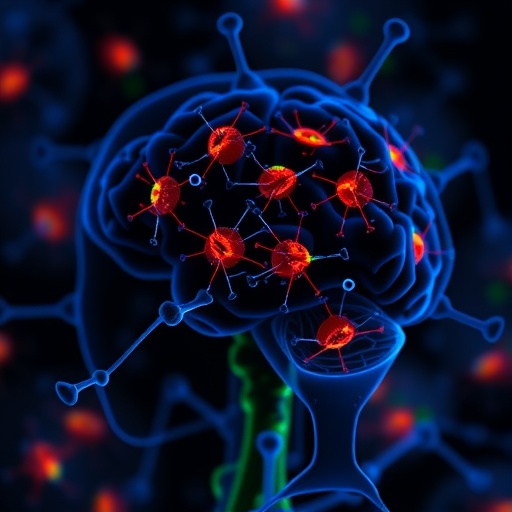
A dormant viral legacy embedded in the human genome may be helping to push the brain’s immune cells toward chronic inflammation and cellular aging, according to a study by Yan, Georgopoulou, Lee and colleagues published in Nature Neuroscience. The research describes how the derepression of endogenous retroviruses—ancient viral sequences that became permanently integrated into mammalian DNA—can activate microglia, the brain’s resident immune cells. Once stimulated by these normally silenced genetic elements, microglia appear to enter an inflammatory state associated with cellular senescence, a condition in which cells stop dividing and release molecular signals that can disrupt the surrounding tissue.
Endogenous retroviruses are remnants of infections that occurred over millions of years of evolution. Unlike viruses that spread from cell to cell, these sequences are inherited as part of the genome and are usually restrained by epigenetic mechanisms, including DNA methylation and repressive chromatin structures. In healthy cells, these molecular locks prevent the viral sequences from being transcribed into RNA or producing viral-like molecules. When that repression weakens, however, the genome can begin to generate nucleic acids that resemble the products of an active infection. The immune system may then interpret these signals as evidence that a virus is present, even when no infectious pathogen has entered the brain.
Microglia are particularly important in this process because they continuously survey the neural environment. Their normal functions include clearing damaged material, responding to injury and supporting neuronal health. Short-lived activation can be protective, but persistent stimulation may transform microglia into a source of inflammatory mediators. The study links endogenous retrovirus derepression to this transition, suggesting that the reactivation of viral genetic material can act as an internal alarm system. Rather than responding to an external infection, microglia respond to a disturbance in the genome’s regulatory landscape, initiating innate immune programs that may become damaging when they remain switched on.
At the molecular level, viral-like RNA and other abnormal nucleic-acid signals can be detected by innate immune sensors. These surveillance systems evolved to recognize invading viruses and activate defensive pathways involving interferons, inflammatory cytokines and chemokines. Such signals can alter the behavior of neighboring cells, recruit additional immune activity and reshape the local environment. In the brain, where neurons are highly sensitive to inflammatory changes, prolonged exposure to these mediators can interfere with communication between cells and place additional stress on neural tissue. The findings therefore point to a mechanism through which an epigenetic failure could be converted into a sustained immune response.
The researchers’ central observation is especially significant because it connects three biological events that are often studied separately: the loss of repression over endogenous retroviruses, microglial activation and cellular senescence. Senescent cells are not simply inactive. Although they no longer progress through the cell cycle in the usual way, they can remain metabolically active and release a mixture of inflammatory proteins, growth factors and tissue-remodeling molecules commonly known as the senescence-associated secretory phenotype. In microglia, this state could create a self-reinforcing loop. Viral-like signals may activate the cells, inflammatory signaling may intensify cellular stress, and senescent microglia may then maintain inflammation even after the original trigger has faded.
This proposed relationship offers a new way to think about brain aging. Age-related changes in DNA methylation, chromatin organization and DNA repair can gradually weaken the systems that keep repetitive and viral-derived sequences silent. Similar losses of genomic control have been associated with aging in other tissues, but the consequences in the brain may be distinct because microglia are long-lived immune cells positioned among neurons and synapses. If they become chronically inflammatory or senescent, their altered behavior could affect the support cells and neural circuits around them. The study does not turn endogenous retroviruses into conventional infectious agents; instead, it highlights how their genetic remnants may influence disease without producing a transmissible virus.
The work also has implications for neurodegenerative disorders, in which inflammatory microglia and senescent cells are frequently observed. Conditions such as Alzheimer’s and Parkinson’s disease involve complex interactions among protein accumulation, neuronal injury, immune activation and changes in the aging brain. Endogenous retrovirus activity could represent one contributor within that network rather than a single universal cause. The importance of the new findings lies in identifying a potentially actionable link: if viral sequences are being released from epigenetic control, interventions might aim either to restore their silencing or to block the immune pathways that detect their products.
That possibility raises difficult therapeutic questions. Broad suppression of microglia would be risky because these cells are essential for defense, repair and the removal of cellular debris. Likewise, epigenetic drugs that silence endogenous retroviruses throughout the body could affect many genes and interfere with normal genome regulation. More selective strategies may be required, such as targeting particular retroviral families, interrupting specific nucleic-acid sensing pathways or eliminating senescent cells while preserving beneficial immune responses. Any treatment would also need to distinguish harmful chronic activation from the short-term microglial responses required to protect the brain after injury or infection.
The study’s broader message is that the genome contains more than a static library of protein-coding instructions. Ancient viral sequences can remain biologically influential long after their infectious ancestors have disappeared, and the balance between repression and expression may change during aging or disease. By showing that derepressed endogenous retroviruses can drive microglial inflammation and cellular senescence, Yan and colleagues add a viral-genomic dimension to the biology of brain aging. The findings suggest that some inflammatory processes may begin not with a new pathogen, but with the gradual loss of control over an old one—and that understanding this hidden viral legacy could open new routes for studying neurodegeneration and age-related decline.
Cite Scienmag News
Beatrice Stafford. (August 17, 2026). Derepressed Endogenous Retroviruses Activate Microglia, Driving Inflammation and Cellular Senescence. Scienmag. https://scienmag.com/derepressed-endogenous-retroviruses-activate-microglia-driving-inflammation-and-cellular-senescence/
Beatrice Stafford. "Derepressed Endogenous Retroviruses Activate Microglia, Driving Inflammation and Cellular Senescence." Scienmag, 17 August 2026, https://scienmag.com/derepressed-endogenous-retroviruses-activate-microglia-driving-inflammation-and-cellular-senescence/. Accessed 4 September 2026.
Beatrice Stafford. "Derepressed Endogenous Retroviruses Activate Microglia, Driving Inflammation and Cellular Senescence." Scienmag. August 17, 2026. https://scienmag.com/derepressed-endogenous-retroviruses-activate-microglia-driving-inflammation-and-cellular-senescence/


