


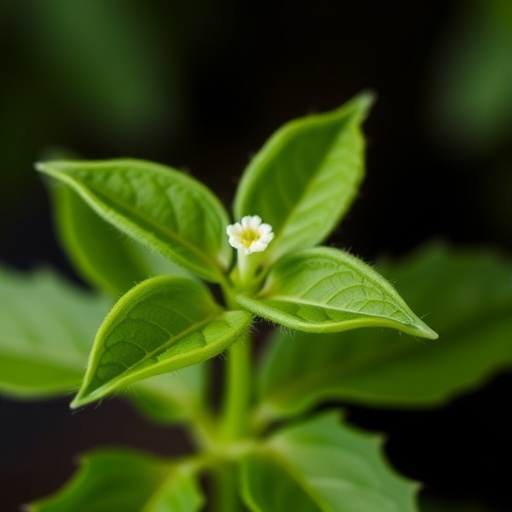
Plants cannot flee when their bodies begin to weaken. Instead, they must detect structural damage, identify its source and rapidly redirect growth. A new study in Nature Plants reports that Arabidopsis thaliana uses a previously unrecognized receptor partnership to respond when cellulose production falls. Researchers Boikine, Chaudhary, Mergner and colleagues identify a cell-surface complex formed by the proteins STRUBBELIG and NHL3, showing that this molecular association helps convert a defect in the plant cell wall into an internal biological response. The finding adds an important piece to the still incomplete picture of how plants monitor the mechanical condition of their own tissues.
Cellulose is the dominant load-bearing material in the primary cell wall, the flexible but remarkably strong extracellular layer surrounding plant cells. It is made at the plasma membrane by cellulose synthase complexes, which move along the membrane while extruding chains of glucose that assemble into crystalline microfibrils. These microfibrils are embedded in a matrix of hemicelluloses and pectins, creating a composite structure that can withstand the pressure generated by water-filled plant cells. If cellulose synthesis is disrupted, the wall becomes mechanically compromised. Cells may swell, growth can become abnormal and tissues may activate stress programs. The central biological challenge is that the damaged structure lies outside the plasma membrane, while the instructions needed to respond must be transmitted inside the cell.
The study addresses this communication problem by focusing on STRUBBELIG, a receptor-like protein associated with the plant cell surface, and NHL3, a member of the NDR1/HIN1-like protein family. Rather than functioning as isolated molecular components, the two proteins operate as a receptor complex, according to the researchers. Their partnership appears to provide a surveillance system capable of detecting or relaying the consequences of cellulose deficiency. This is significant because STRUBBELIG has long been linked to cell-to-cell coordination and tissue patterning, while NHL-family proteins have been associated with responses to environmental and cellular stress. Their connection suggests that developmental signaling and cell-wall damage sensing may be more tightly integrated than previously recognized.
The researchers’ model places the STRUBBELIG–NHL3 complex at the interface between the cell wall and the plasma membrane, where changes in wall structure can influence membrane-associated signaling proteins. When cellulose production is reduced, the complex helps initiate a compensatory response rather than allowing the defect to remain invisible. Such responses can include changes in gene activity, adjustments to cell expansion and the reinforcement of other wall components. In plants, this type of response is often described as cell-wall integrity signaling: a surveillance network that detects altered wall mechanics or chemistry and coordinates repair, remodeling or growth restraint. The newly reported receptor partnership provides a molecular entry point into that network.
Cellulose deficiency is not simply a problem of missing material. It can alter the mechanical forces acting on the plasma membrane, change the balance of wall polymers and affect the geometry of growing cells. Because plant cells are enclosed by rigid walls, expansion is governed by the interaction between internal turgor pressure and wall strength. A weakened wall may therefore trigger signals even before visible collapse occurs. By linking STRUBBELIG and NHL3 to this process, the study supports the idea that plants can sense the physical consequences of altered wall construction through specialized surface receptor systems. The complex may not measure cellulose molecules directly; instead, it may detect the mechanical or biochemical state produced when cellulose synthesis is impaired.
The discovery also helps clarify why plants often respond to cell-wall defects with a broad physiological program. A local disturbance in one cell can influence neighboring cells, tissue architecture and whole-plant development. Receptors at the cell surface are ideally positioned to coordinate these effects because they can receive information from the extracellular wall while communicating with intracellular signaling machinery. STRUBBELIG is particularly relevant to this problem because its known biological roles involve the organization of plant tissues and the coordination of cell behavior. NHL3 may provide an additional signaling or structural component that changes how the receptor complex behaves when wall integrity is threatened. Together, the proteins could form a molecular switch that connects construction of the wall with decisions about growth.
For agriculture and plant biotechnology, the implications extend beyond one model species. Cellulose is essential for crop productivity, vascular development and biomass accumulation, and many strategies for improving plant growth or producing renewable materials involve modifying cell-wall composition. Yet altering cellulose synthesis can carry serious developmental penalties if plants cannot compensate for the resulting structural stress. Understanding the receptors that detect these changes could eventually help researchers design crops that tolerate modified wall chemistry or maintain growth under challenging conditions. It could also inform efforts to engineer plants with more accessible biomass for biofuel and bioproduct production, although translating a receptor mechanism from Arabidopsis to crops will require extensive testing.
The findings place the STRUBBELIG–NHL3 complex within a rapidly expanding field of plant mechanobiology, which examines how cells sense force, stiffness, deformation and changes in tissue architecture. Plants lack a nervous system, but their cells are equipped with sophisticated molecular systems that continuously monitor the physical environment. Receptor-like proteins, ion channels, cell-wall enzymes and hormone pathways can work together to transform mechanical information into changes in transcription and development. The study’s importance lies not only in identifying two proteins that cooperate during cellulose deficiency, but also in showing how a surface receptor complex can serve as a bridge between extracellular construction and intracellular decision-making. That bridge may help explain how plants preserve integrity while continuing to grow.
The work opens several questions that will shape the next phase of research. Scientists will need to determine precisely how STRUBBELIG and NHL3 associate, whether the interaction changes in response to cellulose depletion and which downstream proteins carry the signal into the cell. It will also be important to establish whether the complex responds specifically to cellulose loss or more broadly to mechanical damage and changes in wall composition. The roles of calcium signaling, reactive oxygen species, hormone networks and cell-wall remodeling enzymes may prove central to the pathway. For now, the study offers a compelling molecular explanation for how Arabidopsis recognizes a hidden but potentially dangerous weakness in its architecture: by deploying a STRUBBELIG–NHL3 receptor complex at the cell surface, the plant turns a failure in cellulose construction into a signal for survival and adaptation.
Cite Scienmag News
Drew Townsend. (August 15, 2026). Strubbelig–NHL3 Receptor Complex Helps Arabidopsis Respond to Cellulose Deficiency. Scienmag. https://scienmag.com/strubbelig-nhl3-receptor-complex-helps-arabidopsis-respond-to-cellulose-deficiency/
Drew Townsend. "Strubbelig–NHL3 Receptor Complex Helps Arabidopsis Respond to Cellulose Deficiency." Scienmag, 15 August 2026, https://scienmag.com/strubbelig-nhl3-receptor-complex-helps-arabidopsis-respond-to-cellulose-deficiency/. Accessed 4 September 2026.
Drew Townsend. "Strubbelig–NHL3 Receptor Complex Helps Arabidopsis Respond to Cellulose Deficiency." Scienmag. August 15, 2026. https://scienmag.com/strubbelig-nhl3-receptor-complex-helps-arabidopsis-respond-to-cellulose-deficiency/


