


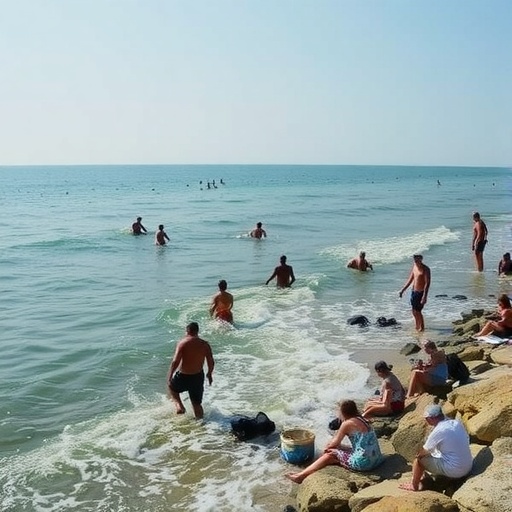
Marine heatwaves are emerging as a major human health threat, with a new commentary warning that prolonged periods of unusually warm ocean temperatures can trigger a chain reaction affecting everything from food security and disaster risk to respiratory illness and mental wellbeing. Researchers from Adelaide University and the University of Hong Kong say the public health consequences of these events have been underestimated because attention has traditionally focused on coral bleaching, fish deaths and damage to marine ecosystems.
Marine heatwaves occur when ocean temperatures remain exceptionally high for several days or longer across a defined region. As the climate warms, these events are becoming more frequent, lasting longer and reaching greater intensities. Their effects are not limited to the water. Warmer seas can alter atmospheric circulation, increase the energy available to tropical cyclones and contribute to extreme rainfall, flooding and coastal destruction. The researchers argue that marine heatwaves should therefore be monitored and managed with the same urgency increasingly applied to heatwaves over land.
The intensification of Hurricane Otis before it struck Mexico in 2023 has been linked to exceptionally warm ocean conditions. The storm rapidly strengthened before making landfall near Acapulco, causing damage estimated at more than US$15 billion. Typhoon Doksuri, which affected more than two million people across Asia in the same year, has also been associated with marine heatwave conditions. Such events can expose communities to injury, death, displacement, infrastructure loss and prolonged disruption of essential services, demonstrating how ocean warming can amplify hazards far from the sea surface itself.
The biological consequences of marine heatwaves can create additional risks. Excess heat stresses marine organisms, disrupts reproduction and metabolism, and can cause mass mortality among fish, seabirds, invertebrates and other species. Warm water can also promote harmful algal blooms, in which certain algae multiply rapidly and produce toxins or reduce oxygen concentrations. These blooms may contaminate shellfish and other seafood, threaten drinking-water sources and release airborne irritants. In South Australia, a devastating algal bloom has been associated with respiratory irritation, asthma and serious social and economic disruption in coastal communities.
The new paper, published in Nature Sustainability, describes these impacts as a cascade rather than a series of isolated environmental problems. Ocean warming can first alter marine ecosystems, then affect fisheries and aquaculture, reduce the availability of nutritious seafood and undermine the incomes of coastal workers. When fish stocks decline or seafood becomes unsafe, households may face higher food prices and reduced access to an important source of protein and micronutrients. For communities that depend heavily on the ocean, these changes can threaten food security, cultural practices and local economies simultaneously.
Lead author Dr Laura Falkenberg, from Adelaide University’s School of Physics, Chemistry and Earth Sciences, said the direct and indirect health consequences of marine heatwaves were receiving far less attention than their ecological effects. “Marine heatwaves are no longer just recognised as an environmental issue; they are increasingly also perceived as a human health issue,” Falkenberg said. She explained that the events can intensify storms and atmospheric heatwaves, compromise the availability and safety of seafood, disrupt livelihoods and contribute to anxiety, grief and other mental health challenges.
The psychological burden may be particularly severe for people whose identities and daily lives are closely connected to marine environments. Fishers, tourism operators, Indigenous communities and coastal residents can experience distress when familiar ecosystems deteriorate or traditional activities become impossible. In 2025, the toxic algal bloom in South Australia reportedly generated high levels of eco-anxiety, alongside grief, frustration and depression. Witnessing the loss of wildlife and coastal habitats can produce a form of environmental grief, while uncertainty about income, food supplies and the future can intensify stress.
The researchers say these health effects should be incorporated into early-warning systems and emergency planning. Marine heatwave forecasts could be connected to public health alerts, allowing authorities to warn communities about unsafe seafood, toxic algal blooms, respiratory hazards and heightened storm risks. Health agencies, ocean scientists, fisheries managers and emergency services would also need to share information more effectively. Monitoring should combine satellite observations, oceanographic measurements, biological sampling and health data to identify emerging threats before they become widespread crises.
Falkenberg said proactive action could reduce the damage caused by increasingly severe ocean warming events. Treating marine heatwaves as a public health issue would encourage governments to account for human wellbeing when making decisions about coastal development, fisheries management and climate adaptation. The authors emphasise that protecting marine ecosystems and protecting people are closely connected: healthier oceans support food supplies, livelihoods, cultural identity and psychological wellbeing, while degraded oceans can transmit climate-related risks through entire communities. Their commentary, “Recognising the human health impacts of marine heatwaves,” calls for this connection to become a central part of climate and health policy.
News Publication Date: 20-Jul-2026
Web References: https://www.nature.com/articles/s41893-026-01892-x; https://researchers.adelaide.edu.au/profile/laura.falkenberg; https://adelaide.edu.au/about/news/2026/toxic-algal-bloom-has-taken-a-heavy-toll-on-south-australians–m/
References: Falkenberg, L. et al., “Recognising the human health impacts of marine heatwaves,” Nature Sustainability. DOI: 10.1038/s41893-026-01892-x
Cite Scienmag News
Violet Maxwell. (August 11, 2026). Marine Heatwaves Pose an Overlooked Threat to Human Health. Scienmag. https://scienmag.com/marine-heatwaves-pose-an-overlooked-threat-to-human-health/
Violet Maxwell. "Marine Heatwaves Pose an Overlooked Threat to Human Health." Scienmag, 11 August 2026, https://scienmag.com/marine-heatwaves-pose-an-overlooked-threat-to-human-health/. Accessed 3 September 2026.
Violet Maxwell. "Marine Heatwaves Pose an Overlooked Threat to Human Health." Scienmag. August 11, 2026. https://scienmag.com/marine-heatwaves-pose-an-overlooked-threat-to-human-health/


