


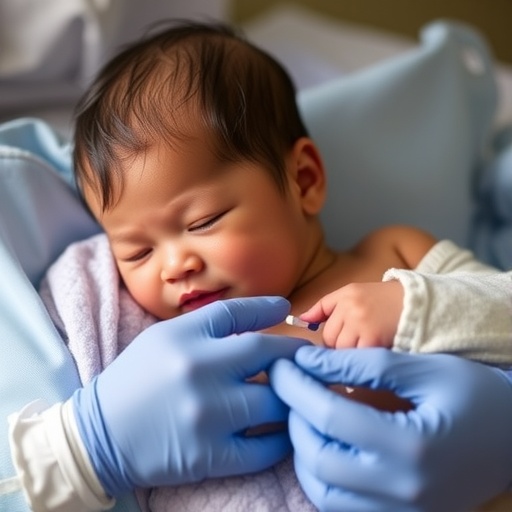
More than 120,000 infants acquire HIV worldwide each year, often through transmission from an infected mother during pregnancy, birth or breastfeeding. Although antiretroviral therapy can suppress the virus and prevent disease progression, treatment must generally continue for life. A new study led by Oregon Health & Science University (OHSU) reports that a carefully timed combination of three therapies prevented the establishment of persistent HIV infection in newborn macaques, raising the possibility of a one-time intervention for infants exposed to the virus.
Published in Nature Microbiology, the study tested a regimen combining standard antiretroviral therapy, broadly neutralizing antibodies and leronlimab, an experimental monoclonal antibody that blocks the CCR5 receptor used by many HIV strains to enter immune cells. The treatment was administered to infant macaques shortly after infection and continued for several weeks. According to the researchers, the combination limited the formation of viral reservoirs and achieved results that none of the individual treatments had produced on its own.
The findings remain preclinical and do not demonstrate that HIV can currently be permanently cleared in human newborns. However, they address a central obstacle in HIV medicine: the virus can integrate its genetic material into the DNA of infected cells soon after exposure, creating latent reservoirs that are largely invisible to both the immune system and conventional antiretroviral drugs. Once these reservoirs are established, stopping therapy can allow the virus to rebound. Preventing or sharply reducing reservoir seeding during the earliest phase of infection could therefore be more effective than attempting to eliminate a mature reservoir later.
The study was led by Jonah Sacha, a professor and chief of pathobiology and immunology at OHSU’s Oregon National Primate Research Center and Vaccine and Gene Therapy Institute, and Nancy Haigwood, a virologist and immunologist who has spent decades studying HIV antibodies. The experiments involved researchers and animals from both the Oregon and California national primate research centers. The infant macaque model was used because the animals share important anatomical, immunological and virological characteristics with humans, while allowing scientists to examine the earliest events following infection in a controlled setting.
Each component of the regimen was designed to interrupt a different stage of HIV’s spread. Antiretroviral drugs suppress viral replication by targeting enzymes and other processes required for the production of new virus particles. Broadly neutralizing antibodies, or bNAbs, bind to vulnerable regions on the viral surface and can block infection by multiple HIV variants. They may also help recruit immune cells to remove antibody-coated virus and infected cells. Leronlimab adds a third layer of protection by binding to CCR5, a chemokine receptor on the surface of many immune cells that HIV uses as a coreceptor during entry.
The researchers describe the combined effect as complementary rather than simply additive. Antiretroviral therapy reduces the amount of virus being produced, while neutralizing antibodies can capture or disable virus circulating in the bloodstream. CCR5 blockade then makes susceptible immune cells less accessible to viral entry. This layered approach may be particularly powerful during the first days of infection, when HIV is spreading rapidly from initial sites of exposure and beginning to populate tissues that can later serve as long-lived reservoirs.
The precise biological mechanism behind the apparent clearance is not yet fully understood. The investigators reported that the treatment prevented or greatly restricted reservoir seeding in the infant macaques, but further work will be needed to determine whether all replication-competent virus was eliminated or whether residual virus remained below the limits of detection. Studies will also need to establish how long protection lasts, whether the result can be reproduced with different viral strains and treatment doses, and whether the therapy remains effective when administration is delayed beyond the first 72 hours.
The timing question is especially important for clinical use. Newborns exposed to HIV may not be identified immediately, and the circumstances of exposure vary widely. The researchers plan to investigate whether the combination can work when given one or two weeks after infection rather than within three days. They also want to determine whether the approach could benefit adults who have recently acquired HIV, when viral reservoirs may still be relatively limited. Any human application would require carefully designed clinical trials, beginning with studies of safety, dosing, immune effects and viral rebound after treatment interruption.
Antiretroviral therapy is already approved for human use, while bNAbs and leronlimab are being evaluated separately in clinical research. Leronlimab’s development has included efforts to use CCR5 blockade as a way to prevent HIV entry into immune cells, but blocking CCR5 alone has not been sufficient to eradicate established infection. The new study suggests that its greatest potential may lie in combination therapy administered immediately after exposure, before the virus has fully entrenched itself in the body.
The researchers emphasize that the work represents a possible strategy, not an available cure. HIV continues to cause hundreds of thousands of deaths globally each year, and access to lifelong treatment remains uneven. A safe, single-course intervention for newborns could substantially reduce the burden of pediatric HIV, particularly in settings where continuous treatment is difficult to maintain. The study was supported by several National Institutes of Health institutes and programs. OHSU disclosed that Sacha and co-author Scott Hansen have significant financial interests in CytoDyn, a company that may have a commercial interest in the research and related technology.
News Publication Date: 10-Aug-2026
Web References: OHSU research announcement: https://news.ohsu.edu/; DOI: https://doi.org/10.1038/s41564-026-02444-x
References: Nature Microbiology, DOI: 10.1038/s41564-026-02444-x
Cite Scienmag News
Kristina Jarvis. (August 10, 2026). Study suggests triple-dose regimen may permanently eliminate HIV in newborns. Scienmag. https://scienmag.com/study-suggests-triple-dose-regimen-may-permanently-eliminate-hiv-in-newborns/
Kristina Jarvis. "Study suggests triple-dose regimen may permanently eliminate HIV in newborns." Scienmag, 10 August 2026, https://scienmag.com/study-suggests-triple-dose-regimen-may-permanently-eliminate-hiv-in-newborns/. Accessed 3 September 2026.
Kristina Jarvis. "Study suggests triple-dose regimen may permanently eliminate HIV in newborns." Scienmag. August 10, 2026. https://scienmag.com/study-suggests-triple-dose-regimen-may-permanently-eliminate-hiv-in-newborns/


