


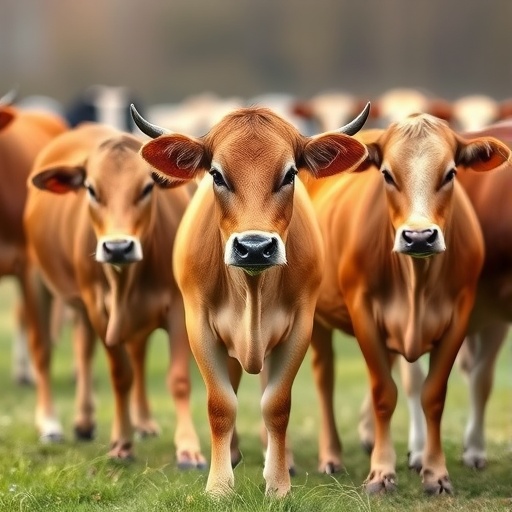
Decades of selective breeding have helped cattle farmers produce more milk, meat and offspring with remarkable efficiency. Yet a new review from Aberystwyth University warns that the same drive for productivity may be quietly erasing genetic diversity that could become essential to agriculture’s future. Traditional cattle populations, often overlooked beside highly productive modern herds, may contain rare genetic variants linked to disease resistance, fertility and survival in difficult environments.
The study, published in Applied Animal Science, examines how intensive agricultural systems and long-term breeding decisions have reshaped cattle genetics. When breeders repeatedly select animals for a narrow set of traits—such as rapid growth, high milk yield or improved feed conversion—the genetic contribution of other traits can decline. Over generations, this process can reduce the effective genetic diversity of a population, leaving herds more genetically similar and potentially less capable of adapting to new threats.
That narrowing of the genetic base is not immediately visible. A modern herd may appear healthy and highly productive under carefully controlled conditions, while carrying fewer alternative gene variants than its traditional counterparts. The danger becomes clearer when environmental conditions change. New diseases, heat stress, water shortages, altered feed supplies and shifting consumer demands can expose weaknesses that were not apparent when breeding goals were focused primarily on output.
Traditional cattle herds may provide an important biological reserve against those risks. These populations are often smaller, less intensively managed and closely connected to the climates, landscapes and farming systems in which they developed. Their genetic profiles can remain distinct from those of modern commercial lines, preserving combinations of genes that may influence immune responses, reproductive performance, longevity or the ability to maintain health while exposed to nutritional and environmental stress.
The review highlights cattle breeds including Ayrshire, Jersey and Hereford, noting that traditional populations within these breeds may differ genetically from animals shaped by modern production systems. Such differences are not simply historical curiosities. They may represent living examples of how cattle can adapt to local conditions, from variations in temperature and pasture quality to regionally important disease pressures. In genetic terms, these herds can function as reservoirs of alleles that have become uncommon or disappeared from intensively selected populations.
Kardelen Oya Temiz, one of the researchers, described traditional cattle as “living genetic libraries” containing traits that could help agriculture respond to some of its most difficult challenges. Modern breeding has delivered major gains in efficiency, but concentrating selection on productivity can produce unintended trade-offs. For example, an animal optimized for maximum output may require more feed, be more vulnerable to heat or disease, or experience reproductive difficulties when conditions are less than ideal. Preserving alternative genetic backgrounds could allow breeders to balance performance with resilience.
Climate change makes that balance increasingly urgent. Rising temperatures can affect cattle fertility, immune function, feed intake and milk production. Drought can reduce the availability and nutritional value of pasture, while extreme weather can increase pressure on both animals and farmers. Genetic traits associated with heat tolerance, efficient use of limited feed, robust fertility and resistance to local diseases could become more valuable as these pressures intensify. Traditional populations may offer starting points for identifying and reintroducing such traits through carefully managed breeding programs.
Dr Matt Hegarty, senior lecturer in the Department of Life Sciences at Aberystwyth University, said that modern agriculture had achieved “remarkable gains in efficiency and output” but had also narrowed the genetic base of many breeds. He argued that this narrowing could make herds more vulnerable to disease, environmental stress and changing markets. Conservation, therefore, is not only a matter of protecting cultural heritage or maintaining rare breeds. It is also a practical strategy for preserving options that future farmers may need.
The researchers call for expanded genomic surveys of cattle populations in which ancestral or traditional animals still exist. Genomic analysis can compare DNA across breeds and identify levels of genetic diversity, distinctive ancestral lineages and rare variants associated with useful biological traits. Such information can guide conservation decisions, prevent further loss of unique populations and help breeders develop strategies that combine productivity with adaptability. The authors conclude that protecting traditional cattle is both a cultural responsibility and a form of agricultural risk management: once a distinctive genetic resource disappears, it may be impossible to recreate.
Web References: Study published in Applied Animal Science
References: Applied Animal Science, DOI: 10.15232/aas.2025-02692
Cite Scienmag News
Juliet Wilcox. (August 9, 2026). Selective breeding reduces genetic diversity in traditional cattle herds, research finds. Scienmag. https://scienmag.com/selective-breeding-reduces-genetic-diversity-in-traditional-cattle-herds-research-finds/
Juliet Wilcox. "Selective breeding reduces genetic diversity in traditional cattle herds, research finds." Scienmag, 9 August 2026, https://scienmag.com/selective-breeding-reduces-genetic-diversity-in-traditional-cattle-herds-research-finds/. Accessed 4 September 2026.
Juliet Wilcox. "Selective breeding reduces genetic diversity in traditional cattle herds, research finds." Scienmag. August 9, 2026. https://scienmag.com/selective-breeding-reduces-genetic-diversity-in-traditional-cattle-herds-research-finds/


