


Erosion Changes the Microbial Rules of Soil Carbon Loss
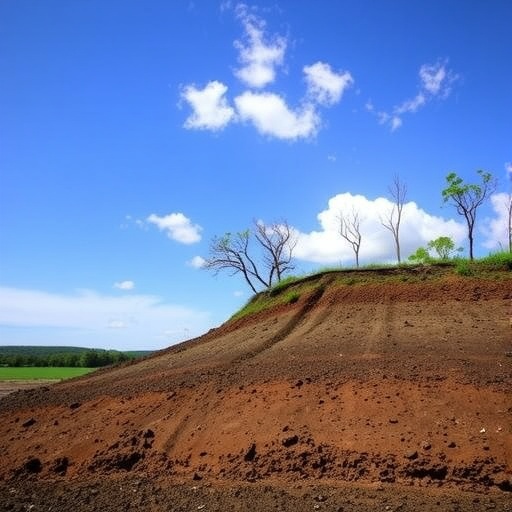
Water erosion is reshaping the carbon cycle beneath agricultural fields in ways that extend far beyond the physical removal of soil. A new study published in Carbon Research shows that erosion can make the organic carbon left behind in topsoil decompose more rapidly, potentially increasing carbon dioxide emissions from cultivated landscapes. The research, conducted in the black-soil region of northeastern China, links the loss of soil carbon to a biological response: microorganisms appear to work harder and change their preferred food sources when erosion leaves them with fewer accessible carbon compounds.
The study examined complete soil profiles extending from the surface to a depth of one meter at two contrasting landscape positions. Researchers sampled upper slopes exposed to water erosion and lower slopes where transported soil accumulated. They combined field measurements with laboratory incubations, extracellular enzyme analyses, microbial community sequencing, and tests of carbon-cycling genes. This profile-scale approach allowed the scientists to distinguish between carbon physically moved by erosion and carbon that was chemically and biologically transformed in place.
The strongest effects appeared in the upper 40 centimeters, the zone most directly exposed to rainfall, runoff, cultivation, and disturbance. Compared with depositional lower slopes, eroded upper slopes contained less total soil organic carbon and lower concentrations of colloidal organic carbon, particularly within the 2–10 micrometer particle fraction. These fine particles are important because they can help protect organic molecules from microbial attack by binding them to minerals or incorporating them into stable soil aggregates.
Yet the reduction in available carbon did not suppress decomposition. During laboratory incubation experiments, organic carbon degradation rates in upper-slope soils were 41% to 48% higher than those measured in lower-slope soils. The result suggests that erosion may create a paradoxical feedback: it removes carbon-rich and physically protected material, but the remaining carbon becomes more vulnerable to microbial consumption. Instead of simply leaving poorer soils, erosion may produce soils in which microbes actively accelerate the breakdown of what remains.
The researchers found several signs that microorganisms were experiencing carbon limitation. Activities of enzymes that acquire carbon, nitrogen, and phosphorus were higher per unit of soil organic carbon in the upper-slope topsoil. One key enzyme, β-glucosidase, showed a particularly strong increase. β-glucosidase helps microbes break down cellulose-derived compounds and release simpler sugars that can enter microbial metabolism. Higher activity indicates that microbial communities were investing more biochemical energy in locating and processing carbon substrates.
Microbial community analysis provided another piece of the explanation. The composition of bacteria shifted in eroded topsoil toward groups associated with the degradation of chemically resistant organic matter. Streptomyces, a genus known for producing a wide range of enzymes capable of breaking down complex biological compounds, was enriched in upper-slope samples. Its abundance was positively correlated with soil organic carbon decomposition, suggesting that the microbial community was not merely changing in response to erosion but may have been contributing directly to the faster carbon loss.
The researchers also detected increased abundance of functional genes involved in the degradation of plant-derived and other complex organic compounds within the upper 40 centimeters. These genes provide the instructions for enzymes that attack substrates often described as recalcitrant, meaning they are relatively difficult to decompose. Under conditions of carbon scarcity, microbes may shift from consuming easily available compounds to investing in the extraction of energy from more resistant materials. This strategy can increase the release of carbon dioxide from soil even when the total carbon pool has already been depleted.
Statistical analyses identified slope position, soil erodibility, the colloidal organic carbon fraction, β-glucosidase activity, and microbial functional traits as major factors associated with decomposition rates. Together, the findings support a mechanistic sequence in which water erosion removes or redistributes protected carbon fractions, increases microbial carbon stress, and selects for organisms and enzymes capable of accessing more resistant substrates. The study therefore challenges the idea that erosion-related carbon loss is mainly a transport problem. The biological processing of carbon remaining in eroded soil may be equally important.
The contrast between surface and deeper soil was especially significant. Below 40 centimeters, differences in microbial community structure, functional gene abundance, and carbon decomposition were much weaker between upper and lower slopes. The authors suggest that deep soil organic carbon remains more effectively protected inside mineral-organic complexes and stable aggregates, making it less accessible to microbial enzymes. This depth dependence means that erosion-control measures aimed at preserving the upper soil layer could have an outsized effect on both agricultural productivity and carbon storage.
The findings have implications for climate policy, soil conservation, and the management of carbon-sequestering farmland. Maintaining plant cover, reducing runoff, and limiting the detachment of topsoil could preserve fine carbon-rich fractions while preventing the microbial shift toward aggressive decomposition. The study also indicates that assessments of erosion and climate emissions should include microbial activity, enzyme investment, and functional genes rather than measuring only the amount of soil physically transported downslope. Although the research focused on black soils in northeastern China, it offers a framework for testing whether similar microbial responses occur in other climates, soil types, and erosion regimes. If they do, the hidden carbon cost of erosion could be substantially larger than estimates based solely on sediment movement.
News Publication Date: 31-Jul-2026
Web References: https://doi.org/10.1007/s44246-026-00293-1
Cite Scienmag News
Morgan Morrow. (August 3, 2026). Erosion Reshapes Microbial Processes Driving Soil Carbon Loss. Scienmag. https://scienmag.com/erosion-reshapes-microbial-processes-driving-soil-carbon-loss/
Morgan Morrow. "Erosion Reshapes Microbial Processes Driving Soil Carbon Loss." Scienmag, 3 August 2026, https://scienmag.com/erosion-reshapes-microbial-processes-driving-soil-carbon-loss/. Accessed 3 September 2026.
Morgan Morrow. "Erosion Reshapes Microbial Processes Driving Soil Carbon Loss." Scienmag. August 3, 2026. https://scienmag.com/erosion-reshapes-microbial-processes-driving-soil-carbon-loss/


