


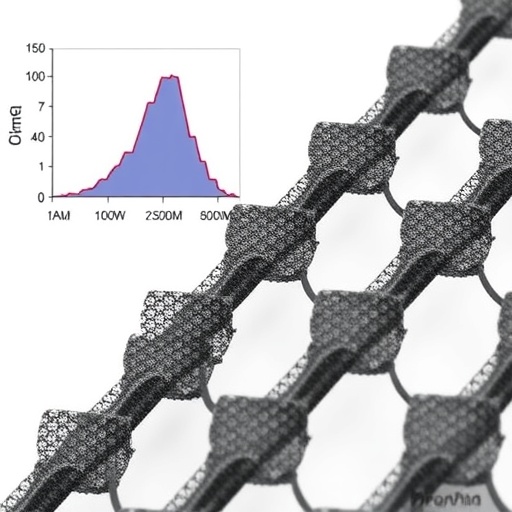
A new nanocomposite design could help turn everyday motion into usable electrical power, offering a promising route toward self-powered wearable devices, flexible sensors and next-generation human–machine interfaces. In a study published in npj Flexible Electronics, S. Mishra, H. Lakra, K. Hazarika and colleagues report a synergistic improvement in both piezoelectric and triboelectric responses by incorporating thermally exfoliated graphene oxide into poly(vinylidene fluoride), commonly known as PVDF.
The significance of the work lies in its attempt to combine two different mechanisms for harvesting mechanical energy. Piezoelectric materials generate electrical charges when they are compressed, stretched or otherwise mechanically deformed. Triboelectric materials, by contrast, produce electricity through contact electrification and electrostatic induction when two surfaces touch, separate or slide against one another. Each effect can be useful on its own, but combining them in a single flexible material may allow devices to capture a wider range of movements.
PVDF is already one of the most widely studied polymers for flexible energy harvesting. It is lightweight, chemically stable, mechanically durable and capable of generating electrical charge when its molecular chains adopt the right arrangement. In particular, the polymer’s electroactive beta phase is strongly associated with piezoelectric performance. However, producing a material with a high proportion of this phase, while maintaining flexibility and reliable electrical output, remains a central challenge.
The researchers addressed this challenge by adding thermally exfoliated graphene oxide to the PVDF matrix. Graphene oxide consists of carbon sheets decorated with oxygen-containing chemical groups. Thermal exfoliation partially separates these layers and can modify their structure, surface chemistry and electrical behavior. When dispersed through a polymer, these nanoscale carbon-based sheets can influence how the polymer chains crystallize, interact with one another and respond to mechanical stress.
This interaction is crucial because the filler is not simply acting as an electrically conductive additive. At the interface between graphene oxide and PVDF, molecular interactions and differences in electrical properties can create localized regions where charges accumulate. These interfaces may assist the formation of electroactive PVDF structures while also affecting how charges move and remain separated during mechanical stimulation. The result is a composite in which the polymer and the nanofiller contribute to the overall electromechanical response in complementary ways.
The reported synergy between piezoelectricity and triboelectricity is particularly important for real-world motion. A bending sensor, for example, may experience both internal deformation of the PVDF and friction or contact between neighboring surfaces. A material optimized for only one mechanism could miss part of that available energy. By integrating both effects, the graphene oxide–PVDF nanocomposite may respond to pressing, bending, stretching, tapping and repeated contact, making it attractive for multifunctional sensing systems.
At the microscopic level, the piezoelectric response originates from the redistribution of bound charges as the polar regions of PVDF deform. The triboelectric response emerges when surfaces exchange charge during contact and separation, followed by the generation of a potential difference as the charged surfaces move apart. Thermally exfoliated graphene oxide can influence both processes by modifying the composite’s dielectric properties, interfacial polarization and charge-trapping behavior. These factors are often decisive in determining how much electrical output a flexible nanogenerator can deliver.
The potential applications extend beyond laboratory demonstrations. Flexible hybrid generators could be integrated into electronic skin, where they detect pressure and texture while producing their own sensing signals. They could also support wearable health monitors, motion-tracking patches, smart textiles and low-power wireless systems. In settings where replacing batteries is difficult or undesirable, materials that harvest energy from body movement, vibration or ambient mechanical activity could help reduce maintenance and improve device autonomy.
The study also highlights a broader strategy in materials science: improving performance not by relying on a single material, but by engineering the interfaces between different components. PVDF provides flexibility and electroactive behavior, while thermally exfoliated graphene oxide introduces nanoscale surfaces capable of modifying crystallization, polarization and charge transport. The reported results suggest that carefully designed polymer–nanocarbon interfaces may be a practical pathway toward lightweight, adaptable energy harvesters that combine sensing and power generation in the same structure.
Cite Scienmag News
Neil Sanderson. (August 3, 2026). Graphene Oxide Boosts Piezoelectric and Triboelectric Performance in Heat-Treated PVDF Nanocomposites. Scienmag. https://scienmag.com/graphene-oxide-boosts-piezoelectric-and-triboelectric-performance-in-heat-treated-pvdf-nanocomposites/
Neil Sanderson. "Graphene Oxide Boosts Piezoelectric and Triboelectric Performance in Heat-Treated PVDF Nanocomposites." Scienmag, 3 August 2026, https://scienmag.com/graphene-oxide-boosts-piezoelectric-and-triboelectric-performance-in-heat-treated-pvdf-nanocomposites/. Accessed 3 September 2026.
Neil Sanderson. "Graphene Oxide Boosts Piezoelectric and Triboelectric Performance in Heat-Treated PVDF Nanocomposites." Scienmag. August 3, 2026. https://scienmag.com/graphene-oxide-boosts-piezoelectric-and-triboelectric-performance-in-heat-treated-pvdf-nanocomposites/


