


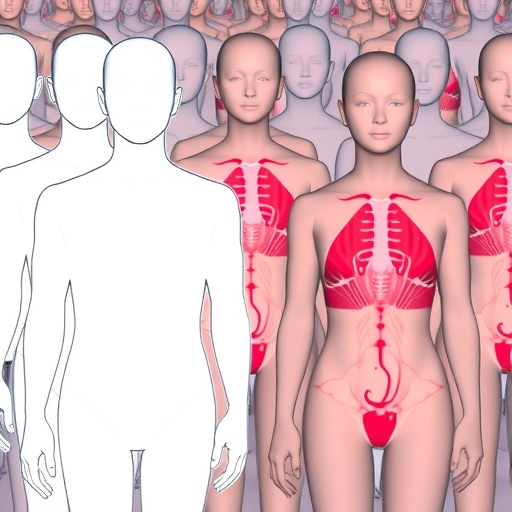
Alveolar capillary dysplasia is one of medicine’s most devastating diagnostic puzzles: newborns appear to have lungs, but their microscopic architecture prevents those lungs from performing the essential exchange of oxygen and carbon dioxide. A new article in Pediatric Research highlights how health system data can help researchers and clinicians understand this exceptionally rare condition, potentially transforming scattered clinical encounters into evidence that improves recognition, referral and care. The work, led by S.B. Axford, R.K. Armstrong, A. Pellicano and colleagues, focuses on alveolar capillary dysplasia as a model for studying rare diseases through information already generated by hospitals and healthcare networks.
The condition most often discussed under the name alveolar capillary dysplasia with misalignment of pulmonary veins, or ACDMPV, affects the structure of the developing lung at the microscopic level. In a healthy newborn, alveoli—tiny air sacs at the ends of the airways—are closely interwoven with a dense network of capillaries. This arrangement allows oxygen to cross from inhaled air into the bloodstream while carbon dioxide moves in the opposite direction. In ACDMPV, the capillaries are abnormally positioned and insufficiently connected to the alveolar surface, making efficient gas exchange extraordinarily difficult.
The result is often severe respiratory failure and pulmonary hypertension shortly after birth. Pulmonary hypertension occurs when blood encounters excessive resistance as it travels through the lung’s circulation, forcing the right side of the heart to work harder. Newborns may develop profound low blood oxygen levels that respond poorly to conventional ventilation and oxygen therapy. Because the symptoms can resemble more common conditions—including persistent pulmonary hypertension of the newborn, infection, congenital heart disease or respiratory distress syndrome—diagnosis may be delayed while clinicians pursue more familiar explanations.
That diagnostic challenge is precisely where health system data can become powerful. Rare conditions are difficult to study through traditional clinical trials because individual hospitals may encounter only a handful of cases, sometimes none at all. Electronic health records, diagnostic databases, pathology reports, genetic testing results, intensive-care records and mortality data can create a wider picture when they are carefully linked and interpreted. Rather than relying solely on a single case report, researchers can examine patterns across patients, institutions and time, identifying recurring features that might otherwise remain hidden.
For ACDMPV, such data may help reveal how patients first present, how quickly their condition is recognized, which investigations are ordered and where clinical pathways break down. It can also show the consequences of inconsistent terminology. A rare disease may be recorded under several diagnostic codes or described differently by neonatologists, pathologists, geneticists and intensive-care teams. If databases fail to connect those terms, cases can disappear from research datasets, making the disease appear even rarer and limiting the reliability of estimates about its frequency and outcomes.
The biological basis of ACDMPV adds another layer of complexity. Many cases are associated with changes involving the FOXF1 gene, which plays an important role in the development of lung blood vessels and surrounding tissues. Genetic variation can occur in different forms, including changes inherited from a parent or alterations that arise during early development. However, not every patient will have an immediately identifiable genetic explanation, and a negative genetic test does not necessarily exclude the disorder. Clinical assessment, imaging, pathology and, in some cases, examination of lung tissue remain important components of diagnosis.
The article’s central significance lies not in treating health records as a simple counting exercise, but in showing how routinely collected information can support rare-disease science. When data are standardized and connected responsibly, they may help identify patients eligible for specialist evaluation, guide the design of natural-history studies and clarify which outcomes matter most to families. They may also support earlier conversations about prognosis, genetic counseling and the limits of available therapies, particularly in newborns whose illness progresses despite maximal intensive care.
For families, earlier recognition can matter even when a curative treatment is unavailable. A clear diagnosis may prevent repeated invasive testing, reduce uncertainty and allow parents to receive appropriate counseling about recurrence risks and future pregnancies. It may also help clinicians distinguish situations in which lung transplantation or other advanced interventions should be considered from those in which the disease is too extensive for such approaches to succeed. Because ACDMPV can vary in its timing and severity, comprehensive data may be essential for understanding why some infants present immediately while others develop symptoms later.
Yet health system data are not automatically complete or unbiased. Records may be missing, genetic testing may not be accessible to every family and the sickest patients may be treated in specialist centers that are not connected to regional databases. Privacy protections are especially important when a dataset contains information about a very small number of identifiable patients. Researchers must therefore balance data sharing with confidentiality, use consistent definitions and communicate uncertainty rather than presenting incomplete records as definitive truth.
By placing ACDMPV within the broader movement toward data-driven rare-disease research, Axford, Armstrong, Pellicano and colleagues draw attention to a practical scientific opportunity: the healthcare system is already generating enormous amounts of clinical information, but its value depends on how accurately that information is captured, linked and interpreted. For a condition measured in tiny numbers yet marked by enormous clinical consequences, better use of health system data could turn isolated tragedies into a more coherent understanding of disease biology, diagnosis and care. The study offers a reminder that progress in rare medicine may begin not only with a new drug or laboratory discovery, but also with learning how to recognize the signals hidden in everyday clinical records.
Cite Scienmag News
Harold Sullivan. (August 1, 2026). Alveolar Capillary Dysplasia: How Health System Data Illuminate Rare Disease. Scienmag. https://scienmag.com/alveolar-capillary-dysplasia-how-health-system-data-illuminate-rare-disease/
Harold Sullivan. "Alveolar Capillary Dysplasia: How Health System Data Illuminate Rare Disease." Scienmag, 1 August 2026, https://scienmag.com/alveolar-capillary-dysplasia-how-health-system-data-illuminate-rare-disease/. Accessed 3 September 2026.
Harold Sullivan. "Alveolar Capillary Dysplasia: How Health System Data Illuminate Rare Disease." Scienmag. August 1, 2026. https://scienmag.com/alveolar-capillary-dysplasia-how-health-system-data-illuminate-rare-disease/


