


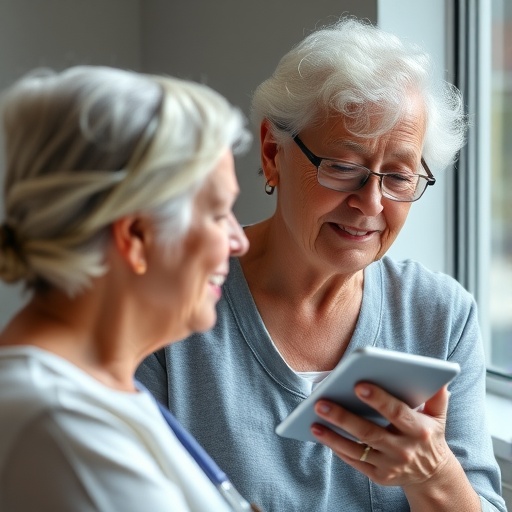
Older adults living with pre-frailty or frailty are turning to the internet for nutritional guidance, but a new study suggests that information alone is not enough. For digital nutrition education to make a meaningful difference, it must be trustworthy, personally relevant, easy to access and adaptable to the different ways people learn. Researchers from Flinders University’s Caring Futures Institute found that older adults engage most deeply with online resources when they can connect the information to their own lives, reflect on their experiences and decide how to apply new knowledge.
Frailty is a medical condition marked by reduced physiological reserve, meaning that the body becomes less able to recover from illness, injury or other stresses. Pre-frailty is an earlier stage in which physical resilience has begun to decline but may still be improved through appropriate interventions. Nutrition is central to both conditions because inadequate intake of energy, protein, vitamins and minerals can contribute to muscle loss, weakness and reduced independence. At the same time, dietary advice designed for younger or healthier populations may not address the physical, social and cognitive realities faced by older adults.
The study was led by Adeline Lau, a PhD candidate supervised by Professor Michelle Miller and Dr Chad Han at Flinders University. The researchers examined how community-dwelling older adults with pre-frailty or frailty experienced an online nutrition education resource intended to help prevent and manage frailty. Participants were given access to the resource for between two and four weeks. Rather than measuring engagement solely through technical indicators such as logins or time spent online, the research team explored how participants interpreted the information, judged its credibility and considered its usefulness in everyday life.
This approach allowed the researchers to investigate the experiential side of digital health engagement. A website may be technically simple to use, yet still fail to connect with its intended audience if the content feels generic, irrelevant or disconnected from daily routines. Participants said their personal circumstances shaped both their motivation to learn and the relevance they assigned to particular topics. Their health status, dietary habits, previous knowledge, confidence and individual priorities influenced whether information felt useful. The findings suggest that older adults cannot be treated as a single uniform group simply because they share an age range or frailty classification.
Trust emerged as a major factor in how participants responded to the resource. Online health information is abundant, but its quality varies widely, and older adults may be cautious about advice that lacks clear evidence or appears to promote unrealistic solutions. Participants were more likely to engage when they considered the material credible and when it helped confirm or expand what they already knew. This process of validation is important in nutrition education: people do not necessarily approach a digital resource as empty vessels waiting to be filled with facts. Instead, they compare new information with their existing beliefs, experiences and routines.
The participants also described online learning as an active and reflective process. Some used the material to think about their eating patterns, identify possible changes or explore questions independently. Others incorporated new ideas into daily life, adapting the information to their own preferences, health needs and practical circumstances. Several participants reported positive dietary changes after using the resource, while others described gaining insight without making an immediate behavioural change. The researchers interpret both responses as meaningful forms of engagement, because reflection can precede later decisions even when its effects are not immediately visible.
Personalisation was therefore one of the strongest themes identified by the study. Older adults wanted information that acknowledged differences within the frailty spectrum rather than presenting universal recommendations. A person experiencing reduced appetite, for example, may require different practical advice from someone who is physically active but struggling to prepare meals. Social isolation, financial limitations, medical conditions, cultural food preferences and access to shops can also determine whether a recommendation is realistic. Digital resources that allow users to select topics, adjust the pace of learning or explore information relevant to their circumstances may be better positioned to support dietary self-management.
The study also highlighted the value of multimodal education. Written explanations may be useful for some users, while others may benefit from videos, audio content, illustrations, practical demonstrations or interactive features. Providing information in several formats can support people with different levels of health literacy, vision, concentration and digital confidence. However, the researchers stress that accessibility should not be reduced to technical usability. A resource can function correctly and still fail to empower users if its language is too abstract, its examples are unfamiliar or its guidance ignores the lived realities of ageing and frailty.
According to the researchers, these findings have implications for the design of future digital health interventions. Older adults should be involved throughout the development process, not merely consulted after a resource has been completed. Their experiences can help researchers identify which explanations are confusing, which recommendations are impractical and which features encourage confidence and independence. Consumer-informed design may ultimately produce online nutrition education that is not only easier to use, but also more credible, relatable and capable of supporting sustained engagement. The study does not establish that the resource directly improves health outcomes, but it shows why empowerment, trust, personal meaning and individual choice are essential ingredients in digital support for healthy ageing.
News Publication Date: 18-May-2026
Web References: https://doi.org/10.1186/s12877-026-07672-8
References: Lau A, Han C, Ludlow K, Young A, Miller E, Miller M. “Perspectives of older adults with pre-frailty and frailty when engaging with an online nutrition educational resource: a qualitative study.” BMC Geriatrics. DOI: 10.1186/s12877-026-07672-8
Cite Scienmag News
Beatrice Stafford. (August 1, 2026). People with Frailty Reveal Their Digital Health Priorities. Scienmag. https://scienmag.com/people-with-frailty-reveal-their-digital-health-priorities/
Beatrice Stafford. "People with Frailty Reveal Their Digital Health Priorities." Scienmag, 1 August 2026, https://scienmag.com/people-with-frailty-reveal-their-digital-health-priorities/. Accessed 3 September 2026.
Beatrice Stafford. "People with Frailty Reveal Their Digital Health Priorities." Scienmag. August 1, 2026. https://scienmag.com/people-with-frailty-reveal-their-digital-health-priorities/


