

Wednesday, July 29, 2026
Science
No Result
View All Result
  • Login
  • HOME
  • SCIENCE NEWS
  • CONTACT US
  • HOME
  • SCIENCE NEWS
  • CONTACT US
No Result
View All Result
Scienmag
No Result
View All Result
Home Science News Medicine

RHOT1/2 Mitochondrial Vesicles Target Tumors and Enable In Situ Vaccination

July 29, 2026
in Medicine
Reading Time: 2 mins read
0
RHOT1/2 Mitochondrial Vesicles Target Tumors and Enable In Situ Vaccination

RHOT1/2 Mitochondrial Vesicles Target Tumors and Enable In Situ Vaccination

65
SHARES
587
VIEWS
Share on FacebookShare on Twitter
ADVERTISEMENT

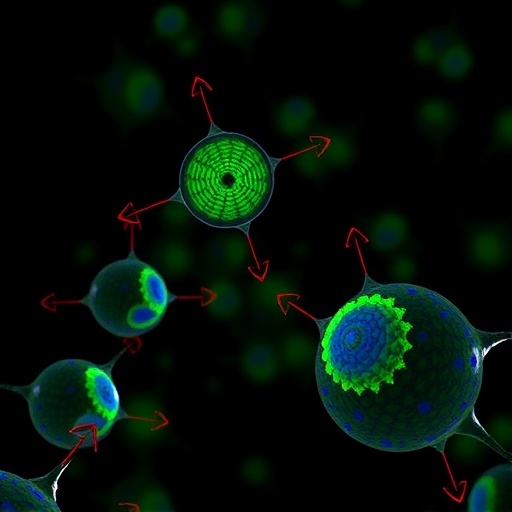
Mitochondria have long been treated as cellular powerhouses, but a new study reframes them as potential vehicles for targeted cancer therapy. Researchers report that mitochondria-derived vesicles can be engineered to seek tumors and, once delivered in the body, act as a platform for local immune priming.

The approach centers on mitochondrial membrane vesicles produced through RHOT1/2 activity. RHOT1 and RHOT2 are small GTPases known to regulate mitochondrial dynamics, and their activation appears to reshape both vesicle biogenesis and the surface cues that determine where these nanoparticles travel. By steering vesicle production with RHOT1/2, the team was able to tune tumor-homing selectivity rather than relying on generic uptake by proliferating tissue.

In preclinical experiments, RHOT1/2-driven vesicles preferentially accumulated in tumor tissue after in vivo administration. The authors connect this targeting behavior to vesicle membrane composition and nanoscale presentation of ligands, which likely interact with tumor-associated microenvironment signals. This selective localization reduced off-target distribution compared with controls lacking RHOT1/2-dependent vesicle features.

Beyond delivery, the vesicles were used as an “in situ vaccination” strategy. Instead of manufacturing a conventional antigen-based vaccine outside the body, the method harnesses the vesicles to help trigger antigen presentation within the tumor setting. Once concentrated in tumors, the vesicles promoted immune activation pathways associated with cross-presentation and priming of tumor-reactive responses.

Mechanistically, the study emphasizes that mitochondrial-derived material can act as immunostimulatory cargo, providing danger signals that recruit and activate innate immune cells. The ensuing inflammatory context supports subsequent adaptive responses, helping the host mount a longer-lasting attack on malignant tissue.

Importantly, the researchers highlight that the system’s effectiveness depends on vesicle traits established during RHOT1/2-driven production. Altering these traits changes both where the vesicles go and how strongly they stimulate immunity, implying that biogenesis is not just a manufacturing detail but a determinant of therapeutic function.

If these findings translate, they could expand mitochondrial nanomedicine into a broader platform for precision oncology. The concept of “manufacturing” immune competence at the tumor site may help circumvent limitations of ex vivo vaccines, including logistical complexity and variable antigen availability.

From a viral-science-news perspective, the work also underscores a broader theme: the immune system is sensitive to subcellular structures, and engineering those structures can reprogram immune trafficking. In that sense, RHOT1/2-driven vesicles represent a rational design of intracellular origin nanoparticles to convert solid tumors into sites of vaccination.

Subject of Research: Mitochondrial membrane vesicles / targeted cancer immunotherapy (in situ cancer vaccination)

Article Title: RHOT1/2-driven mitochondrial membrane vesicles confer tumor-homing selectivity and enable in situ cancer vaccination.

Article References: Meng, W., Li, B., Cao, C. et al. RHOT1/2-driven mitochondrial membrane vesicles confer tumor-homing selectivity and enable in situ cancer vaccination. Nat Commun (2026). https://doi.org/10.1038/s41467-026-75830-y

DOI: 10.1038/s41467-026-75830-y

Keywords: RHOT1/2, mitochondrial membrane vesicles, tumor homing, in situ vaccination, cancer immunotherapy, immune priming

Tags: GTPase-regulated vesicle surface cues for cancer targetingin situ cancer vaccination using mitochondrial vesiclesin vivo tumor accumulation of mitochondrial vesiclesmitochondria-based drug delivery in oncologymitochondria-driven immune primingMitochondrial vesicles for targeted cancer therapyoff-target reduction in mitochondrial vesicle therapyRHOT1/2 regulated vesicle biogenesisselective tumor targeting nanocarrierstumor-homing mitochondrial nanoparticlesvesicle membrane composition and tumor microenvironment
Share26Tweet16
Previous Post

Early psychosis shows reduced low-frequency sensorimotor fluctuations tied to dexterity

Next Post

Antioxidant lipid nanoparticles deliver circRNA uricase to treat hyperuricemia in mice

Related Posts

ProteinGuide Offers Property Guidance for Protein Sequence Generative Models
Medicine

ProteinGuide Offers Property Guidance for Protein Sequence Generative Models

July 29, 2026
Antioxidant lipid nanoparticles deliver circRNA uricase to treat hyperuricemia in mice
Medicine

Antioxidant lipid nanoparticles deliver circRNA uricase to treat hyperuricemia in mice

July 29, 2026
Bioinspired Porous Metal-Amino Acid Nanozymes Treat Atherosclerosis via Dual Pathways
Medicine

Bioinspired Porous Metal-Amino Acid Nanozymes Treat Atherosclerosis via Dual Pathways

July 29, 2026
Palmitoylation boosts NKAα2 and improves diabetic cardiomyopathy via fumarate pathway
Medicine

Palmitoylation boosts NKAα2 and improves diabetic cardiomyopathy via fumarate pathway

July 29, 2026
3D Visualization Reveals Nanoplastic Distribution in Neonatal Mouse Brains
Medicine

3D Visualization Reveals Nanoplastic Distribution in Neonatal Mouse Brains

July 29, 2026
Transcriptomic Profiling Reveals Differences Between Human Brown and White Fat Depots
Medicine

Transcriptomic Profiling Reveals Differences Between Human Brown and White Fat Depots

July 29, 2026
Next Post
Antioxidant lipid nanoparticles deliver circRNA uricase to treat hyperuricemia in mice

Antioxidant lipid nanoparticles deliver circRNA uricase to treat hyperuricemia in mice

  • Mothers who receive childcare support from maternal grandparents show more

    Mothers who receive childcare support from maternal grandparents show more parental warmth, finds NTU Singapore study

    27656 shares
    Share 11059 Tweet 6912
  • University of Seville Breaks 120-Year-Old Mystery, Revises a Key Einstein Concept

    1061 shares
    Share 424 Tweet 265
  • Bee body mass, pathogens and local climate influence heat tolerance

    682 shares
    Share 273 Tweet 171
  • Researchers record first-ever images and data of a shark experiencing a boat strike

    546 shares
    Share 218 Tweet 137
  • Groundbreaking Clinical Trial Reveals Lubiprostone Enhances Kidney Function

    531 shares
    Share 212 Tweet 133
Science

Embark on a thrilling journey of discovery with Scienmag.com—your ultimate source for cutting-edge breakthroughs. Immerse yourself in a world where curiosity knows no limits and tomorrow’s possibilities become today’s reality!

RECENT NEWS

  • New Einstein puzzle variant uncovers surprising physics
  • ProteinGuide Offers Property Guidance for Protein Sequence Generative Models
  • Antioxidant lipid nanoparticles deliver circRNA uricase to treat hyperuricemia in mice
  • RHOT1/2 Mitochondrial Vesicles Target Tumors and Enable In Situ Vaccination

Categories

  • Agriculture
  • Anthropology
  • Archaeology
  • Athmospheric
  • Biology
  • Biotechnology
  • Blog
  • Bussines
  • Cancer
  • Chemistry
  • Climate
  • Earth Science
  • Editorial Policy
  • Marine
  • Mathematics
  • Medicine
  • Pediatry
  • Policy
  • Psychology & Psychiatry
  • Science Education
  • Social Science
  • Space
  • Technology and Engineering

Subscribe to Blog via Email

Enter your email address to subscribe to this blog and receive notifications of new posts by email.

Join 5,147 other subscribers

© 2025 Scienmag - Science Magazine

Welcome Back!

Login to your account below

Forgotten Password?

Retrieve your password

Please enter your username or email address to reset your password.

Log In
No Result
View All Result
  • HOME
  • SCIENCE NEWS
  • CONTACT US

© 2025 Scienmag - Science Magazine

Discover more from Science

Subscribe now to keep reading and get access to the full archive.

Continue reading
