


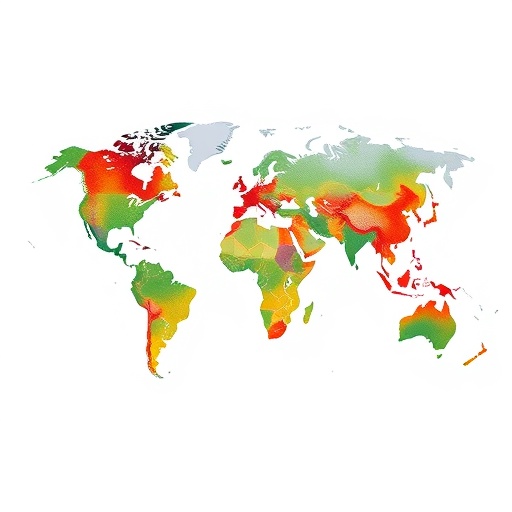
A new Nature Communications study in 2026 spotlights a largely overlooked driver of atmospheric chemistry: inorganic halogens originating from continental sources. While much air-quality research has focused on anthropogenic aerosols and nitrogen–sulfur chemistry, the authors argue that halogens—especially chlorine, bromine, and iodine species—can reshape how pollutants transform, persist, and spread across the globe.
Using a combination of chemical mechanism development and model experiments, the research team traced how continental emissions and reservoir cycling of inorganic halogens alter oxidant levels. In particular, they show that halogen radicals can modulate the efficiency of reactions that convert primary pollutants into secondary aerosols and trace gases, shifting both composition and lifetime.
The study emphasizes “reservoir” behavior: inorganic halogen compounds are not merely emitted and instantly oxidized. Instead, they partition into atmospheric and surface-linked reservoirs, later releasing reactive halogen forms under specific meteorological and chemical conditions. This delayed release creates episodic chemistry that can amplify pollution or change its peak timing.
Globally, the work suggests that halogen-driven chemistry can affect key pathways that govern particle formation and growth. By influencing the availability of oxidants and changing the balance between competing reaction routes, continental halogens can lead to regional differences in aerosol properties that standard frameworks may underestimate.
The authors further connect these effects to long-range transport. Continental sources inject inorganic halogens that travel into cleaner or more urban-influenced air masses, where they interact with prevailing oxidants. The result is a chemistry “bridge” between local emissions and distant air-quality outcomes, linking continental conditions to downwind atmospheric evolution.
A striking implication for interpretation of satellite and ground observations is that aerosol and trace-gas signals may reflect halogen-influenced aging rather than only changes in conventional emissions. This means that air-quality assessments that ignore halogen chemistry could misattribute causes of observed trends.
From a policy perspective, the findings widen the target set for atmospheric mitigation. Traditional strategies reducing sulfate, nitrate, or organics may not fully address the chemical pathways controlling halogen-driven transformations, especially where continental sources of inorganic halogens remain active.
Overall, the study frames continental inorganic halogens as a key “hidden variable” in global air-quality evolution—one that can reorganize atmospheric reaction networks, alter pollutant lifetimes, and change aerosol formation outcomes across regions and seasons.
Cite Scienmag News
Russell Cooper. (July 29, 2026). Continental Inorganic Halogens Shape Global Air Quality Evolution. Scienmag. https://scienmag.com/continental-inorganic-halogens-shape-global-air-quality-evolution/
Russell Cooper. "Continental Inorganic Halogens Shape Global Air Quality Evolution." Scienmag, 29 July 2026, https://scienmag.com/continental-inorganic-halogens-shape-global-air-quality-evolution/. Accessed 5 September 2026.
Russell Cooper. "Continental Inorganic Halogens Shape Global Air Quality Evolution." Scienmag. July 29, 2026. https://scienmag.com/continental-inorganic-halogens-shape-global-air-quality-evolution/


