

Wednesday, July 29, 2026
Science
No Result
View All Result
  • Login
  • HOME
  • SCIENCE NEWS
  • CONTACT US
  • HOME
  • SCIENCE NEWS
  • CONTACT US
No Result
View All Result
Scienmag
No Result
View All Result
Home Science News Social Science

Expanding microbiome–gut–brain research could boost mental health in the Global South

July 28, 2026
in Social Science
Reading Time: 2 mins read
0
Expanding microbiome–gut–brain research could boost mental health in the Global South

Expanding microbiome–gut–brain research could boost mental health in the Global South

65
SHARES
587
VIEWS
Share on FacebookShare on Twitter
ADVERTISEMENT

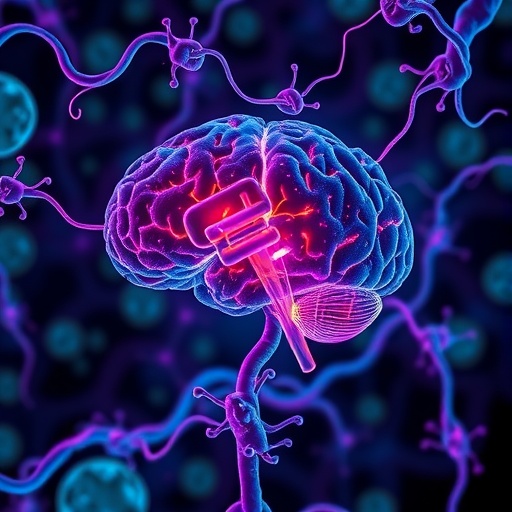
Microbiome research is increasingly pointing to the gut–brain axis as an important pathway for mental health, linking microbial communities to neural function through immune signaling, metabolic byproducts, and neuroactive metabolites. Yet most studies that probe this relationship have been conducted in high-income countries (HICs). A new perspective in Nature Mental Health argues that this geographic imbalance is not merely a gap in representation—it may actively skew what scientists think the microbiome–gut–brain axis means for mood, cognition, and brain resilience.

The authors emphasize that environmental exposures vary dramatically across regions—diet composition, sanitation infrastructure, urbanization patterns, early-life factors, and infection burden. These variables can shape microbiome development and function, which in turn can influence host pathways relevant to stress physiology and neuroinflammation. If studies are concentrated in HIC settings, the resulting models may overfit to microbial configurations and environmental contexts that are atypical elsewhere.

In their first argument, the researchers warn that overrepresentation of HIC cohorts could distort our understanding of how the axis operates in real-world mental health risk. For example, microbiome signatures associated with psychiatric outcomes might differ when baseline diets, commensal diversity, or pathogen-driven immune tone vary. The consequence is a partial, context-dependent theory—one that may not translate well to populations in low- and middle-income countries (LMICs).

Second, the paper highlights an opportunity often missed: LMICs may provide “natural experiments” where environmental forces differ in systematic ways. By comparing populations with distinct yet stable exposure profiles, researchers can disentangle which environmental drivers are most influential—whether through changes in fiber fermentation, microbial metabolite availability, or immune modulation.

Third, the authors argue that intervention pipelines could be limited if lifestyle-informed treatments are developed primarily from HIC-derived evidence. Microbiome-targeted approaches—such as diet-based strategies—may require adaptation to local food systems, cultural practices, and existing microbial ecosystems to be effective and equitable.

Importantly, the case is framed as scientific rigor rather than charity alone. Studying the microbiome–gut–brain axis across broader geographies can generate more generalizable mechanisms and better estimates of causal pathways.

The authors conclude that expanding research into the global south is therefore both ethically desirable and methodologically necessary, with the potential to produce mental health benefits that scale beyond the contexts where current evidence was generated.

Subject of Research: Microbiome–gut–brain axis and mental health across regions
Article Title: Global mental health benefits from expanding microbiome–gut–brain axis research to the global south
Article References: Valderrama, B., Morais, L.H., Lavelle, A. et al. Global mental health benefits from expanding microbiome–gut–brain axis research to the global south. Nat. Mental Health (2026). https://doi.org/10.1038/s44220-026-00690-w
Image Credits: AI Generated
DOI: https://doi.org/10.1038/s44220-026-00690-w
Keywords: microbiome–gut–brain axis; global mental health; LMICs; environmental exposures; mental health interventions

Tags: cross-cultural microbiome studiesenvironmental influences on gut microbiotagut–brain communication pathwaysimmune signaling in gut–brain axisimpact of diet and sanitation on microbiomeinfluence of urbanization and early-life factorsmental health in the Global Southmicrobiome research disparitiesmicrobiome-based mental health interventionsmicrobiome–gut–brain axisneuroinflammation and mental healthregional differences in microbial communities
Share26Tweet16
Previous Post

Cholinergic Basal Forebrain Control of Glymphatic Flow May Affect Depression

Next Post

Heatwaves Drive Faster Biological Aging by Disrupting Metabolism

Related Posts

Queen Bee Pheromones Guide Daughters in Choosing to Stay or Leave
Social Science

Queen Bee Pheromones Guide Daughters in Choosing to Stay or Leave

July 29, 2026
Ancient Human Parents Faced Challenges Raising Children, New Evidence Shows
Social Science

Ancient Human Parents Faced Challenges Raising Children, New Evidence Shows

July 29, 2026
Heatwaves Drive Faster Biological Aging by Disrupting Metabolism
Social Science

Heatwaves Drive Faster Biological Aging by Disrupting Metabolism

July 28, 2026
Polygenic Liability to Loneliness Raises Psychosis Risk via Adolescent Loneliness, EU-GEI Study
Social Science

Polygenic Liability to Loneliness Raises Psychosis Risk via Adolescent Loneliness, EU-GEI Study

July 28, 2026
New Study Predicts Audience Nostalgia Preferences Using a Fresh Perspective
Social Science

New Study Predicts Audience Nostalgia Preferences Using a Fresh Perspective

July 28, 2026
Biographies of Scientists Could Discourage Children From Studying Science
Social Science

Biographies of Scientists Could Discourage Children From Studying Science

July 28, 2026
Next Post
Heatwaves Drive Faster Biological Aging by Disrupting Metabolism

Heatwaves Drive Faster Biological Aging by Disrupting Metabolism

  • Mothers who receive childcare support from maternal grandparents show more

    Mothers who receive childcare support from maternal grandparents show more parental warmth, finds NTU Singapore study

    27656 shares
    Share 11059 Tweet 6912
  • University of Seville Breaks 120-Year-Old Mystery, Revises a Key Einstein Concept

    1061 shares
    Share 424 Tweet 265
  • Bee body mass, pathogens and local climate influence heat tolerance

    682 shares
    Share 273 Tweet 171
  • Researchers record first-ever images and data of a shark experiencing a boat strike

    546 shares
    Share 218 Tweet 137
  • Groundbreaking Clinical Trial Reveals Lubiprostone Enhances Kidney Function

    531 shares
    Share 212 Tweet 133
Science

Embark on a thrilling journey of discovery with Scienmag.com—your ultimate source for cutting-edge breakthroughs. Immerse yourself in a world where curiosity knows no limits and tomorrow’s possibilities become today’s reality!

RECENT NEWS

  • Queen Bee Pheromones Guide Daughters in Choosing to Stay or Leave
  • Inequality rises in cities as heat and daylight patterns reshape life
  • Gut Microbiome Signatures Enable Detection of Colorectal Lesions in FIT Screening
  • Premature Infants Show Abnormal Eye Movements, New Study Finds

Categories

  • Agriculture
  • Anthropology
  • Archaeology
  • Athmospheric
  • Biology
  • Biotechnology
  • Blog
  • Bussines
  • Cancer
  • Chemistry
  • Climate
  • Earth Science
  • Editorial Policy
  • Marine
  • Mathematics
  • Medicine
  • Pediatry
  • Policy
  • Psychology & Psychiatry
  • Science Education
  • Social Science
  • Space
  • Technology and Engineering

Subscribe to Blog via Email

Enter your email address to subscribe to this blog and receive notifications of new posts by email.

Join 5,147 other subscribers

© 2025 Scienmag - Science Magazine

Welcome Back!

Login to your account below

Forgotten Password?

Retrieve your password

Please enter your username or email address to reset your password.

Log In
No Result
View All Result
  • HOME
  • SCIENCE NEWS
  • CONTACT US

© 2025 Scienmag - Science Magazine

Discover more from Science

Subscribe now to keep reading and get access to the full archive.

Continue reading
