

Wednesday, July 29, 2026
Science
No Result
View All Result
  • Login
  • HOME
  • SCIENCE NEWS
  • CONTACT US
  • HOME
  • SCIENCE NEWS
  • CONTACT US
No Result
View All Result
Scienmag
No Result
View All Result
Home Science News Psychology & Psychiatry

Cholinergic Basal Forebrain Control of Glymphatic Flow May Affect Depression

July 28, 2026
in Psychology & Psychiatry
Reading Time: 2 mins read
0
Cholinergic Basal Forebrain Control of Glymphatic Flow May Affect Depression

Cholinergic Basal Forebrain Control of Glymphatic Flow May Affect Depression

65
SHARES
587
VIEWS
Share on FacebookShare on Twitter
ADVERTISEMENT

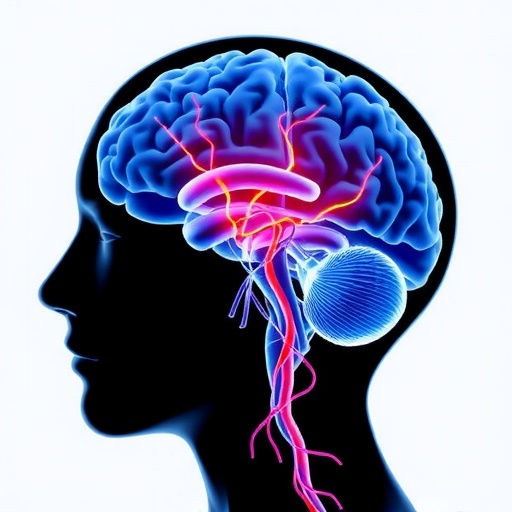
A new study links a little-known brain control system to the way the brain clears waste—and suggests a fresh explanation for why depression may involve more than mood chemistry. Researchers report that cholinergic neurons in the basal forebrain can actively shape glymphatic function, the brain’s circulation-and-clearance pathway that helps remove metabolic byproducts during sleep-like states.

The glymphatic system relies on specialized fluid movement through brain tissue and through perivascular channels surrounding blood vessels. In this framework, the efficiency of waste clearance depends on how water and solutes flow across neural tissue, as well as how vascular dynamics and surrounding astrocytes behave. While glymphatic activity has been studied in relation to sleep and neurodegeneration, the precise neural inputs governing the process have remained unclear.

In their 2026 work in Translational Psychiatry, Fang and colleagues describe a mechanism centered on cholinergic signaling. Cholinergic projections from the basal forebrain—famous for roles in attention, arousal, and cortical state—appear to modulate the physical conditions that enable glymphatic transport. By influencing factors such as extracellular fluid dynamics and tissue-level permeability, the pathway may determine how effectively the brain’s “cleanup crew” can operate.

The researchers frame their findings as a potential bridge between two major domains: neuromodulation and the brain’s internal housekeeping. In other words, the same neurotransmitter system that tunes brain state may also tune how efficiently debris is cleared. That coupling could help explain why shifts in sleep, arousal, and neural network activity—common in depression—might also impair biological cleanup processes.

Experimentally, the team used approaches that probe glymphatic behavior and manipulate cholinergic influence, tracking how changes altered transport-related outcomes. The pattern of results supports the idea that basal forebrain cholinergic input is not merely correlated with glymphatic function, but can function as a regulatory lever.

Depression has long been associated with neuroinflammation, altered neuroplasticity, and disrupted circadian rhythms. This new angle adds a physiological layer: if cholinergic modulation affects glymphatic clearance, then inefficient waste removal could contribute to sustained cellular stress, microenvironment changes, or heightened vulnerability in mood-regulating circuits.

Crucially, the study points to mechanistic targets rather than only symptoms. If cholinergic control can influence waste transport, therapies that restore appropriate cholinergic signaling—or normalize glymphatic dynamics—might offer a route to reduce downstream brain stressors linked to depressive disorders.

The work also raises a broader question: how do brain states that favor sleep-like clearance become regulated, and what happens when those switches malfunction? By identifying a specific neuromodulatory origin for glymphatic modulation, the authors provide a testable roadmap for future research into mood, sleep physiology, and brain hygiene.

Whether these findings translate directly into clinical depression remains to be determined, but the study’s message is clear: glymphatic function may be a modifiable biological process under cholinergic control, with implications for understanding—and potentially treating—depression.

Subject of Research: Glymphatic function modulated by cholinergic basal forebrain signaling and its implications for depression.

Article Title: Cholinergic basal forebrain modulation of glymphatic function: implications for depression.

Article References: Fang, Y., Lu, Z., Chao, X. et al. Cholinergic basal forebrain modulation of glymphatic function: implications for depression. Translational Psychiatry (2026). https://doi.org/10.1038/s41398-026-04284-z

Image Credits: AI Generated

DOI: https://doi.org/10.1038/s41398-026-04284-z

Tags: basal forebrain in brain waste clearancebrain detoxification and mood disorderscholinergic modulation of brain circulationCholinergic neurons and glymphatic systemdepression and brain clearance pathwaysglymphatic systemneural control of glymphatic flowneural mechanisms underlying brain waste removalneurodegeneration and glymphatic dysfunctionneuromodulation and brain healthrole of astrocytes in waste removalsleepsleep-like states and brain detoxification
Share26Tweet16
Previous Post

Mafic and Ultramafic Rocks Could Supply Reactive Phosphorus for Life Origins

Next Post

Expanding microbiome–gut–brain research could boost mental health in the Global South

Related Posts

Mechanisms Connecting Gut Microbiome to Causality in Psychiatric Disorders
Psychology & Psychiatry

Mechanisms Connecting Gut Microbiome to Causality in Psychiatric Disorders

July 28, 2026
Study Uncovers Neuroinflammation Mechanisms, Biomarkers, and Treatments for Long COVID
Psychology & Psychiatry

Study Uncovers Neuroinflammation Mechanisms, Biomarkers, and Treatments for Long COVID

July 28, 2026
Single-Cell Transcriptomics Reveals Cerebral Cortex Adaptations to High Altitude in Pigs
Psychology & Psychiatry

Single-Cell Transcriptomics Reveals Cerebral Cortex Adaptations to High Altitude in Pigs

July 28, 2026
High IQ and ADHD show separable patterns of inattention and impulsivity
Psychology & Psychiatry

High IQ and ADHD show separable patterns of inattention and impulsivity

July 28, 2026
Meta-analysis Identifies Brain Functional Changes Linked to Suicidal Ideation
Psychology & Psychiatry

Meta-analysis Identifies Brain Functional Changes Linked to Suicidal Ideation

July 28, 2026
Physical Activity Duration and Fragmentation Predict Future Dementia, Depression, Anxiety in UK Biobank
Psychology & Psychiatry

Physical Activity Duration and Fragmentation Predict Future Dementia, Depression, Anxiety in UK Biobank

July 28, 2026
Next Post
Expanding microbiome–gut–brain research could boost mental health in the Global South

Expanding microbiome–gut–brain research could boost mental health in the Global South

  • Mothers who receive childcare support from maternal grandparents show more

    Mothers who receive childcare support from maternal grandparents show more parental warmth, finds NTU Singapore study

    27656 shares
    Share 11059 Tweet 6912
  • University of Seville Breaks 120-Year-Old Mystery, Revises a Key Einstein Concept

    1061 shares
    Share 424 Tweet 265
  • Bee body mass, pathogens and local climate influence heat tolerance

    682 shares
    Share 273 Tweet 171
  • Researchers record first-ever images and data of a shark experiencing a boat strike

    546 shares
    Share 218 Tweet 137
  • Groundbreaking Clinical Trial Reveals Lubiprostone Enhances Kidney Function

    531 shares
    Share 212 Tweet 133
Science

Embark on a thrilling journey of discovery with Scienmag.com—your ultimate source for cutting-edge breakthroughs. Immerse yourself in a world where curiosity knows no limits and tomorrow’s possibilities become today’s reality!

RECENT NEWS

  • Gene Discovery May Speed Avocado Breeding, Cutting Years Off Timelines
  • Ancient Human Parents Faced Challenges Raising Children, New Evidence Shows
  • Integrated breastfeeding peer counseling improves equity in hospital lactation support
  • Mid-Holocene Thar Desert hydroclimate patterns reveal seasonal shifts in India

Categories

  • Agriculture
  • Anthropology
  • Archaeology
  • Athmospheric
  • Biology
  • Biotechnology
  • Blog
  • Bussines
  • Cancer
  • Chemistry
  • Climate
  • Earth Science
  • Editorial Policy
  • Marine
  • Mathematics
  • Medicine
  • Pediatry
  • Policy
  • Psychology & Psychiatry
  • Science Education
  • Social Science
  • Space
  • Technology and Engineering

Subscribe to Blog via Email

Enter your email address to subscribe to this blog and receive notifications of new posts by email.

Join 5,147 other subscribers

© 2025 Scienmag - Science Magazine

Welcome Back!

Login to your account below

Forgotten Password?

Retrieve your password

Please enter your username or email address to reset your password.

Log In
No Result
View All Result
  • HOME
  • SCIENCE NEWS
  • CONTACT US

© 2025 Scienmag - Science Magazine

Discover more from Science

Subscribe now to keep reading and get access to the full archive.

Continue reading
