


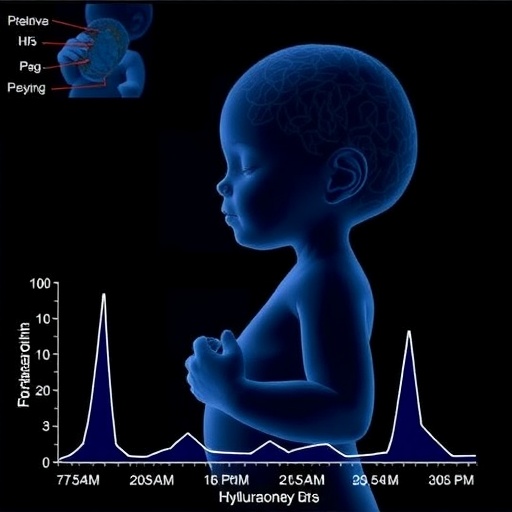
Preterm infants arrive with unique vulnerabilities, and the first nourishment they receive is more than calories—it’s a time-sensitive biological instruction manual. In a new study, researchers track how a specific sugar molecule in human milk changes over time, using hyaluronan (HA) as a molecular signal of maternal–infant adaptation. The findings point to dynamic biochemical choreography in preterm milk, with potential implications for gut development and immune balance.
Hyaluronan is a long-chain glycosaminoglycan found throughout the body and known to influence tissue hydration, cell migration, and inflammatory signaling. In the infant gut, where the microbiome and epithelial barriers are still forming, HA may act as a structural and regulatory molecule. “Temporal changes” matter because the early days of lactation could provide distinct biological cues as preterm infants transition from immediate stabilization to longer-term growth.
To investigate, the team collected preterm human milk samples across defined time windows and quantified HA concentrations. Rather than treating milk composition as static, the study frames it as a moving target shaped by developmental stage and lactation timing. This approach helps distinguish baseline HA abundance from time-linked shifts that could correlate with maturation of the infant digestive tract.
The researchers report measurable variation in HA levels over the sampling period, suggesting that preterm milk is not a single formula but a progressive biochemical environment. Such variation could reflect evolving maternal physiology, changes in mammary gland activity, or feedback from the demands of preterm feeding. The pattern also raises the possibility that HA supply could contribute to how the infant gut handles inflammation and barrier formation during early life.
These dynamics may be particularly relevant for preterm populations, which face elevated risks of necrotizing enterocolitis, infection, and impaired growth. Mechanistically, HA can interact with cell-surface receptors involved in inflammatory tone and repair processes. If HA availability declines or increases over specific windows, the timing could matter as much as the dose.
The study’s design emphasizes precision in measuring HA and interpreting concentration trends rather than only comparing milk from different mothers. That analytical lens strengthens the case for a timeline-dependent nutrition strategy. It also sets the groundwork for future work linking measured HA profiles to clinical endpoints such as stool characteristics, gut barrier markers, or immune signaling patterns.
For clinicians and researchers, the broader message is that “human milk quality” may need to be reconsidered in terms of temporal molecular composition. Viral-style, the story is simple: preterm milk evolves, and HA may be one of the keys to understanding how.
Cite Scienmag News
Harold Sullivan. (July 28, 2026). Temporal Changes in Hyaluronan Levels in Preterm Human Breast Milk. Scienmag. https://scienmag.com/temporal-changes-in-hyaluronan-levels-in-preterm-human-breast-milk/
Harold Sullivan. "Temporal Changes in Hyaluronan Levels in Preterm Human Breast Milk." Scienmag, 28 July 2026, https://scienmag.com/temporal-changes-in-hyaluronan-levels-in-preterm-human-breast-milk/. Accessed 3 September 2026.
Harold Sullivan. "Temporal Changes in Hyaluronan Levels in Preterm Human Breast Milk." Scienmag. July 28, 2026. https://scienmag.com/temporal-changes-in-hyaluronan-levels-in-preterm-human-breast-milk/


