


Uranium sits at the heart of the nuclear power industry, and natural aquatic environments are among its richest reservoirs. Yet turning that abundance into usable supply is notoriously difficult: uranium typically exists as uranyl species that form unusually stable complexes with common coexisting ions such as carbonate (CO₃²⁻) and calcium (Ca²⁺). These “passivating” interactions block the performance of conventional extraction materials that rely mainly on adsorption or catalysis, which often cannot reach or disrupt the uranium core effectively.
In a new study in Nature Water, researchers report a strategy designed specifically around the chemistry of interference. They engineered a family of porous polymers built from metalloporphyrin as the pore-wall component, creating rigid, triangular binding pockets intended to recognize uranyl complex ions with high selectivity.
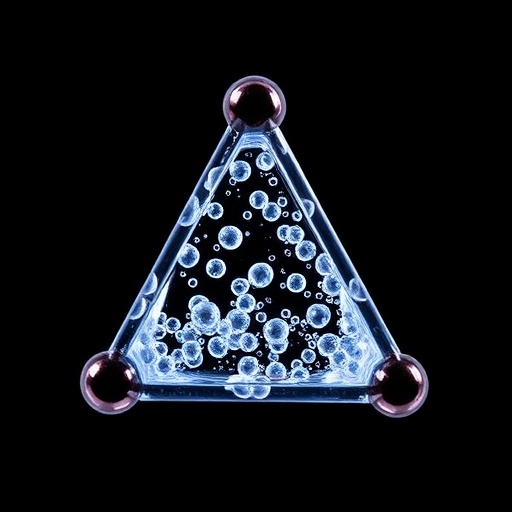
The core idea is that molecular geometry can be used as a functional filter. The triangular pockets confine approaching uranyl–carbonate species while positioning functional sites for multi-coordination. Rather than attempting to “outcompete” uranium chemistry with generic active groups, the design leverages coordinated interactions that align with how uranyl complexes behave in real waters.
As a result, the adsorbent achieves a striking removal efficiency exceeding 96% after 1,500 minutes. The performance is attributed to robust micropore confinement plus coordinated binding that directly involves carbonate (CO₃²⁻) and the porphyrin cationic environment.
The team tested the material beyond controlled solutions, extracting uranium from multiple natural sources including lake water, salt-lake brine, and seawater. Uranium uptake reached as high as 79.8 mg g⁻¹ over a span of 24 days, demonstrating both durability and practical relevance for unconventional feedstocks.
Importantly, the researchers describe the system as tunable: by modifying the polymer architecture, the binding-pocket concept can be adapted for different target speciation. That tunability matters because uranium’s dominant chemical form shifts across pH, salinity, and ion composition—conditions that vary widely in environmental settings.
Beyond the immediate goal of uranium capture, this work offers a broader design blueprint. Triangular, metalloporphyrin-based binding pockets could guide the rational development of porous adsorbents for electrochemical devices and precise molecular separations where selectivity and stability are critical.
Uranium extraction and adsorptive porous polymer design from natural waters
Engineering triangular binding pockets for efficient extraction of uranyl complexes from natural water
Cao, D., Zhang, C., Li, S. et al. Engineering triangular binding pockets for efficient extraction of uranyl complexes from natural water. Nat Water (2026). https://doi.org/10.1038/s44221-026-00688-9
AI Generated
https://doi.org/10.1038/s44221-026-00688-9
Cite Scienmag News
Violet Maxwell. (July 27, 2026). Engineered Triangular Pockets Efficiently Extract Uranyl Complexes from Water. Scienmag. https://scienmag.com/engineered-triangular-pockets-efficiently-extract-uranyl-complexes-from-water/
Violet Maxwell. "Engineered Triangular Pockets Efficiently Extract Uranyl Complexes from Water." Scienmag, 27 July 2026, https://scienmag.com/engineered-triangular-pockets-efficiently-extract-uranyl-complexes-from-water/. Accessed 3 September 2026.
Violet Maxwell. "Engineered Triangular Pockets Efficiently Extract Uranyl Complexes from Water." Scienmag. July 27, 2026. https://scienmag.com/engineered-triangular-pockets-efficiently-extract-uranyl-complexes-from-water/


