


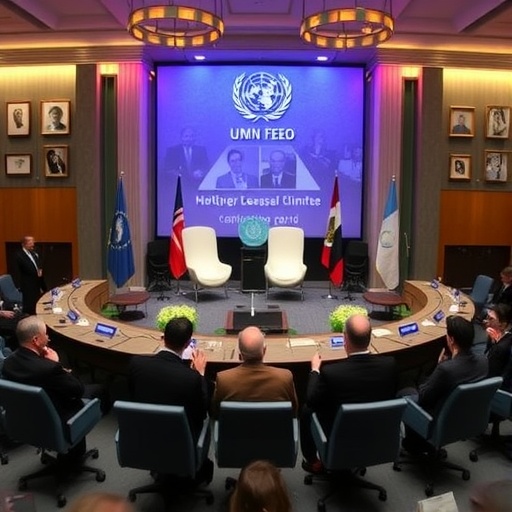
A new analysis of climate diplomacy shows how reform proposals in the UNFCCC can be reshaped—not simply by governments’ formal positions, but by shifting preferences among the process’s most influential actors. The study, appearing in Nature Climate Change, examines how key parties and stakeholders adjust what they want from institutional change, and how those adjustments reverberate through negotiation dynamics.
The authors argue that “preference reform” is best understood as a strategic response to evolving constraints and opportunities inside the UNFCCC. Rather than treating reform as a one-way effort to modernize rules, the work frames reform as an interactive bargaining outcome, where actors anticipate future outcomes and recalibrate their stances accordingly.
Using the UNFCCC negotiation context as a laboratory, the research highlights how preferences can change when actors perceive renegotiation leverage—such as when political support strengthens for certain mechanisms or when implementation details become more salient. In this setting, even widely discussed goals may be translated into different institutional designs depending on who expects gains and losses.
Technically, the paper emphasizes the role of expectations in shaping negotiation behavior: actors do not merely react to current proposals, but forecast how reforms will affect future bargaining positions. This can lead to preference convergence around workable compromises—or divergence when actors anticipate that delays, sequencing, or scope adjustments will shift burdens in their favor.
The findings also suggest that reforms are more likely to succeed when they align with the interests of pivotal parties who can influence agenda-setting and consensus-building. In practical terms, institutional change may hinge less on rhetoric and more on who controls the “terms of exchange” during negotiation rounds.
By mapping how preferences evolve across actors, the study provides a framework for interpreting negotiation volatility, including periods when reform momentum accelerates or stalls. It implies that observing only stated commitments may miss the underlying strategic shifts that determine whether reforms become actionable.
For policymakers, the work offers a cautionary message for climate negotiations: reform design cannot be separated from political incentives and bargaining foresight. If reform packages do not account for how preferences will likely change under different institutional scenarios, implementation risk rises.
For the public, the relevance is simple but urgent: the architecture of climate governance is not static. As preferences among key UNFCCC actors move, the path from aspiration to mechanism—and ultimately to emissions-relevant action—can change shape quickly.
Cite Scienmag News
Sloane Callahan. (July 26, 2026). UNFCCC Shifts Preferences Among Key Actors in Climate Negotiations. Scienmag. https://scienmag.com/unfccc-shifts-preferences-among-key-actors-in-climate-negotiations/
Sloane Callahan. "UNFCCC Shifts Preferences Among Key Actors in Climate Negotiations." Scienmag, 26 July 2026, https://scienmag.com/unfccc-shifts-preferences-among-key-actors-in-climate-negotiations/. Accessed 4 September 2026.
Sloane Callahan. "UNFCCC Shifts Preferences Among Key Actors in Climate Negotiations." Scienmag. July 26, 2026. https://scienmag.com/unfccc-shifts-preferences-among-key-actors-in-climate-negotiations/


