


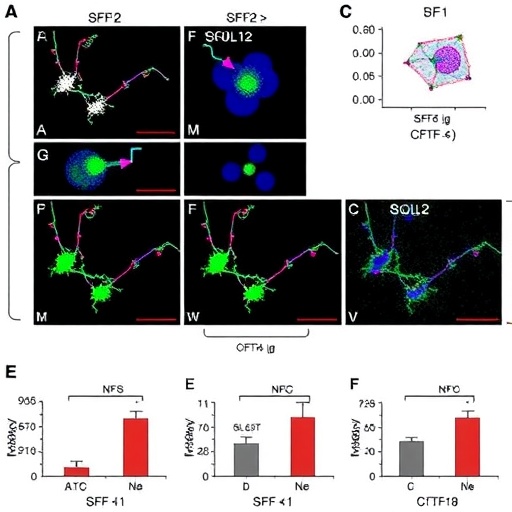
A new study in Nature Plants spotlights how plants keep their chromosomes properly wired during the critical process of meiosis. Researchers report that a deSUMOylase enzyme called SPF2, together with two cohesin regulators—SGO2 and CTF18—forms a coordinated defense against unwanted crossover events close to centromeres, the chromosome regions that help ensure accurate segregation.
During meiosis, homologous chromosomes must exchange DNA through crossover formation. These exchanges are not random: their location affects how reliably chromosomes separate. Crossovers too near centromeres can destabilize meiotic progression, increasing the risk of errors that would otherwise compromise fertility.
The team focused on the functional interplay between SPF2 and cohesin-associated control factors. SUMOylation—an essential protein modification pathway—can act like molecular “switching” for many chromosomal proteins. By removing SUMO tags, SPF2 helps tune the activity or stability of meiotic regulators, shifting the balance of where recombination is permitted to occur.
SGO2 and CTF18 are known to modulate cohesin, the ring-like protein complex that holds sister chromatids together. Cohesin dynamics are tightly regulated in space and time, and centromeres are particularly sensitive because they must support proper kinetochore attachment while still guiding meiotic recombination toward safe genomic neighborhoods.
Using genetic and cytological approaches, the authors show that disrupting SPF2 or its cohesin regulatory partners leads to a measurable increase in crossover frequency near centromeres. This pattern suggests that these proteins normally create a restrictive microenvironment, limiting recombination in the centromere-proximal zone.
Mechanistically, the study supports a model in which altered SUMO signaling and compromised cohesin regulation change how recombination intermediates are processed. Instead of being redirected or suppressed, crossover-prone structures appear more readily in regions where they are typically avoided.
The findings carry broader implications beyond plants. Because the choreography of SUMOylation and cohesin is conserved across eukaryotes, the work hints at universal strategies cells use to preserve genome integrity—especially in the most structurally complex chromosomal territories.
Ultimately, the paper reframes centromeres as active regulatory hubs that do not simply “hold” chromosomes, but actively shape the recombination landscape. By suppressing risky exchanges near centromeres, SPF2, SGO2, and CTF18 help protect the fidelity of meiosis and the continuity of plant reproduction.
Cite Scienmag News
Drew Townsend. (July 26, 2026). SPF2 and SGO2/CTF18 limit centromere-near crossovers by regulating SUMOylation. Scienmag. https://scienmag.com/spf2-and-sgo2-ctf18-limit-centromere-near-crossovers-by-regulating-sumoylation/
Drew Townsend. "SPF2 and SGO2/CTF18 limit centromere-near crossovers by regulating SUMOylation." Scienmag, 26 July 2026, https://scienmag.com/spf2-and-sgo2-ctf18-limit-centromere-near-crossovers-by-regulating-sumoylation/. Accessed 4 September 2026.
Drew Townsend. "SPF2 and SGO2/CTF18 limit centromere-near crossovers by regulating SUMOylation." Scienmag. July 26, 2026. https://scienmag.com/spf2-and-sgo2-ctf18-limit-centromere-near-crossovers-by-regulating-sumoylation/


