

Sunday, July 26, 2026
Science
No Result
View All Result
  • Login
  • HOME
  • SCIENCE NEWS
  • CONTACT US
  • HOME
  • SCIENCE NEWS
  • CONTACT US
No Result
View All Result
Scienmag
No Result
View All Result
Home Science News Medicine

Mitochondrial Metabolism Predicts Chemotherapy Sensitivity in Colorectal Cancer

July 26, 2026
in Medicine
Reading Time: 2 mins read
0
Mitochondrial Metabolism Predicts Chemotherapy Sensitivity in Colorectal Cancer

Mitochondrial Metabolism Predicts Chemotherapy Sensitivity in Colorectal Cancer

65
SHARES
587
VIEWS
Share on FacebookShare on Twitter
ADVERTISEMENT

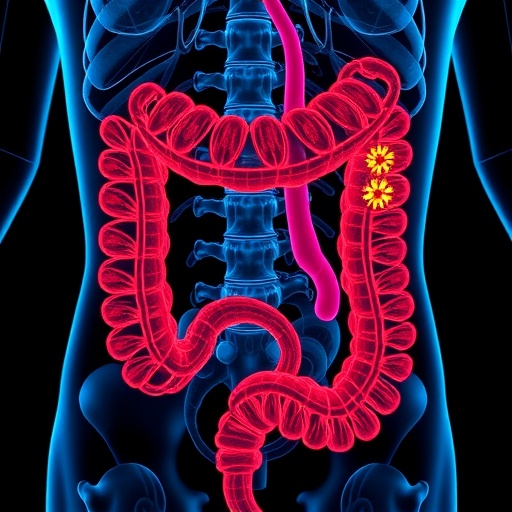
A new study suggests that the way cancer cells run their mitochondria—tiny energy factories inside the cell—can predict how well colorectal tumors respond to chemotherapy. Reporting in Nature Metabolism, researchers led by D.Y. Moss and colleagues analyze tumor behavior through the lens of mitochondrial metabolism, revealing a link between bioenergetic state and drug sensitivity. The findings raise the prospect of more rational treatment selection based on metabolic signatures.

The team focuses on how mitochondrial pathways shape the balance between energy production and cellular stress. By tuning processes such as oxidative metabolism and related bioenergetic flux, tumor cells can either become more vulnerable to chemotherapy or develop a protective metabolic phenotype. In other words, the same treatment may succeed or fail depending on the mitochondria’s operating mode.

To connect mitochondrial function with therapeutic outcomes, the researchers compare metabolic features across colorectal cancer contexts and assess how these traits associate with response to standard chemotherapeutic regimens. Their analysis emphasizes that chemotherapy sensitivity is not solely determined by canonical genetic factors, but also by the cell’s energetic wiring and its capacity to manage damaging stress.

Mechanistically, the study highlights that mitochondrial metabolism influences downstream vulnerability during treatment. When mitochondria are engaged in particular metabolic programs, they can alter redox balance, oxygen usage, and the ability of cells to buffer injury. Those shifts may change whether chemotherapy triggers lethal damage or is effectively resisted.

The authors also discuss mitochondrial activity in relation to cellular decision-making under therapeutic pressure. Metabolic state can modulate signaling networks that govern survival, proliferation, and stress responses. This creates a plausible pathway from mitochondria-centered metabolism to whole-tumor drug responsiveness.

Importantly for clinical translation, the work frames mitochondrial metabolic features as potential biomarkers. If validated in larger patient cohorts, such markers could help clinicians stratify patients before treatment, reducing trial-and-error and improving outcomes. The approach also suggests that metabolic profiling might reveal hidden resistance mechanisms.

Beyond prediction, the results imply opportunities for combination strategies. If chemotherapy response depends on mitochondrial function, then drugs that reshape mitochondrial metabolism could potentially sensitize tumors that would otherwise resist standard regimens.

Overall, the study positions mitochondria as more than energy producers in colorectal cancer—they may be decision hubs that determine whether chemotherapy delivers irreparable harm. With metastasis and drug resistance remaining major clinical hurdles, metabolic biomarkers and mitochondria-targeted interventions could become increasingly important.

Subject of Research: Colorectal cancer chemotherapy sensitivity; mitochondrial metabolism
Article Title: Mitochondrial metabolism determines chemotherapy sensitivity in colorectal cancer
Article References: Moss, D.Y., Brown, C.N., Shaw, A.M. et al. Mitochondrial metabolism determines chemotherapy sensitivity in colorectal cancer. Nat Metab (2026). https://doi.org/10.1038/s42255-026-01578-w
DOI: https://doi.org/10.1038/s42255-026-01578-w
Image Credits: AI Generated

Tags: bioenergetic states influencing chemotherapy efficacychemotherapy sensitivity predictionenergy production and cancer cell vulnerabilitymetabolic profiling of colorectal tumorsmetabolic signatures for therapy selectionmitochondrial bioenergetic flux in tumor cellsmitochondrial function and therapeutic outcomesMitochondrial metabolism in colorectal cancermitochondrial pathways in cancer treatmentmitochondrial stress management in cancer therapyoxidative metabolism and chemotherapy resistancetumor bioenergetics and drug response
Share26Tweet16
Previous Post

Generative AI Enables Inverse Design of 3D Energetic Materials for Tailored Combustion

Next Post

How Emotional Learning Biases Shape Everyday Food Choices

Related Posts

Structure Reveals How Trypanosome Mitochondria Coordinate RNA Editing Cascade
Medicine

Structure Reveals How Trypanosome Mitochondria Coordinate RNA Editing Cascade

July 26, 2026
ENVnet launches global molecular resource for dissolved organic matter data
Medicine

ENVnet launches global molecular resource for dissolved organic matter data

July 26, 2026
Focal Astrocyte Loss Shows Nuclear Translocation During Lesion Repopulation
Medicine

Focal Astrocyte Loss Shows Nuclear Translocation During Lesion Repopulation

July 26, 2026
ACSS2-KAT5 drives histone crotonylation to trigger MASLD-to-MASH inflammation
Medicine

ACSS2-KAT5 drives histone crotonylation to trigger MASLD-to-MASH inflammation

July 26, 2026
Androgen receptor targeting radiosensitizes glioblastoma by rewiring TGF-β/Smad3 signaling
Medicine

Androgen receptor targeting radiosensitizes glioblastoma by rewiring TGF-β/Smad3 signaling

July 26, 2026
Maternal Wildfire Exposure Linked to Neonatal Outcomes in 28-Year Chile Study
Medicine

Maternal Wildfire Exposure Linked to Neonatal Outcomes in 28-Year Chile Study

July 26, 2026
Next Post
How Emotional Learning Biases Shape Everyday Food Choices

How Emotional Learning Biases Shape Everyday Food Choices

  • Mothers who receive childcare support from maternal grandparents show more

    Mothers who receive childcare support from maternal grandparents show more parental warmth, finds NTU Singapore study

    27656 shares
    Share 11059 Tweet 6912
  • University of Seville Breaks 120-Year-Old Mystery, Revises a Key Einstein Concept

    1061 shares
    Share 424 Tweet 265
  • Bee body mass, pathogens and local climate influence heat tolerance

    682 shares
    Share 273 Tweet 171
  • Researchers record first-ever images and data of a shark experiencing a boat strike

    546 shares
    Share 218 Tweet 137
  • Groundbreaking Clinical Trial Reveals Lubiprostone Enhances Kidney Function

    531 shares
    Share 212 Tweet 133
Science

Embark on a thrilling journey of discovery with Scienmag.com—your ultimate source for cutting-edge breakthroughs. Immerse yourself in a world where curiosity knows no limits and tomorrow’s possibilities become today’s reality!

RECENT NEWS

  • JMIR News Highlights Health Tech Industry Trends and Innovations
  • Satellite Sentinel-2 Drought Forecasting in Austria Using Random Forest and Deep Learning
  • Cafeteria Menu Revamp Could Lower Students’ Sugar and Salt Consumption
  • How Quantum Computers Lose Power and Halt Calculations

Categories

  • Agriculture
  • Anthropology
  • Archaeology
  • Athmospheric
  • Biology
  • Biotechnology
  • Blog
  • Bussines
  • Cancer
  • Chemistry
  • Climate
  • Earth Science
  • Editorial Policy
  • Marine
  • Mathematics
  • Medicine
  • Pediatry
  • Policy
  • Psychology & Psychiatry
  • Science Education
  • Social Science
  • Space
  • Technology and Engineering

Subscribe to Blog via Email

Enter your email address to subscribe to this blog and receive notifications of new posts by email.

Join 5,146 other subscribers

© 2025 Scienmag - Science Magazine

Welcome Back!

Login to your account below

Forgotten Password?

Retrieve your password

Please enter your username or email address to reset your password.

Log In
No Result
View All Result
  • HOME
  • SCIENCE NEWS
  • CONTACT US

© 2025 Scienmag - Science Magazine

Discover more from Science

Subscribe now to keep reading and get access to the full archive.

Continue reading
