


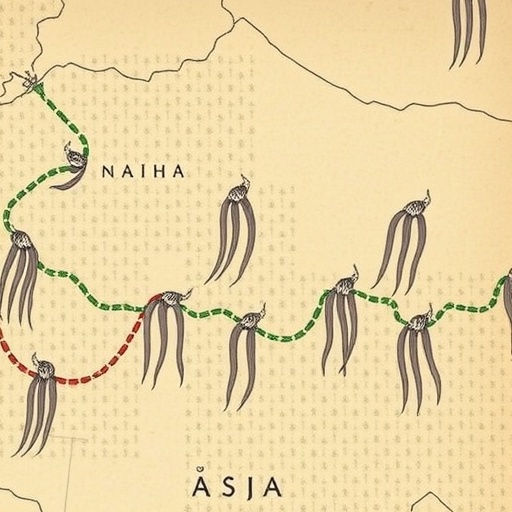
Silk—often treated as the star of the ancient “Silk Road”—may have started traveling much earlier than historians assumed. New archaeological research from Washington University in St. Louis reports direct evidence that silkworm cultivation reached southern Central Asia around 2,000 BCE, nearly 2,000 years before the era typically associated with the Silk Road’s peak.
The breakthrough comes from three exceptionally well-preserved silkworm cocoons recovered at Bronze Age sites along the Surkhan-Darya River in Uzbekistan, including Sapalli Tepe. Local arid conditions helped keep the cocoons intact long enough for scientists to identify them among plant seeds and charcoal fragments.
Researchers extracted silk proteins from the cocoons and used radiocarbon dating to establish reliable timelines. The results confirm the cocoons belong to the domesticated silkworm species, Bombyx mori. According to the study’s corresponding author, Xinyi Liu, these cocoons provide the oldest dependable archaeological record of preserved silkworm remains with direct radiocarbon dates.
The implications are striking: Bombyx mori is tightly linked to the mulberry-based sericulture tradition that originated in ancient China. This evidence therefore suggests that the East Asian silk system—mulberry feeding and domesticated silkworm rearing—had already been established in southern Central Asia by about 4,000 years ago.
At Sapalli Tepe, scientists also found charcoal identified as mulberry wood, strengthening the ecological case for a working sericulture setup rather than a stray imported product. Additional evidence includes citrus wood charcoal, supporting an interpretation of wider cultivated plant presence in the region during this period.
Together, the material record points to an early dispersal pathway that may have crossed the Himalayas instead of following strictly an inner-Asian route. Yet the team notes that silk traditions in South Asia historically relied heavily on non-Bombyx silkworm species, so the study raises a key open question: why did a Bombyx-centered silk tradition not persist clearly there?
Beyond silk, the findings fit a growing pattern of early globalization across Eurasia during the third and second millennia BCE. Similar evidence has already linked ancient China to Central and South Asia through the movement of cereals, fruits, metallurgy, and domesticated livestock.
“Making silk fibers” now appears to belong to this earlier exchange network, pushing the development of sericulture into a Bronze Age timeline rather than a Silk Road narrative centered on later Roman-Han commerce. If confirmed and expanded by future digs around the Tibetan Plateau, silk may join cereals and animals as a viral hallmark of early interconnection.
Cite Scienmag News
Courtney Benton. (July 26, 2026). Silkworm Farming in Southern Central Asia Preceded the Silk Road. Scienmag. https://scienmag.com/silkworm-farming-in-southern-central-asia-preceded-the-silk-road/
Courtney Benton. "Silkworm Farming in Southern Central Asia Preceded the Silk Road." Scienmag, 26 July 2026, https://scienmag.com/silkworm-farming-in-southern-central-asia-preceded-the-silk-road/. Accessed 3 September 2026.
Courtney Benton. "Silkworm Farming in Southern Central Asia Preceded the Silk Road." Scienmag. July 26, 2026. https://scienmag.com/silkworm-farming-in-southern-central-asia-preceded-the-silk-road/


