

Saturday, July 18, 2026
Science
No Result
View All Result
  • Login
  • HOME
  • SCIENCE NEWS
  • CONTACT US
  • HOME
  • SCIENCE NEWS
  • CONTACT US
No Result
View All Result
Scienmag
No Result
View All Result
Home Science News Technology and Engineering

AI Identifies Environmental Chemicals with Highest Potential Health Risks

July 17, 2026
in Technology and Engineering
Reading Time: 2 mins read
0
AI Identifies Environmental Chemicals with Highest Potential Health Risks

AI Identifies Environmental Chemicals with Highest Potential Health Risks

65
SHARES
587
VIEWS
Share on FacebookShare on Twitter
ADVERTISEMENT

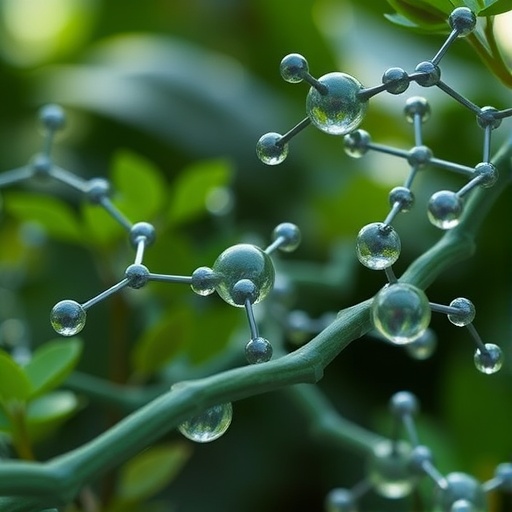
Artificial intelligence is accelerating the identification of chemical exposures across environmental media and within the human body. Yet simply detecting more molecules is not enough to explain why some exposures translate into disease risk. A new perspective reframes the goal of chemical exposomics: the central challenge is to determine which measured exposures are most likely to perturb biological systems and drive pathogenic pathways.

Published in Artificial Intelligence & Environment, the article argues for a shift toward “functional chemical exposomics.” This emerging paradigm combines high-resolution mass spectrometry, machine-learning models, toxicology knowledge bases, and biological response data. Together, these inputs aim to move from chemical inventories toward predictions of biological impact.

Exposomics studies the total spectrum of environmental chemicals encountered over a lifetime. Modern analytical platforms can generate thousands of signals from blood, urine, tissues, and environmental samples. However, many features remain unidentified, while the biological relevance of others is difficult to interpret using conventional toxicology alone.

The authors propose transforming AI from a discovery tool into a functional prediction engine. In practice, models would integrate chemical structure information with toxicity forecasts, molecular interaction patterns, and downstream changes in genes, proteins, and metabolites. Each candidate exposure could be assigned an activity-risk score, enabling researchers to prioritize which signals deserve costly laboratory validation.

A key element of the proposed workflow is causal inference. Because exposure–outcome associations in observational data can be confounded, machine-learning methods designed for causal questions may help separate meaningful biological effects from spurious correlations.

The framework also highlights mixture complexity, where multiple co-occurring chemicals may produce additive, synergistic, or antagonistic effects. Addressing this requires models that can learn from heterogeneous datasets and account for the uncertainty introduced by incomplete chemical annotation.

Despite the promise, the article emphasizes ongoing obstacles: limited high-quality training datasets, unobserved confounding factors, and the need for transparent, interpretable predictions. Ultimately, experimental verification—using cell systems, organoids, or animal models—remains essential for confirming model-driven hypotheses.

The perspective concludes that progress depends on cross-disciplinary collaboration among chemists, toxicologists, epidemiologists, bioinformaticians, and computer scientists. By turning exposomics into a predictive and preventive capability, AI could support more targeted public health interventions rather than broad, undifferentiated chemical monitoring.


Subject of Research: Functional chemical exposomics using AI/ML to predict biologically relevant environmental exposures
Article Title: Advancing AI/ML-driven chemical exposomics to identify biologically relevant environmental exposures
News Publication Date: 29-Apr-2026
Web References: http://dx.doi.org/10.66178/aie-0026-0008
References: Luan H; Luan T. AI Environ. 2026, 1(2): 77-82. DOI: 10.66178/aie-0026-0008
Image Credits: Hemi Luan, Tiangang Luan

Keywords

Artificial intelligence; machine learning; chemical exposomics; mass spectrometry; toxicity prediction; causal inference; biological response

Tags: advanced analytical platforms for environmental healthAI-driven toxicology predictionbiological impact of environmental chemicalsbiological response data integrationchemical structure-based toxicity forecastingenvironmental chemical exposure risk assessmentexposome-wide health risk analysisfunctional chemical exposomicshigh-resolution mass spectrometry in exposomicsmachine learning models for chemical toxicitymolecular interaction patterns in toxicologypredicting disease risk from chemical exposures
Share26Tweet16
Previous Post

Texas Tech Veterinary Students Publish Research in International Journals

Next Post

Avian Influenza Ecological Shifts After HPAIV Arrivals in Southwestern Alaska, 2011–2024

Related Posts

UVA Engineer Geoff Geise Wins NAMS Permeance Prize for Mid-Career Excellence
Technology and Engineering

UVA Engineer Geoff Geise Wins NAMS Permeance Prize for Mid-Career Excellence

July 18, 2026
UMN researcher wins $3.7 million NIH grant to advance AI glaucoma care
Technology and Engineering

UMN researcher wins $3.7 million NIH grant to advance AI glaucoma care

July 17, 2026
CRISPR, AI, and Personalized Approaches Shape the Future of Pediatric Gene Therapy
Technology and Engineering

CRISPR, AI, and Personalized Approaches Shape the Future of Pediatric Gene Therapy

July 17, 2026
Researchers Identify Optimal Conditions for Safer, Longer-Lasting Lithium Metal Batteries
Technology and Engineering

Researchers Identify Optimal Conditions for Safer, Longer-Lasting Lithium Metal Batteries

July 17, 2026
Unraveling Europe’s Energy Crisis with Structural Causal Models
Technology and Engineering

Unraveling Europe’s Energy Crisis with Structural Causal Models

July 17, 2026
Biomarker Validation Tests Accuracy of Maternal Reports on Infant Smoke Exposure
Technology and Engineering

Biomarker Validation Tests Accuracy of Maternal Reports on Infant Smoke Exposure

July 17, 2026
Next Post
Avian Influenza Ecological Shifts After HPAIV Arrivals in Southwestern Alaska, 2011–2024

Avian Influenza Ecological Shifts After HPAIV Arrivals in Southwestern Alaska, 2011–2024

  • Mothers who receive childcare support from maternal grandparents show more

    Mothers who receive childcare support from maternal grandparents show more parental warmth, finds NTU Singapore study

    27656 shares
    Share 11059 Tweet 6912
  • University of Seville Breaks 120-Year-Old Mystery, Revises a Key Einstein Concept

    1061 shares
    Share 424 Tweet 265
  • Bee body mass, pathogens and local climate influence heat tolerance

    682 shares
    Share 273 Tweet 171
  • Researchers record first-ever images and data of a shark experiencing a boat strike

    546 shares
    Share 218 Tweet 137
  • Groundbreaking Clinical Trial Reveals Lubiprostone Enhances Kidney Function

    531 shares
    Share 212 Tweet 133
Science

Embark on a thrilling journey of discovery with Scienmag.com—your ultimate source for cutting-edge breakthroughs. Immerse yourself in a world where curiosity knows no limits and tomorrow’s possibilities become today’s reality!

RECENT NEWS

  • UVA Engineer Geoff Geise Wins NAMS Permeance Prize for Mid-Career Excellence
  • Organic fertilizer helps biochar immobilize cadmium in contaminated soil
  • Cannabis Exposure Alters Reelin Signaling in Schizophrenia-Like Dual-Hit Mice
  • Avian Influenza Ecological Shifts After HPAIV Arrivals in Southwestern Alaska, 2011–2024

Categories

  • Agriculture
  • Anthropology
  • Archaeology
  • Athmospheric
  • Biology
  • Biotechnology
  • Blog
  • Bussines
  • Cancer
  • Chemistry
  • Climate
  • Earth Science
  • Editorial Policy
  • Marine
  • Mathematics
  • Medicine
  • Pediatry
  • Policy
  • Psychology & Psychiatry
  • Science Education
  • Social Science
  • Space
  • Technology and Engineering

Subscribe to Blog via Email

Enter your email address to subscribe to this blog and receive notifications of new posts by email.

Join 5,146 other subscribers

© 2025 Scienmag - Science Magazine

Welcome Back!

Login to your account below

Forgotten Password?

Retrieve your password

Please enter your username or email address to reset your password.

Log In
No Result
View All Result
  • HOME
  • SCIENCE NEWS
  • CONTACT US

© 2025 Scienmag - Science Magazine

Discover more from Science

Subscribe now to keep reading and get access to the full archive.

Continue reading
