

Friday, July 17, 2026
Science
No Result
View All Result
  • Login
  • HOME
  • SCIENCE NEWS
  • CONTACT US
  • HOME
  • SCIENCE NEWS
  • CONTACT US
No Result
View All Result
Scienmag
No Result
View All Result
Home Science News Medicine

CD33 and Clusterin Physically and Genetically Interact to Shape Alzheimer Risk

July 17, 2026
in Medicine
Reading Time: 2 mins read
0
CD33 and Clusterin Physically and Genetically Interact to Shape Alzheimer Risk

CD33 and Clusterin Physically and Genetically Interact to Shape Alzheimer Risk

65
SHARES
587
VIEWS
Share on FacebookShare on Twitter
ADVERTISEMENT

In a new viral-science report, researchers say they have uncovered how two Alzheimer-associated proteins—CD33 and clusterin (CLU)—team up at the molecular level and through inherited genetic variation. The findings, reported in Nature Communications (2026), connect biophysical interactions with population-scale risk signals, offering a more unified explanation for why Alzheimer susceptibility is shaped by immune and protein-homeostasis pathways.

CD33 is a receptor expressed on myeloid cells, including microglia, where it helps tune immune responses in the brain. Clusterin, meanwhile, is a secreted chaperone implicated in protein folding, clearance, and lipid transport, and it has long appeared in genetic and pathological studies of neurodegeneration. By focusing on both proteins together, the study addresses a longstanding question: are their genetic associations merely correlated, or do they reflect a direct functional relationship?

Using biochemical and biophysical assays, the team mapped how CD33 and clusterin physically interact. They report interaction features consistent with specific binding geometry rather than nonspecific association, suggesting that clusterin can influence CD33-related signaling or trafficking. This matters because small changes in receptor regulation can reshape how microglia respond to amyloid and other neurotoxic cues.

To connect molecules to risk, the researchers integrated genetic analyses. They describe evidence that variants impacting CD33 and CLU jointly associate with Alzheimer risk, implying coordinated effects. Importantly, the gene–gene relationship supports the idea that Alzheimer biology is not driven by single factors in isolation, but by networks that converge on shared cellular processes.

Mechanistically, the authors propose that clusterin may modulate CD33’s role in immune sensing, potentially altering downstream pathways linked to amyloid processing and inflammatory tone. If correct, this would place clusterin at a decision point where secreted protein quality control intersects with microglial receptor behavior.

The “viral” implication for readers is that Alzheimer risk may be influenced by a combined molecular handshake—one mediated by direct protein contacts and reinforced by human genetic variation. Such coupling strengthens the case for targeting the interaction interface or the pathways that regulate it.

Therapeutically, the study hints at strategies beyond simply adjusting amyloid levels. If CD33–CLU crosstalk shifts microglial responses, then modulating their interaction could recalibrate neuroinflammation and clearance mechanisms simultaneously.

While the work is still preclinical in scope, it provides a concrete, testable mechanism that bridges molecular interaction and inherited risk. That combination—biophysics plus genetics—may accelerate the search for druggable targets that align with how Alzheimer susceptibility actually arises.

Subject of Research: Alzheimer risk; CD33 and clusterin interaction (biophysical and genetic)

Article Title: CD33 and clusterin interact biophysically and genetically to modulate Alzheimer risk.

Article References: Dodd, R.B., Enomoto, M., Zhou, Y. et al. CD33 and clusterin interact biophysically and genetically to modulate Alzheimer risk. Nat Commun (2026). https://doi.org/10.1038/s41467-026-75140-3

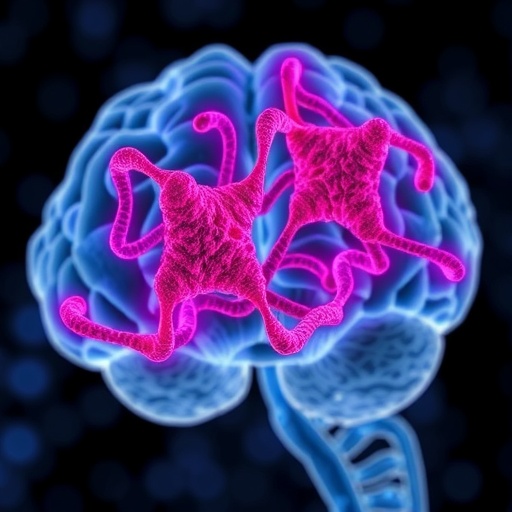
Image Credits: AI Generated

Tags: Alzheimer's disease genetic risk factorsamyloid clearance mechanismsbiophysical assays of protein interactionsCD33 microglia receptor functionclusterin protein chaperone rolegenetic and biochemical integration in Alzheimer's riskimmune pathways in Alzheimer'simpact of receptor regulation on neurodegenerationinherited genetic variation in Alzheimer'smicroglia mediated neuroinflammationneurodegenerative disease molecular pathwaysprotein-protein interactions in neurodegeneration
Share26Tweet16
Previous Post

Unraveling Europe’s Energy Crisis with Structural Causal Models

Next Post

Mediterranean Outflow Waters Power North Atlantic Deep Convection Sites

Related Posts

Platelet Reactivity in Older Polymorbid Patients and Effects of 4-Methylcatechol
Medicine

Platelet Reactivity in Older Polymorbid Patients and Effects of 4-Methylcatechol

July 17, 2026
Lurie Children’s Program Builds Pediatric Expertise to Treat More Youth Depression, Study Finds
Medicine

Lurie Children’s Program Builds Pediatric Expertise to Treat More Youth Depression, Study Finds

July 17, 2026
USF Study Finds Promising Strategy to Protect Hearts in Duchenne Muscular Dystrophy
Medicine

USF Study Finds Promising Strategy to Protect Hearts in Duchenne Muscular Dystrophy

July 17, 2026
Renal Resistive Index–Guided Blood Pressure Titration in Sepsis: Randomized Trial
Medicine

Renal Resistive Index–Guided Blood Pressure Titration in Sepsis: Randomized Trial

July 17, 2026
Study Finds No Link Between Acetaminophen Use in Pregnancy and Birth Outcomes
Medicine

Study Finds No Link Between Acetaminophen Use in Pregnancy and Birth Outcomes

July 17, 2026
Bootstrapped Multimodal LLM Learns Medical Knowledge for Automatic EGD Diagnosis and Reporting
Medicine

Bootstrapped Multimodal LLM Learns Medical Knowledge for Automatic EGD Diagnosis and Reporting

July 17, 2026
Next Post
Mediterranean Outflow Waters Power North Atlantic Deep Convection Sites

Mediterranean Outflow Waters Power North Atlantic Deep Convection Sites

  • Mothers who receive childcare support from maternal grandparents show more

    Mothers who receive childcare support from maternal grandparents show more parental warmth, finds NTU Singapore study

    27656 shares
    Share 11059 Tweet 6912
  • University of Seville Breaks 120-Year-Old Mystery, Revises a Key Einstein Concept

    1061 shares
    Share 424 Tweet 265
  • Bee body mass, pathogens and local climate influence heat tolerance

    682 shares
    Share 273 Tweet 171
  • Researchers record first-ever images and data of a shark experiencing a boat strike

    546 shares
    Share 218 Tweet 137
  • Groundbreaking Clinical Trial Reveals Lubiprostone Enhances Kidney Function

    531 shares
    Share 212 Tweet 133
Science

Embark on a thrilling journey of discovery with Scienmag.com—your ultimate source for cutting-edge breakthroughs. Immerse yourself in a world where curiosity knows no limits and tomorrow’s possibilities become today’s reality!

RECENT NEWS

  • Ice-to-ocean method tracks mercury mobilization and export from Greenland ice sheet
  • Platelet Reactivity in Older Polymorbid Patients and Effects of 4-Methylcatechol
  • How culture, tasks, and biology shape spatial-number associations
  • Researchers Identify Optimal Conditions for Safer, Longer-Lasting Lithium Metal Batteries

Categories

  • Agriculture
  • Anthropology
  • Archaeology
  • Athmospheric
  • Biology
  • Biotechnology
  • Blog
  • Bussines
  • Cancer
  • Chemistry
  • Climate
  • Earth Science
  • Editorial Policy
  • Marine
  • Mathematics
  • Medicine
  • Pediatry
  • Policy
  • Psychology & Psychiatry
  • Science Education
  • Social Science
  • Space
  • Technology and Engineering

Subscribe to Blog via Email

Enter your email address to subscribe to this blog and receive notifications of new posts by email.

Join 5,146 other subscribers

© 2025 Scienmag - Science Magazine

Welcome Back!

Login to your account below

Forgotten Password?

Retrieve your password

Please enter your username or email address to reset your password.

Log In
No Result
View All Result
  • HOME
  • SCIENCE NEWS
  • CONTACT US

© 2025 Scienmag - Science Magazine

Discover more from Science

Subscribe now to keep reading and get access to the full archive.

Continue reading
