

Friday, September 4, 2026
Science
No Result
View All Result
  • Login
  • HOME
  • SCIENCE NEWS
  • CONTACT US
  • HOME
  • SCIENCE NEWS
  • CONTACT US
No Result
View All Result
Scienmag
No Result
View All Result
Home Science News Biology

TSPAN7 Builds Transmembrane Skeleton, Stabilizing Tubular Membranes via Spiral Assembly

July 16, 2026
in Biology
Drew Townsend
By Drew Townsend Scienmag Editorial Profile - Cell Biology
Reading Time: 2 mins read
0
TSPAN7 Builds Transmembrane Skeleton, Stabilizing Tubular Membranes via Spiral Assembly

TSPAN7 Builds Transmembrane Skeleton, Stabilizing Tubular Membranes via Spiral Assembly

65
SHARES
587
VIEWS
Share on FacebookShare on Twitter
ADVERTISEMENT

Tetraspanins are four-transmembrane proteins best known for organizing cell membranes into specialized microdomains that recruit lipids and partner proteins. Over the past few years, several tetraspanins have also been shown to form ordered polymer assemblies, raising the possibility that these structures may act as functional scaffolds. Yet for TSPAN7, linked to intellectual disability, viral infection, diabetes, and cancer progression, the physical mechanism behind how it shapes and stabilizes tubular membrane structures remained unclear.

In a new study published in Vita, researchers show that TSPAN7 directly senses membrane curvature and polymerizes into a helical assembly on tubular membranes. Using a combination of live-cell imaging, in vitro reconstitution, and cryo-electron tomography, they uncover how individual TSPAN7 protomers self-assemble into a multi-start helix through two conserved interaction interfaces.

The team first observed that TSPAN7 accumulates on retraction fibers and tunneling nanotubes, and that elevating TSPAN7 expression enhances the formation of these structures. To test whether curvature recognition is intrinsic to TSPAN7, they reconstituted membrane tubes using giant unilamellar vesicles (GUVs). Without TSPAN7, the tubular network rapidly collapses into vesicles. With recombinant TSPAN7 present, TSPAN7 rapidly concentrates at the tubular network and preserves its curvature-dependent morphology.

Functional dynamics reinforced this model. Fluorescence recovery after photobleaching (FRAP) experiments showed TSPAN7 is largely immobile on retraction fibers and tunneling nanotubes, unlike other tetraspanin family members that display typical lateral diffusion. This immobilization persisted even after actin disruption with latrunculin A, suggesting the behavior arises from ordered polymerization rather than cytoskeletal coupling.

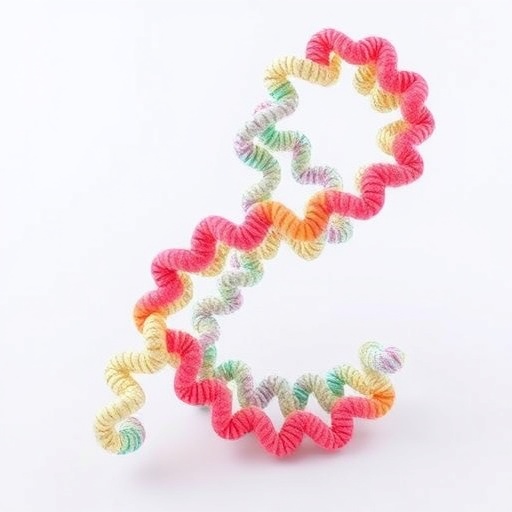
To visualize the molecular architecture, the authors used in situ cryo-EM and cryo-ET. TSPAN7 formed a highly ordered, right-handed helical structure on membrane tubes, with multiple protofilaments wrapping around the lipid membrane. Importantly, they identified two key protomer–protomer interfaces that drive assembly.

A double mutant designed to disrupt both interfaces failed to form spirals, regained mobility, and could not stabilize tubular membranes in vitro. Under microfluidic shear, cells expressing this spiral-deficient mutant exhibited exaggerated, deformation-prone membrane protrusions, whereas cells expressing wild-type TSPAN7 resisted tube constriction.

Together, the work supports a model in which TSPAN7 polymerizes into a membrane-embedded “transmembrane skeleton” that mechanically resists deformation. Notably, TSPAN7 and F-actin appear to occupy largely non-overlapping regions on protrusions, implying coordinated but distinct contributions to maintaining delicate membrane integrity.

By reframing a tetraspanin as an autonomous curvature sensor and intrinsic structural reinforcement, the study introduces a new conceptual class of membrane skeletal architecture. For viral and disease-relevant contexts where tubular conduits may facilitate spread and signaling, TSPAN7’s helical scaffold suggests a mechanistic lever that cells—and pathogens—may exploit.

Subject of Research: Cell biology
Article Title: Polymerization of tetraspanin 7 into helical transmembrane skeletons for tubular membrane stabilization
News Publication Date: 9-Jun-2026
Web References: http://dx.doi.org/10.15302/vita.2026.05.0039
References: 10.15302/vita.2026.05.0039
Image Credits: HIGHER EDUCATION PRESS
Keywords: tetraspanin 7, membrane curvature sensing, helical polymerization, tubular membrane stabilization, retraction fibers, tunneling nanotubes, cryo-electron tomography, transmembrane skeleton, cytoskeleton mechanics, viral infection

Article Title: TSPAN7 Builds Transmembrane Skeleton, Stabilizing Tubular Membranes via Spiral Assembly

Article References: Original research article

Image Credits: AI Generated

DOI: Not provided

Keywords: cryo-electron tomography of membrane structures, live-cell imaging of membrane dynamics, Membrane curvature sensing, protein-mediated membrane stabilization, reconstitution of membrane tubes with GUVs, role of tetraspanins in membrane architecture, spiral assembly of membrane proteins, stabilization of tubular membranes, TSPAN7 in cell membrane microdomains, TSPAN7 in disease progression, TSPAN7 polymerization mechanism, TSPAN7 transmembrane protein

Cite Scienmag News

Drew Townsend. (July 16, 2026). TSPAN7 Builds Transmembrane Skeleton, Stabilizing Tubular Membranes via Spiral Assembly. Scienmag. https://scienmag.com/tspan7-builds-transmembrane-skeleton-stabilizing-tubular-membranes-via-spiral-assembly/


Drew Townsend. "TSPAN7 Builds Transmembrane Skeleton, Stabilizing Tubular Membranes via Spiral Assembly." Scienmag, 16 July 2026, https://scienmag.com/tspan7-builds-transmembrane-skeleton-stabilizing-tubular-membranes-via-spiral-assembly/. Accessed 4 September 2026.

Drew Townsend. "TSPAN7 Builds Transmembrane Skeleton, Stabilizing Tubular Membranes via Spiral Assembly." Scienmag. July 16, 2026. https://scienmag.com/tspan7-builds-transmembrane-skeleton-stabilizing-tubular-membranes-via-spiral-assembly/

Tags: cryo-electron tomography of membrane structureslive-cell imaging of membrane dynamicsMembrane curvature sensingprotein-mediated membrane stabilizationreconstitution of membrane tubes with GUVsrole of tetraspanins in membrane architecturespiral assembly of membrane proteinsstabilization of tubular membranesTSPAN7 in cell membrane microdomainsTSPAN7 in disease progressionTSPAN7 polymerization mechanismTSPAN7 transmembrane protein
Share26Tweet16
Previous Post

Invertebrates Can Discriminate Specific Bacteria, Study Finds

Next Post

Political Leaders Are More Polarized on Climate Change Than Voters

Related Posts

Losing desmoplakin in lung epithelium triggers fibrotic Wnt signaling in vitro
Biology

Losing desmoplakin in lung epithelium triggers fibrotic Wnt signaling in vitro

September 4, 2026
Genetic diversity of full-length HLA-E gene characterized in Estonians
Biology

Genetic diversity of full-length HLA-E gene characterized in Estonians

September 4, 2026
Microcapsules deliver probiotic-derived extracellular vesicles via mucosal adhesion
Biology

Microcapsules deliver probiotic-derived extracellular vesicles via mucosal adhesion

September 4, 2026
Narcissus transcriptomics reveals modified ABCDE model and double flower mechanism
Biology

Narcissus transcriptomics reveals modified ABCDE model and double flower mechanism

September 4, 2026
Cyclin gene evolution in Arabidopsis and Brassica links polyploid duplication to flowering time
Biology

Cyclin gene evolution in Arabidopsis and Brassica links polyploid duplication to flowering time

September 3, 2026
Genetic Structure and Environment-Linked Loci in a Resilient Coral Along Eutrophication Gradient
Biology

Genetic Structure and Environment-Linked Loci in a Resilient Coral Along Eutrophication Gradient

September 3, 2026
Next Post
Political Leaders Are More Polarized on Climate Change Than Voters

Political Leaders Are More Polarized on Climate Change Than Voters

  • Mothers who receive childcare support from maternal grandparents show more optimized

    Mothers who receive childcare support from maternal grandparents show more parental warmth, finds NTU Singapore study

    27656 shares
    Share 11059 Tweet 6912
  • University of Seville Breaks 120-Year-Old Mystery, Revises a Key Einstein Concept

    1061 shares
    Share 424 Tweet 265
  • Bee body mass, pathogens and local climate influence heat tolerance

    682 shares
    Share 273 Tweet 171
  • Researchers record first-ever images and data of a shark experiencing a boat strike

    546 shares
    Share 218 Tweet 137
  • Groundbreaking Clinical Trial Reveals Lubiprostone Enhances Kidney Function

    531 shares
    Share 212 Tweet 133
Science

Embark on a thrilling journey of discovery with Scienmag.com—your ultimate source for cutting-edge breakthroughs. Immerse yourself in a world where curiosity knows no limits and tomorrow’s possibilities become today’s reality!

RECENT NEWS

  • Martian Homopause Variability Revealed by Climate Models and Observations
  • Econometric and machine learning models improve volatility forecasting with capacity control
  • How AI systems reshape human judgement in mediated society
  • Quantum computers tackle image loading and classification at utility scale

Categories

  • Agriculture
  • Anthropology
  • Archaeology
  • Athmospheric
  • Biology
  • Biotechnology
  • Blog
  • Bussines
  • Cancer
  • Chemistry
  • Climate
  • Earth Science
  • Editorial Policy
  • Marine
  • Mathematics
  • Medicine
  • Pediatry
  • Policy
  • Psychology & Psychiatry
  • Science Education
  • Social Science
  • Space
  • Technology and Engineering

Subscribe to Blog via Email

Enter your email address to subscribe to this blog and receive notifications of new posts by email.

Join 5,151 other subscribers

© 2025 Scienmag - Science Magazine

Welcome Back!

Login to your account below

Forgotten Password?

Retrieve your password

Please enter your username or email address to reset your password.

Log In
No Result
View All Result
  • HOME
  • SCIENCE NEWS
  • CONTACT US

© 2025 Scienmag - Science Magazine

Discover more from Science

Subscribe now to keep reading and get access to the full archive.

Continue reading