

Thursday, July 16, 2026
Science
No Result
View All Result
  • Login
  • HOME
  • SCIENCE NEWS
  • CONTACT US
  • HOME
  • SCIENCE NEWS
  • CONTACT US
No Result
View All Result
Scienmag
No Result
View All Result
Home Science News Medicine

Scalable Nearly-Pure MOF Membranes Enable Energy-Efficient Gas Separations

July 16, 2026
in Medicine, Technology and Engineering
Reading Time: 2 mins read
0
Scalable Nearly-Pure MOF Membranes Enable Energy-Efficient Gas Separations

Scalable Nearly-Pure MOF Membranes Enable Energy-Efficient Gas Separations

65
SHARES
587
VIEWS
Share on FacebookShare on Twitter
ADVERTISEMENT

Metal–organic framework (MOF) membranes have long promised energy savings for gas separations, yet turning laboratory breakthroughs into scalable devices has remained difficult. The central challenge is that crystalline MOFs, when processed into macroscopic membranes, often lose performance or become impractically hard to manufacture. In a new study, researchers introduce a membrane architecture designed to close the gap between intrinsic MOF selectivity and industrially compatible fabrication.

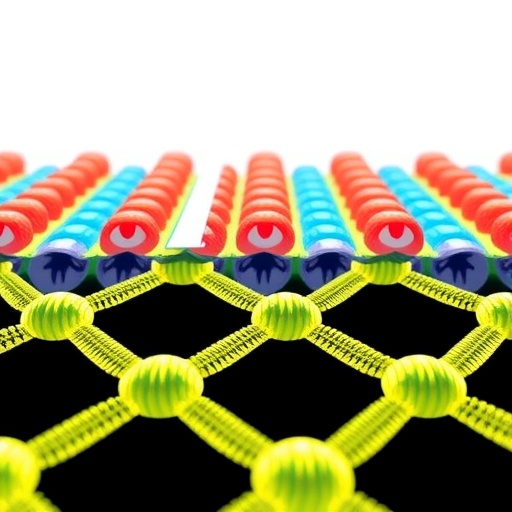
The team reports “quasi-pure” MOF membranes—materials composed of more than 90 vol% MOF—fabricated using solution-processing routes familiar to industry. The approach hinges on a merged-phase strategy that fuses MOFs and polymers into a single pseudo-continuous phase, rather than treating them as separate components. This fusion helps the resulting material behave mechanically and processably like a polymer film while retaining MOF-driven transport.

A second key innovation is tailoring MOF surface character to mimic polymer-like interfaces. With these modified surfaces, MOFs can form rheologically controlled flocculated networks even at extreme solid loadings. The result is a concentrated, crack-resistant membrane structure that can be deposited, dried, and handled without sacrificing the pore-network environment responsible for selective diffusion and adsorption.

To benchmark the concept, the researchers fabricated quasi-pure membranes from representative MOFs, including ZIF-67, CALF-20, and CuBDC. They then tested essential separations spanning hydrocarbon mixtures and carbon capture, as well as hydrogen purification. Across these targets, the membranes delivered performance approaching that of their “associated” pure MOF counterparts, indicating that the merged-phase processing does not substantially degrade the functional pore chemistry.

One headline demonstration targets propylene/propane separation, a notoriously energy-intensive industrial duty. The quasi-pure (110)-oriented ZIF-67 membranes achieve a propylene permeability of about 160 barrer and a mixed-gas selectivity near 100. The authors argue these metrics are sufficient to reach polymer-grade propylene.

Techno-economic considerations further strengthen the case: the study estimates an 80% reduction in purification cost compared with distillation, attributable to lower energy requirements when separations shift from thermal to membrane-based processes. This cost advantage, if scalable, could materially affect how propylene is produced and purified.

Crucially, the work emphasizes manufacturing relevance. The researchers report continuous roll-to-roll fabrication of the quasi-pure membranes at an industrial plant, suggesting the method can be integrated into production lines rather than confined to specialized lab settings. In doing so, they address the long-standing mismatch between crystalline membrane performance and real-world manufacturability.

By combining merged-phase chemistry, polymer-like MOF interfaces, and extreme-concentration network control, the study proposes a practical pathway for crystalline MOF membranes at scale. The quasi-pure architecture may become a template for future membrane materials that require both high selectivity and industrial throughput.

Subject of Research: Scalable quasi-pure MOF membranes for energy-efficient gas separations

Article Title: Scalable quasi-pure MOF membranes for energy-efficient gas separations

Article References: Song, S., Fan, D., Jia, X. et al. Scalable quasi-pure MOF membranes for energy-efficient gas separations. Nature (2026). https://doi.org/10.1038/s41586-026-10655-9

DOI: https://doi.org/10.1038/s41586-026-10655-9

Image Credits: AI Generated

Keywords: Metal–organic frameworks, MOF membranes, gas separation, propylene/propane, roll-to-roll fabrication, roll-to-roll manufacturing, carbon capture, hydrogen purification

Tags: crack-resistant MOF membrane structuresenergy savings in gas separationsenergy-efficient gas separation membranesfused-phase MOF-polymer compositeshigh-performance gas separation materialsindustrial application of MOF membranespolymer-like MOF surface modificationquasi-pure metal–organic framework membranesrobust MOF membrane fabrication techniquesscalable MOF membrane fabricationselective gas diffusion in MOFssolution-processing MOF membranes
Share26Tweet16
Previous Post

What Animals Do Before Going to War

Next Post

Study Finds Golf Delivers Nearly €630 Million in Finland’s Societal Benefits

Related Posts

Experts Reach Consensus on Bedside PDA Closure for Extremely Low-Birth-Weight Infants
Technology and Engineering

Experts Reach Consensus on Bedside PDA Closure for Extremely Low-Birth-Weight Infants

July 16, 2026
Medication Complexity and Risk of Rehospitalization in Older Chronic Kidney Disease Patients
Medicine

Medication Complexity and Risk of Rehospitalization in Older Chronic Kidney Disease Patients

July 16, 2026
AI-Guided CRISPR and quantum nanobiology reverse cancer cell behavior
Medicine

AI-Guided CRISPR and quantum nanobiology reverse cancer cell behavior

July 16, 2026
Genome Editing Reinvents Perilla, Boosting Potential of Traditional Herb
Technology and Engineering

Genome Editing Reinvents Perilla, Boosting Potential of Traditional Herb

July 16, 2026
Association for Molecular Pathology Honors National Cancer Institute Pathologist
Medicine

Association for Molecular Pathology Honors National Cancer Institute Pathologist

July 16, 2026
Maternal and Cord Mitochondrial DNA Heteroplasmy, Copy Number Linked to Preterm Birth
Technology and Engineering

Maternal and Cord Mitochondrial DNA Heteroplasmy, Copy Number Linked to Preterm Birth

July 16, 2026
Next Post
Study Finds Golf Delivers Nearly €630 Million in Finland’s Societal Benefits

Study Finds Golf Delivers Nearly €630 Million in Finland’s Societal Benefits

  • Mothers who receive childcare support from maternal grandparents show more

    Mothers who receive childcare support from maternal grandparents show more parental warmth, finds NTU Singapore study

    27656 shares
    Share 11059 Tweet 6912
  • University of Seville Breaks 120-Year-Old Mystery, Revises a Key Einstein Concept

    1061 shares
    Share 424 Tweet 265
  • Bee body mass, pathogens and local climate influence heat tolerance

    682 shares
    Share 273 Tweet 171
  • Researchers record first-ever images and data of a shark experiencing a boat strike

    546 shares
    Share 218 Tweet 137
  • Groundbreaking Clinical Trial Reveals Lubiprostone Enhances Kidney Function

    531 shares
    Share 212 Tweet 133
Science

Embark on a thrilling journey of discovery with Scienmag.com—your ultimate source for cutting-edge breakthroughs. Immerse yourself in a world where curiosity knows no limits and tomorrow’s possibilities become today’s reality!

RECENT NEWS

  • Experts Reach Consensus on Bedside PDA Closure for Extremely Low-Birth-Weight Infants
  • Medication Complexity and Risk of Rehospitalization in Older Chronic Kidney Disease Patients
  • Traumatic Experiences Linked to Depression Symptoms in LGBTQ+ People in China
  • AI-Guided CRISPR and quantum nanobiology reverse cancer cell behavior

Categories

  • Agriculture
  • Anthropology
  • Archaeology
  • Athmospheric
  • Biology
  • Biotechnology
  • Blog
  • Bussines
  • Cancer
  • Chemistry
  • Climate
  • Earth Science
  • Editorial Policy
  • Marine
  • Mathematics
  • Medicine
  • Pediatry
  • Policy
  • Psychology & Psychiatry
  • Science Education
  • Social Science
  • Space
  • Technology and Engineering

Subscribe to Blog via Email

Enter your email address to subscribe to this blog and receive notifications of new posts by email.

Join 5,146 other subscribers

© 2025 Scienmag - Science Magazine

Welcome Back!

Login to your account below

Forgotten Password?

Retrieve your password

Please enter your username or email address to reset your password.

Log In
No Result
View All Result
  • HOME
  • SCIENCE NEWS
  • CONTACT US

© 2025 Scienmag - Science Magazine

Discover more from Science

Subscribe now to keep reading and get access to the full archive.

Continue reading
