


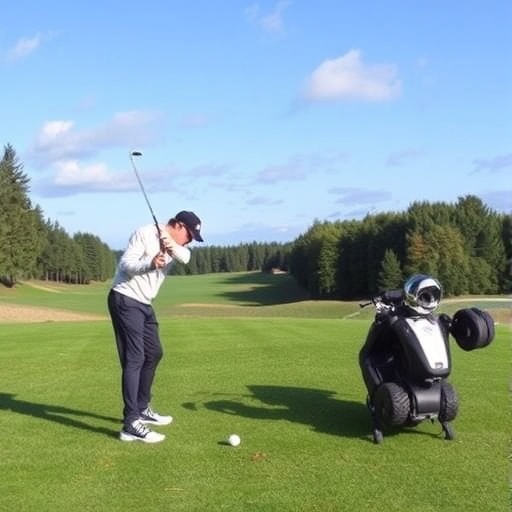
A new analysis published in Frontiers in Sports and Active Living suggests that golf in Finland is not only a pastime but a measurable public-health and economic driver. Using data from 2021, the study estimates that Finnish golfers spend about €330 million annually on the sport. It then evaluates what that spending returns to society through health effects and financial flows across the economy.
The researchers applied SROI (Social Return on Investment), a framework designed to quantify social and economic outcomes relative to the cost of an activity. Unlike conventional accounting, SROI attempts to capture “externalities”—benefits or costs that spill over beyond the individual participants. In this case, that means translating physical activity and well-being into potential healthcare savings, and tracking where players’ money circulates.
To build the analysis, the team combined an online survey conducted in May 2021 with additional evidence sources. The survey drew responses from 1,052 members of the Finnish Golf Union, supplemented by existing research, financial statements from ten golf courses, and other national economic statistics. The mixed approach supports both behavioral estimates (activity levels) and monetary impact pathways.
The money side of the calculation shows that players’ spending is widely distributed. The largest share, roughly €150 million, is linked to membership, green fees, and other on-course costs. Additional expenditures include about €59 million for equipment bought in Finland and around €50 million tied to domestic golf tourism.
Those flows propagate through sectors of the economy, contributing to wages (about €57 million), local supplier activity (about €50 million), and tourism services (about €50 million), among other channels. The study’s accounting approach treats these as downstream economic effects of sports participation.
On the health side, golfers reported substantially higher activity than the Finnish average. In the survey, 89% reported physical activity for at least four hours per week, and 59% reported vigorous activity for more than two hours weekly. The model converts those patterns into estimated societal savings and added revenues of about €80.9 million each year.
The biggest quantified benefit categories include increased tax revenues (€46.0 million), reduced institutional care costs for older people (€11.0 million), and lower disability pension costs (€8.1 million). Together, these components form the study’s social-value estimate rather than limiting the analysis to personal enjoyment.
Overall, the results produce an SROI ratio of 1.9, meaning every euro associated with golf participation is linked to nearly €1.90 in social and economic returns. When economic multiplier effects from sports and recreation services are incorporated, the estimated economic impact rises to about €370 million, total benefits to about €770 million, and the SROI ratio to 2.4.
The authors emphasize that golfers do not capture the entire societal value of their participation. While the personal benefit valuation is tied to the €330 million spending, the broader population-level gains are estimated to add roughly €300 million more—supporting the idea of golf as a middle-aged and older-adult–relevant “investment” in physical activity.
Cite Scienmag News
Courtney Benton. (July 16, 2026). Study Finds Golf Delivers Nearly €630 Million in Finland’s Societal Benefits. Scienmag. https://scienmag.com/study-finds-golf-delivers-nearly-e630-million-in-finlands-societal-benefits/
Courtney Benton. "Study Finds Golf Delivers Nearly €630 Million in Finland’s Societal Benefits." Scienmag, 16 July 2026, https://scienmag.com/study-finds-golf-delivers-nearly-e630-million-in-finlands-societal-benefits/. Accessed 3 September 2026.
Courtney Benton. "Study Finds Golf Delivers Nearly €630 Million in Finland’s Societal Benefits." Scienmag. July 16, 2026. https://scienmag.com/study-finds-golf-delivers-nearly-e630-million-in-finlands-societal-benefits/


