

Friday, September 4, 2026
Science
No Result
View All Result
  • Login
  • HOME
  • SCIENCE NEWS
  • CONTACT US
  • HOME
  • SCIENCE NEWS
  • CONTACT US
No Result
View All Result
Scienmag
No Result
View All Result
Home Science News Medicine

Blood Test Model Predicts Postoperative Lung Infections in Older Hip Fracture Patients

July 16, 2026
in Medicine
Ophelia Keating
By Ophelia Keating Scienmag Editorial Profile - Health Services Research
Reading Time: 2 mins read
0
Blood Test Model Predicts Postoperative Lung Infections in Older Hip Fracture Patients

Blood Test Model Predicts Postoperative Lung Infections in Older Hip Fracture Patients

65
SHARES
587
VIEWS
Share on FacebookShare on Twitter
ADVERTISEMENT

Older adults who suffer hip fractures face a high risk of complications after surgery, particularly postoperative pulmonary infection. A new study reports the development and validation of a prediction model that relies on routine blood tests—data that are already collected in most hospitals—aiming to identify vulnerable patients early and support timely preventive care.

The research focuses specifically on older patients undergoing hip fracture surgery, a population known to experience weakened respiratory function, altered immune responses, and frequent comorbidities. The investigators sought a clinically practical alternative to complex assessments by using measurable laboratory markers available soon after admission or around the perioperative period.

Using statistical modeling, the team combined multiple blood-based variables to estimate the probability of developing an in-hospital postoperative pulmonary infection. The approach evaluates patterns across routine laboratory parameters rather than requiring specialized imaging or biomarkers, which can delay decision-making and increase cost.

Model performance was assessed through validation procedures designed to test how well the tool generalizes beyond the data used to train it. Evaluation metrics indicate whether the model can reliably distinguish patients who will develop infection from those who will not, which is critical for any risk-stratification method intended for clinical deployment.

Importantly, the study emphasizes interpretability and workflow fit. Because routine blood tests are already embedded in standard care pathways, clinicians could potentially integrate the risk score into postoperative monitoring protocols without adding new diagnostic steps.

The findings may also inform hospital-level strategies, such as targeting pulmonary hygiene measures, optimizing early mobilization, and refining antibiotic stewardship. By identifying high-risk patients, healthcare teams could prioritize interventions that reduce infection rates while avoiding unnecessary treatment for lower-risk individuals.

In a “viral science news” framing, this work exemplifies a broader trend: turning everyday clinical data into actionable predictive intelligence. As hospitals increasingly adopt data-driven tools, blood test–based models could become a fast, scalable method for anticipating complications across surgical specialties.

For the hip fracture community, where postoperative outcomes heavily influence long-term recovery and survival, even modest improvements in early risk detection can have outsized benefits. The authors note that routine blood-based prediction models could help standardize care and sharpen clinical decision-making during a critical window.

Subject of Research: Older patients with hip fracture undergoing surgery; prediction of in-hospital postoperative pulmonary infection
Article Title: Development and validation of a routine blood test–based model to predict in-hospital postoperative pulmonary infection in older patients with hip fracture.
Article References: Xu, Z., Liu, J., Chen, F. et al. Development and validation of a routine blood test–based model to predict in-hospital postoperative pulmonary infection in older patients with hip fracture. BMC Geriatr (2026). https://doi.org/10.1186/s12877-026-07906-9
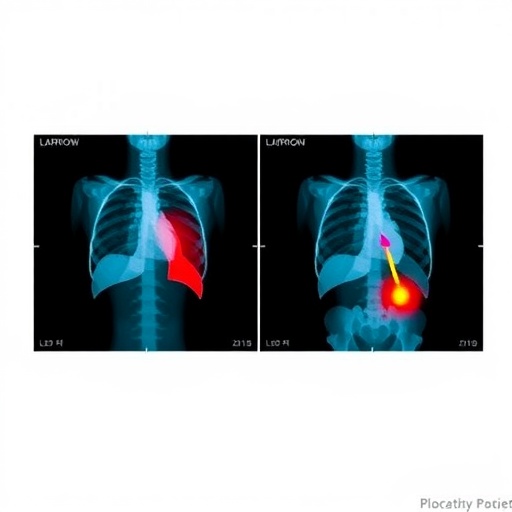
Image Credits: AI Generated

Article Title: Blood Test Model Predicts Postoperative Lung Infections in Older Hip Fracture Patients

Article References: Xu, Z., Liu, J., Chen, F., Zhou, T., Qu, Z., Zhang, J., Liu, F., Song, Y., & Zhang, Y. (2026). Development and validation of a routine blood test–based model to predict in-hospital postoperative pulmonary infection in older patients with hip fracture. BMC Geriatrics. https://doi.org/10.1186/s12877-026-07906-9

Image Credits: AI Generated

DOI: 10.1186/s12877-026-07906-9

Keywords: blood test-based risk assessment, clinical risk stratification models, early detection of postoperative pulmonary infections, elderly patient respiratory health, hip fracture surgery complication prevention, hospital-based infection prediction tools, non-invasive assessment for postoperative complications, Postoperative lung infection prediction, predictive analytics in orthopedic care, routine laboratory markers for infection risk, statistical modeling for infection risk, validation of clinical prediction models

Cite Scienmag News

Ophelia Keating. (July 16, 2026). Blood Test Model Predicts Postoperative Lung Infections in Older Hip Fracture Patients. Scienmag. https://scienmag.com/blood-test-model-predicts-postoperative-lung-infections-in-older-hip-fracture-patients/


Ophelia Keating. "Blood Test Model Predicts Postoperative Lung Infections in Older Hip Fracture Patients." Scienmag, 16 July 2026, https://scienmag.com/blood-test-model-predicts-postoperative-lung-infections-in-older-hip-fracture-patients/. Accessed 4 September 2026.

Ophelia Keating. "Blood Test Model Predicts Postoperative Lung Infections in Older Hip Fracture Patients." Scienmag. July 16, 2026. https://scienmag.com/blood-test-model-predicts-postoperative-lung-infections-in-older-hip-fracture-patients/

Tags: blood test-based risk assessmentclinical risk stratification modelsearly detection of postoperative pulmonary infectionselderly patient respiratory healthhip fracture surgery complication preventionhospital-based infection prediction toolsnon-invasive assessment for postoperative complicationsPostoperative lung infection predictionpredictive analytics in orthopedic careroutine laboratory markers for infection riskstatistical modeling for infection riskvalidation of clinical prediction models
Share26Tweet16
Previous Post

Programming Fracture Resistance in Metamaterials through Elastic Instability Design

Next Post

Rising European Dust Pollution Tied to a Changing Climate

Related Posts

Variational autoencoders detect coronary artery disease in SPECT images
Medicine

Variational autoencoders detect coronary artery disease in SPECT images

September 4, 2026
VESALIUS-REAL study reveals lipid treatment gaps in high-risk patients lacking prior cardiovascular events
Medicine

VESALIUS-REAL study reveals lipid treatment gaps in high-risk patients lacking prior cardiovascular events

September 4, 2026
GFRAL mediates metabolic responses to mitochondrial stress in brown fat
Medicine

GFRAL mediates metabolic responses to mitochondrial stress in brown fat

September 4, 2026
Vasospasm and Delayed Ischemia After Aneurysmal Rupture With Hemorrhage
Medicine

Vasospasm and Delayed Ischemia After Aneurysmal Rupture With Hemorrhage

September 3, 2026
Graph-Based White Matter Tractometry: Methods, Applications, and Validation Paths
Medicine

Graph-Based White Matter Tractometry: Methods, Applications, and Validation Paths

September 3, 2026
Managing Everyday Life in Double Exposure: Frail Older People’s Experiences During a Pandemic
Medicine

Managing Everyday Life in Double Exposure: Frail Older People’s Experiences During a Pandemic

September 3, 2026
Next Post
Rising European Dust Pollution Tied to a Changing Climate

Rising European Dust Pollution Tied to a Changing Climate

  • Mothers who receive childcare support from maternal grandparents show more optimized

    Mothers who receive childcare support from maternal grandparents show more parental warmth, finds NTU Singapore study

    27656 shares
    Share 11059 Tweet 6912
  • University of Seville Breaks 120-Year-Old Mystery, Revises a Key Einstein Concept

    1061 shares
    Share 424 Tweet 265
  • Bee body mass, pathogens and local climate influence heat tolerance

    682 shares
    Share 273 Tweet 171
  • Researchers record first-ever images and data of a shark experiencing a boat strike

    546 shares
    Share 218 Tweet 137
  • Groundbreaking Clinical Trial Reveals Lubiprostone Enhances Kidney Function

    531 shares
    Share 212 Tweet 133
Science

Embark on a thrilling journey of discovery with Scienmag.com—your ultimate source for cutting-edge breakthroughs. Immerse yourself in a world where curiosity knows no limits and tomorrow’s possibilities become today’s reality!

RECENT NEWS

  • Microcapsules deliver probiotic-derived extracellular vesicles via mucosal adhesion
  • Narcissus transcriptomics reveals modified ABCDE model and double flower mechanism
  • Invasive plant growth shaped by soil microbes and local leaf inputs
  • Variational autoencoders detect coronary artery disease in SPECT images

Categories

  • Agriculture
  • Anthropology
  • Archaeology
  • Athmospheric
  • Biology
  • Biotechnology
  • Blog
  • Bussines
  • Cancer
  • Chemistry
  • Climate
  • Earth Science
  • Editorial Policy
  • Marine
  • Mathematics
  • Medicine
  • Pediatry
  • Policy
  • Psychology & Psychiatry
  • Science Education
  • Social Science
  • Space
  • Technology and Engineering

Subscribe to Blog via Email

Enter your email address to subscribe to this blog and receive notifications of new posts by email.

Join 5,151 other subscribers

© 2025 Scienmag - Science Magazine

Welcome Back!

Login to your account below

Forgotten Password?

Retrieve your password

Please enter your username or email address to reset your password.

Log In
No Result
View All Result
  • HOME
  • SCIENCE NEWS
  • CONTACT US

© 2025 Scienmag - Science Magazine

Discover more from Science

Subscribe now to keep reading and get access to the full archive.

Continue reading