

Thursday, July 16, 2026
Science
No Result
View All Result
  • Login
  • HOME
  • SCIENCE NEWS
  • CONTACT US
  • HOME
  • SCIENCE NEWS
  • CONTACT US
No Result
View All Result
Scienmag
No Result
View All Result
Home Science News Psychology & Psychiatry

Reanalysis of Longitudinal Studies on How Intergroup Contact Shapes Attitudes

July 15, 2026
in Psychology & Psychiatry
Reading Time: 2 mins read
0
Reanalysis of Longitudinal Studies on How Intergroup Contact Shapes Attitudes

Reanalysis of Longitudinal Studies on How Intergroup Contact Shapes Attitudes

65
SHARES
587
VIEWS
Share on FacebookShare on Twitter
ADVERTISEMENT

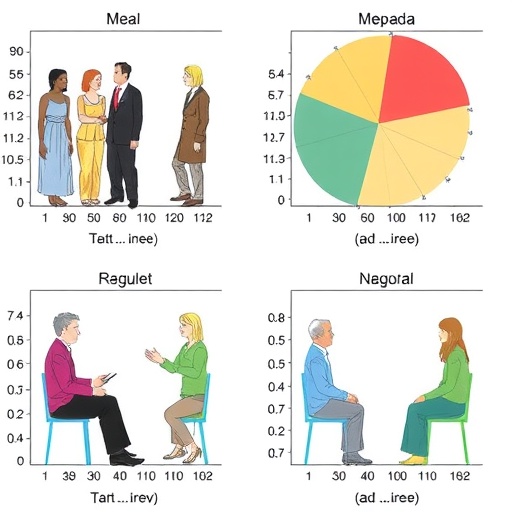
A new study re-examines one of social psychology’s most influential ideas: the claim that meaningful contact between members of different social groups can causally improve attitudes. While earlier research has suggested that intergroup contact can reduce prejudice, the field has also faced a recurring challenge—distinguishing true cause from statistical coincidence in longitudinal data. In response, researchers carried out a comparative, multi-method re-analysis focused on longitudinal evidence linking contact to attitude change.

The team revisited prior datasets and methodological choices to test whether observed attitude shifts genuinely follow from contact, rather than reflecting pre-existing differences between who meets whom, when, and under what conditions. Because contact opportunities are rarely randomly assigned, causal inference becomes fragile. Small modeling decisions can flip the direction and strength of estimated effects. This study emphasizes that uncertainty must be treated as part of the scientific result, not as an afterthought.

To address this, the authors applied multiple analytical strategies designed to reduce bias and improve causal interpretability. By comparing results across methods, the researchers aimed to map where conclusions converge and where they diverge. Such cross-method scrutiny is particularly important for long-running debates in psychology, where findings may appear consistent under one statistical framework but weaken under another.

A key technical theme is longitudinal causal modeling: the same individuals are tracked across time, and past attitudes and group contact patterns can influence later outcomes. Properly accounting for these temporal dependencies is essential. The study evaluates how different approaches handle confounding factors that may evolve over time, as well as how they treat measurement timing and repeat observations.

The re-analysis also highlights that attitude change is complex and may depend on the social context of contact—such as the quality, balance, and institutional setting of interactions. When such context is not directly measured, statistical models can only partially correct for its influence. Accordingly, the researchers interpret causal claims with greater nuance than many earlier summaries.

Overall, the work presents a more cautious picture of causal intergroup contact effects on attitudes. Rather than offering a single definitive estimate, it emphasizes robustness: which effects persist across methods and which appear method-dependent. That distinction matters for translating research into real-world interventions.

By reframing the evidence through multi-method causal re-analysis, the study provides a template for how psychological longitudinal claims should be tested. If contact effects are truly causal, they should survive different modeling assumptions. If they are not, the field must adjust its theoretical expectations and intervention strategies.

In this viral-style “evidence check,” the message is clear: causal narratives in psychology require not only more data, but better, comparative methods that stress-test every assumption.

Subject of Research: Intergroup contact effects on attitudes (causal evidence from longitudinal studies)

Article Title: A comparative multi-method re-analysis of the longitudinal evidence for causal intergroup contact effects on attitudes

Article References: Friehs, MT., Schäfer, S.J., Wüst, K. et al. A comparative multi-method re-analysis of the longitudinal evidence for causal intergroup contact effects on attitudes. Commun Psychol 4, 107 (2026). https://doi.org/10.1038/s44271-026-00495-8

Image Credits: AI Generated

DOI: https://doi.org/10.1038/s44271-026-00495-8

Tags: causal inference in social researchcross-method analysis in psychologyimportance of causal interpretation in social psychologyinfluence of contact opportunities on prejudiceintergroup contact and attitude changelongitudinal social psychology studiesmethodological challenges in longitudinal studiesprejudice reduction through intergroup contactreanalysis of historical datasetsreducing bias in attitude measurementsocial group attitudes and intergroup relationsstatistical modeling in attitude research
Share26Tweet16
Previous Post

Tectonic record reveals early tidal despinning history on Oz Terra, Charon

Next Post

Ammonia Pressure Tunes Colloidal Metal Nitride Synthesis in Molten Salts

Related Posts

Psilocybin Alters Human Brain Synaptic Plasticity, New Research Finds
Psychology & Psychiatry

Psilocybin Alters Human Brain Synaptic Plasticity, New Research Finds

July 15, 2026
Early-Life Stress Alters Spontaneous Behavior in Cntnap2 Heterozygous Mice
Psychology & Psychiatry

Early-Life Stress Alters Spontaneous Behavior in Cntnap2 Heterozygous Mice

July 15, 2026
COVID-19 fatigue linked to hippocampal immune and metabolic changes
Psychology & Psychiatry

COVID-19 fatigue linked to hippocampal immune and metabolic changes

July 15, 2026
Early Brain Morphology and Cortical Microstructure Deviations in Schizophrenia Spectrum
Psychology & Psychiatry

Early Brain Morphology and Cortical Microstructure Deviations in Schizophrenia Spectrum

July 15, 2026
Multi-omics identifies MHC II neuroinflammation and metabolic dysregulation across brain disorders
Psychology & Psychiatry

Multi-omics identifies MHC II neuroinflammation and metabolic dysregulation across brain disorders

July 15, 2026
Genetic risk and COVID-19 drove rising youth psychopathology in the United States
Psychology & Psychiatry

Genetic risk and COVID-19 drove rising youth psychopathology in the United States

July 15, 2026
Next Post
Ammonia Pressure Tunes Colloidal Metal Nitride Synthesis in Molten Salts

Ammonia Pressure Tunes Colloidal Metal Nitride Synthesis in Molten Salts

  • Mothers who receive childcare support from maternal grandparents show more

    Mothers who receive childcare support from maternal grandparents show more parental warmth, finds NTU Singapore study

    27656 shares
    Share 11059 Tweet 6912
  • University of Seville Breaks 120-Year-Old Mystery, Revises a Key Einstein Concept

    1061 shares
    Share 424 Tweet 265
  • Bee body mass, pathogens and local climate influence heat tolerance

    682 shares
    Share 273 Tweet 171
  • Researchers record first-ever images and data of a shark experiencing a boat strike

    546 shares
    Share 218 Tweet 137
  • Groundbreaking Clinical Trial Reveals Lubiprostone Enhances Kidney Function

    531 shares
    Share 212 Tweet 133
Science

Embark on a thrilling journey of discovery with Scienmag.com—your ultimate source for cutting-edge breakthroughs. Immerse yourself in a world where curiosity knows no limits and tomorrow’s possibilities become today’s reality!

RECENT NEWS

  • Piceatannol Targets Radiation-Induced Senescence Markers in a Mouse Model
  • Network Analysis of Gastritis Symptoms in Elderly Patients, Repeated Over Time
  • Engineered Biochar Converts Biomass Waste into Safer, More Effective Wastewater Cleaners
  • Accurate Diagnosis Crucial as Rare Cervical Tumor Explains Persistent Menorrhagia

Categories

  • Agriculture
  • Anthropology
  • Archaeology
  • Athmospheric
  • Biology
  • Biotechnology
  • Blog
  • Bussines
  • Cancer
  • Chemistry
  • Climate
  • Earth Science
  • Editorial Policy
  • Marine
  • Mathematics
  • Medicine
  • Pediatry
  • Policy
  • Psychology & Psychiatry
  • Science Education
  • Social Science
  • Space
  • Technology and Engineering

Subscribe to Blog via Email

Enter your email address to subscribe to this blog and receive notifications of new posts by email.

Join 5,146 other subscribers

© 2025 Scienmag - Science Magazine

Welcome Back!

Login to your account below

Forgotten Password?

Retrieve your password

Please enter your username or email address to reset your password.

Log In
No Result
View All Result
  • HOME
  • SCIENCE NEWS
  • CONTACT US

© 2025 Scienmag - Science Magazine

Discover more from Science

Subscribe now to keep reading and get access to the full archive.

Continue reading
