

Wednesday, August 5, 2026
Science
No Result
View All Result
  • Login
  • HOME
  • SCIENCE NEWS
  • CONTACT US
  • HOME
  • SCIENCE NEWS
  • CONTACT US
No Result
View All Result
Scienmag
No Result
View All Result
Home Science News Psychology & Psychiatry

Early-Life Stress Alters Spontaneous Behavior in Cntnap2 Heterozygous Mice

July 15, 2026
in Psychology & Psychiatry
Reading Time: 2 mins read
0
Early-Life Stress Alters Spontaneous Behavior in Cntnap2 Heterozygous Mice

Early-Life Stress Alters Spontaneous Behavior in Cntnap2 Heterozygous Mice

65
SHARES
587
VIEWS
Share on FacebookShare on Twitter
ADVERTISEMENT

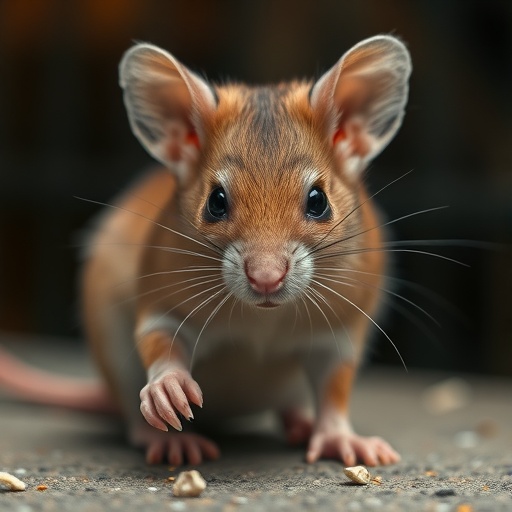
Early-life stress leaves a measurable imprint on developing brains, and a new study now suggests that this imprint can reshape how animals move and behave even when their genetics are only partially altered. In mice carrying one copy of Cntnap2—a gene linked to neurodevelopmental conditions—researchers report that early adversity drives striking abnormalities in spontaneous behavior.

The work, published in Translational Psychiatry, focuses on heterozygous Cntnap2 mice, a model designed to mirror subtle genetic risk rather than complete gene loss. The team subjected animals to an early-life adversity paradigm and then assessed behavior without relying on explicit training or external prompts, emphasizing baseline “self-driven” activity.

Using a battery of behavioral measurements, the researchers observed that early-life adversity amplified irregular activity patterns. Instead of producing uniform changes in speed or exploration, the stress exposure altered the structure of behavior—how often actions occurred, how long they persisted, and how sequences of actions emerged spontaneously. This points to disruptions not just in motivation, but in the internal dynamics that govern ongoing brain-driven behavior.

The study also highlights an interaction effect: adversity did not merely worsen baseline behavior in all animals, but specifically reshaped patterns in Cntnap2 heterozygotes. That genotype × environment coupling suggests that partial genetic risk may lower the threshold for stress-related neural reprogramming.

From a technical standpoint, the researchers analyzed behavior at high temporal resolution, enabling detection of event-level anomalies rather than only coarse outcomes. Such fine-grained quantification can reveal hidden signatures—like abnormal switching between behavioral states—that would be missed by simpler readouts.

The implications extend to human neurodevelopmental disorders, where both inherited variants and early stress are known contributors. If similar mechanisms operate in people, early adversity could bias neural circuit development toward atypical self-organized activity.

Importantly, the authors frame the findings as “anomalous spontaneous behavior,” underscoring that the phenotype emerges during naturalistic, unprompted conditions. This strengthens the case that early stress can modify fundamental brain organization, not just performance under test conditions.

As viral science news, the message is clear: stress in early life may act as a biological amplifier for genetic vulnerability, shifting behavior from orderly to irregular. Future work will be needed to identify the circuits and molecular pathways through which Cntnap2 heterozygosity and adversity converge.

Subject of Research: Early-life adversity and spontaneous behavior in Cntnap2 heterozygous mice
Article Title: Early-life adversity shapes anomalous spontaneous behavior in mice heterozygous for Cntnap2
Article References: Canicatti, V., Cibin, V., Berardi, N. et al. Early-life adversity shapes anomalous spontaneous behavior in mice heterozygous for Cntnap2. Transl Psychiatry (2026). https://doi.org/10.1038/s41398-026-04281-2
Image Credits: AI Generated
DOI: https://doi.org/10.1038/s41398-026-04281-2

Tags: behavioral dynamics in neurodevelopmental modelsbehavioral sequencing analysisCntnap2 heterozygous miceearly-life stressgene-environment interactions in behaviorimpact of early adversity on brain developmentinfluence of stress on activity patternsmodeling subtle genetic risk factorsneurobehavioral effects of early-life stressneurodevelopmental disorder modelsspontaneous behavior alterationstranslational psychiatry research on early stress
Share26Tweet16
Previous Post

Local Complement C3 Shapes Control Myeloid Infiltration and Checkpoint Blockade Efficacy

Next Post

Self-Aligned Heterogeneous Integration Advances Quantum Photonics Fabrication

Related Posts

Detecting Generative AI Use Among Genuine Respondents in Online Surveys
Psychology & Psychiatry

Detecting Generative AI Use Among Genuine Respondents in Online Surveys

August 5, 2026
Brain Circuit Changes Link Anterior Cingulate Connectivity to Suicidal Thoughts in Depression
Psychology & Psychiatry

Brain Circuit Changes Link Anterior Cingulate Connectivity to Suicidal Thoughts in Depression

August 4, 2026
How AI Companions Affect Psychological Well-Being
Psychology & Psychiatry

How AI Companions Affect Psychological Well-Being

August 4, 2026
Predictive Dysfunction: A Unified Mechanism-Based Framework for Psychiatry
Psychology & Psychiatry

Predictive Dysfunction: A Unified Mechanism-Based Framework for Psychiatry

August 4, 2026
Client and therapist language valence tracks symptom changes in messaging-based psychotherapy
Psychology & Psychiatry

Client and therapist language valence tracks symptom changes in messaging-based psychotherapy

August 4, 2026
How Hippocampal Development Influences Post-Traumatic Stress Disorder in Children
Psychology & Psychiatry

How Hippocampal Development Influences Post-Traumatic Stress Disorder in Children

August 4, 2026
Next Post
Self-Aligned Heterogeneous Integration Advances Quantum Photonics Fabrication

Self-Aligned Heterogeneous Integration Advances Quantum Photonics Fabrication

  • Mothers who receive childcare support from maternal grandparents show more

    Mothers who receive childcare support from maternal grandparents show more parental warmth, finds NTU Singapore study

    27656 shares
    Share 11059 Tweet 6912
  • University of Seville Breaks 120-Year-Old Mystery, Revises a Key Einstein Concept

    1061 shares
    Share 424 Tweet 265
  • Bee body mass, pathogens and local climate influence heat tolerance

    682 shares
    Share 273 Tweet 171
  • Researchers record first-ever images and data of a shark experiencing a boat strike

    546 shares
    Share 218 Tweet 137
  • Groundbreaking Clinical Trial Reveals Lubiprostone Enhances Kidney Function

    531 shares
    Share 212 Tweet 133
Science

Embark on a thrilling journey of discovery with Scienmag.com—your ultimate source for cutting-edge breakthroughs. Immerse yourself in a world where curiosity knows no limits and tomorrow’s possibilities become today’s reality!

RECENT NEWS

  • Air–sea interactions triggered and prolonged the 2013–2016 North Pacific marine heatwave
  • Generative AI Transforms Urban Science and Planning Practice
  • Human Activity More Than Doubles Arctic Fire Occurrence
  • Pusan National University finds climate-driven greening reshapes East Asian air pollution

Categories

  • Agriculture
  • Anthropology
  • Archaeology
  • Athmospheric
  • Biology
  • Biotechnology
  • Blog
  • Bussines
  • Cancer
  • Chemistry
  • Climate
  • Earth Science
  • Editorial Policy
  • Marine
  • Mathematics
  • Medicine
  • Pediatry
  • Policy
  • Psychology & Psychiatry
  • Science Education
  • Social Science
  • Space
  • Technology and Engineering

Subscribe to Blog via Email

Enter your email address to subscribe to this blog and receive notifications of new posts by email.

Join 5,148 other subscribers

© 2025 Scienmag - Science Magazine

Welcome Back!

Login to your account below

Forgotten Password?

Retrieve your password

Please enter your username or email address to reset your password.

Log In
No Result
View All Result
  • HOME
  • SCIENCE NEWS
  • CONTACT US

© 2025 Scienmag - Science Magazine

Discover more from Science

Subscribe now to keep reading and get access to the full archive.

Continue reading
