

Thursday, July 16, 2026
Science
No Result
View All Result
  • Login
  • HOME
  • SCIENCE NEWS
  • CONTACT US
  • HOME
  • SCIENCE NEWS
  • CONTACT US
No Result
View All Result
Scienmag
No Result
View All Result
Home Science News Medicine

Piceatannol Targets Radiation-Induced Senescence Markers in a Mouse Model

July 16, 2026
in Medicine
Reading Time: 2 mins read
0
Piceatannol Targets Radiation-Induced Senescence Markers in a Mouse Model

Piceatannol Targets Radiation-Induced Senescence Markers in a Mouse Model

65
SHARES
587
VIEWS
Share on FacebookShare on Twitter
ADVERTISEMENT

In a new study published in Cell Death Discovery, researchers report that piceatannol—a natural polyphenol—may act as a “senotherapeutic,” helping counter cellular senescence after radiation injury. The work uses a murine model in which radiation drives the accumulation of senescent cells and the emergence of hallmark senescence-associated signals.

Cellular senescence is a stress response linked to aging and chronic disease, but it is also triggered by DNA damage. Following irradiation, cells can enter a stable growth arrest while remaining metabolically active, releasing inflammatory cues and exhibiting distinctive molecular features. Targeting these senescence programs is therefore viewed as a promising route to reduce long-term radiation complications.

The authors frame piceatannol as a safety-oriented candidate for senotherapy, emphasizing its potential to modulate senescence-associated markers without the systemic toxicity that can limit other interventions. In their approach, the compound was evaluated in vivo in the context of radiation-induced tissue damage.

To capture senescence-related changes, the team assessed established readouts that rise during stress-induced premature or therapy-associated states. These include alterations in senescence-associated phenotypes and shifts in marker profiles expected to accompany radiation-driven cellular aging. By tracking how these indicators evolve with treatment, the study aims to determine whether piceatannol can blunt the senescence program rather than simply delay injury.

Mechanistically, the findings suggest that piceatannol can restore aspects of cellular homeostasis that radiation disrupts. While senescence is not a single pathway, the ability of a candidate senotherapeutic to reduce multiple senescence-linked signals can be critical for meaningful translational impact.

A key element of the report is the focus on tolerability. The investigators describe piceatannol as “safe” in the experimental setting, supporting the idea that senotherapeutics may need to prioritize therapeutic windows before efficacy can be clinically leveraged.

The study’s authors conclude that piceatannol can ameliorate radiation-induced senescence-associated markers, positioning it as a candidate worth further exploration for radiation injury mitigation and potentially broader anti-senescent strategies.

For readers tracking viral-style science news developments, this paper adds momentum to the growing field of senotherapeutics—where natural compounds, safety profiles, and multi-marker efficacy are increasingly shaping early-stage translational research.

Future work will likely focus on dose optimization, durability of the response, and whether the senescence modulation translates into improved tissue function and reduced downstream pathology after irradiation.

Ambrosino and colleagues’ report appears online in 2026 with DOI: https://doi.org/10.1038/s41420-026-03253-1.

Subject of Research: Cellular senescence and radiation-induced damage; senotherapeutic effects of piceatannol in a murine model.

Article Title: Piceatannol as a safe senotherapeutic: ameliorating senescence-associated markers in a radiation-induced murine model.

Article References: Ambrosino, A., Moriello, C., Alessio, N. et al. Cell Death Discovery (2026). https://doi.org/10.1038/s41420-026-03253-1

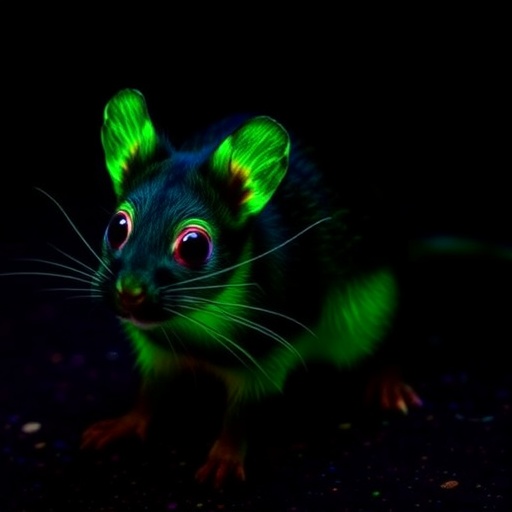
Image Credits: AI Generated

DOI: https://doi.org/10.1038/s41420-026-03253-1

Keywords:

Tags: DNA damage responseinflammation and aginglong-term radiation complicationsmodulation of senescence markersnatural polyphenols in aging therapypiceatannol as senotherapeutic agentradiation injury mouse modelradiation-induced cellular senescencesafety profile of senolyticssenescence-associated markerstargeting cellular aging pathwaystissue damage and repair after radiation
Share26Tweet16
Previous Post

Network Analysis of Gastritis Symptoms in Elderly Patients, Repeated Over Time

Next Post

White Matter Microstructure and Brain Network Changes in Children With Global Developmental Delay

Related Posts

UCSF, Kleiner Perkins, and Doerr Capital Launch New Healthcare AI Model
Medicine

UCSF, Kleiner Perkins, and Doerr Capital Launch New Healthcare AI Model

July 16, 2026
ATPγS recycling enables practical biocatalytic thiophosphorylation
Medicine

ATPγS recycling enables practical biocatalytic thiophosphorylation

July 16, 2026
Network Analysis of Gastritis Symptoms in Elderly Patients, Repeated Over Time
Medicine

Network Analysis of Gastritis Symptoms in Elderly Patients, Repeated Over Time

July 16, 2026
Study Uncovers a Winter-Adjusted Biological Clock in Living Organisms
Medicine

Study Uncovers a Winter-Adjusted Biological Clock in Living Organisms

July 16, 2026
Black and Asian doctors face up to 30 times fewer specialty training posts
Medicine

Black and Asian doctors face up to 30 times fewer specialty training posts

July 15, 2026
Ammonia Pressure Tunes Colloidal Metal Nitride Synthesis in Molten Salts
Medicine

Ammonia Pressure Tunes Colloidal Metal Nitride Synthesis in Molten Salts

July 15, 2026
Next Post
White Matter Microstructure and Brain Network Changes in Children With Global Developmental Delay

White Matter Microstructure and Brain Network Changes in Children With Global Developmental Delay

  • Mothers who receive childcare support from maternal grandparents show more

    Mothers who receive childcare support from maternal grandparents show more parental warmth, finds NTU Singapore study

    27656 shares
    Share 11059 Tweet 6912
  • University of Seville Breaks 120-Year-Old Mystery, Revises a Key Einstein Concept

    1061 shares
    Share 424 Tweet 265
  • Bee body mass, pathogens and local climate influence heat tolerance

    682 shares
    Share 273 Tweet 171
  • Researchers record first-ever images and data of a shark experiencing a boat strike

    546 shares
    Share 218 Tweet 137
  • Groundbreaking Clinical Trial Reveals Lubiprostone Enhances Kidney Function

    531 shares
    Share 212 Tweet 133
Science

Embark on a thrilling journey of discovery with Scienmag.com—your ultimate source for cutting-edge breakthroughs. Immerse yourself in a world where curiosity knows no limits and tomorrow’s possibilities become today’s reality!

RECENT NEWS

  • Stirling Study Shows People Overestimate Legal Protections for Dogs
  • COVID-19 Pandemic Altered Seasonal Surges of Other Respiratory Diseases
  • Lab-Quality At-Home HIV Test Receives $1.3 Million Grant at UMass Amherst
  • Sylvester Releases July 2026 Cancer Tip Sheet

Categories

  • Agriculture
  • Anthropology
  • Archaeology
  • Athmospheric
  • Biology
  • Biotechnology
  • Blog
  • Bussines
  • Cancer
  • Chemistry
  • Climate
  • Earth Science
  • Editorial Policy
  • Marine
  • Mathematics
  • Medicine
  • Pediatry
  • Policy
  • Psychology & Psychiatry
  • Science Education
  • Social Science
  • Space
  • Technology and Engineering

Subscribe to Blog via Email

Enter your email address to subscribe to this blog and receive notifications of new posts by email.

Join 5,146 other subscribers

© 2025 Scienmag - Science Magazine

Welcome Back!

Login to your account below

Forgotten Password?

Retrieve your password

Please enter your username or email address to reset your password.

Log In
No Result
View All Result
  • HOME
  • SCIENCE NEWS
  • CONTACT US

© 2025 Scienmag - Science Magazine

Discover more from Science

Subscribe now to keep reading and get access to the full archive.

Continue reading
