

Thursday, September 3, 2026
Science
No Result
View All Result
  • Login
  • HOME
  • SCIENCE NEWS
  • CONTACT US
  • HOME
  • SCIENCE NEWS
  • CONTACT US
No Result
View All Result
Scienmag
No Result
View All Result
Home Science News Marine

Deep-Sea Creatures Undertake Epic Migrations Between Hydrothermal Vents

July 15, 2026
in Marine
Gavin Prescott
By Gavin Prescott Scienmag Editorial Profile - Ecology and Ecosystem Dynamics
Reading Time: 2 mins read
0
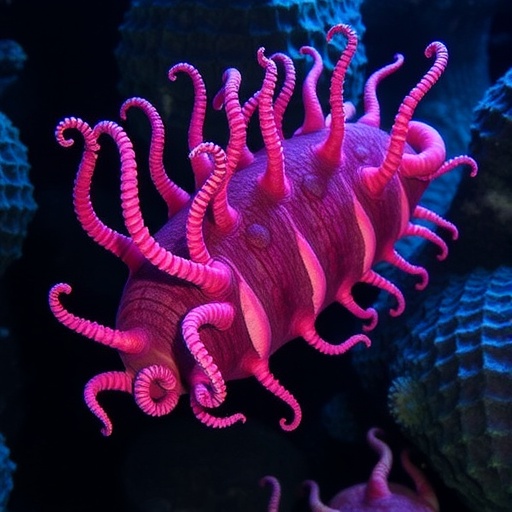
Deep-Sea Creatures Undertake Epic Migrations Between Hydrothermal Vents

Deep-Sea Creatures Undertake Epic Migrations Between Hydrothermal Vents

65
SHARES
587
VIEWS
Share on FacebookShare on Twitter
ADVERTISEMENT

Hydrothermal vents, scattered across the seafloor like isolated oases, host ecosystems that thrive on chemistry rather than sunlight. Yet many of the creatures living there are surprisingly similar—even when vents lie hundreds to thousands of kilometers apart. A long-standing puzzle has been how tiny, often non-swimming larvae can travel between these widely separated habitats. Researchers from the University of Tokyo now report evidence that sheds light on the migration routes connecting vent populations.

The team focused on vent-dwelling limpets (gastropods) that can retain their early larval shells after settling. Those shells, though less than a millimeter in size and extremely thin, preserve chemical “growth-ring” information. By analyzing these retained larval shell materials, the scientists reconstructed the temperature conditions the larvae experienced during development.

Their approach is based on the principle that the chemical signatures locked into a shell correlate with the environment in which the larva grew. The researchers converted those chemical records into temperature estimates, then used the results to infer larval life histories—effectively reading a microscopic environmental diary.

The findings indicate that limpets collected from deep-sea hydrothermal vents had spent their larval stage in the sunlit upper ocean (the euphotic zone). In other words, before either returning to their natal vent or establishing themselves elsewhere, the larvae likely rose from vent depths into surface waters. This supports the idea that strong currents and surface-region conditions can act as dispersal highways for vent species.

The study also highlights why successful migration may be rare. Larvae face major risks while adrift at the surface, from predators and unfavorable transport that could prevent them from ever reaching a suitable vent. Such bottlenecks could help explain why many vent animals produce large numbers of offspring.

The results further suggest that ocean temperature patterns—shaped by regional climate and water-column structure—could influence larval connectivity. Although direct evidence linking current climate change to larval dispersal is still limited, the mechanism identified here provides a plausible route by which environmental shifts could alter vent ecosystem links.

While the larval duration for most vent species remains unknown, experiments and related data suggest that at least some species may remain near the surface for over a year. The longevity increases both dispersal potential and exposure to threats, emphasizing the delicate balance between survival and spreading.

Looking ahead, the researchers plan to test how widespread this surface migration behavior is across hydrothermal vent animals, including species living deeper than about 2,000 meters. They also aim for higher-resolution chemical measurements that could trace not only the ascent to the surface but potentially the full return journey to the deep sea.

Subject of Research: Animals
Article Title: Gastropod shells record larval migration from deep-sea hydrothermal vents to the euphotic zone
News Publication Date: 15-Jul-2026
Web References: https://www.science.org/doi/10.1126/sciadv.adx7045
References: Yahagi et al., “Gastropod shells record larval migration from deep-sea hydrothermal vents to the euphotic zone,” Science Advances (

Article Title: Deep-Sea Creatures Undertake Epic Migrations Between Hydrothermal Vents

Article References: Original research article

Image Credits: AI Generated

DOI: Not provided

Keywords: hydrothermal vents, larval dispersal, gastropod shells, chemical signatures, euphotic zone, connectivity, deep-sea ecology, climate impacts

Cite Scienmag News

Gavin Prescott. (July 15, 2026). Deep-Sea Creatures Undertake Epic Migrations Between Hydrothermal Vents. Scienmag. https://scienmag.com/deep-sea-creatures-undertake-epic-migrations-between-hydrothermal-vents/

Gavin Prescott. "Deep-Sea Creatures Undertake Epic Migrations Between Hydrothermal Vents." Scienmag, 15 July 2026, https://scienmag.com/deep-sea-creatures-undertake-epic-migrations-between-hydrothermal-vents/. Accessed 3 September 2026.

Gavin Prescott. "Deep-Sea Creatures Undertake Epic Migrations Between Hydrothermal Vents." Scienmag. July 15, 2026. https://scienmag.com/deep-sea-creatures-undertake-epic-migrations-between-hydrothermal-vents/


Tags: chemical analysis of larval shellsdeep-sea ecosystem resiliencedeep-sea gastropodsDeep-sea vent ecosystemshydrothermal vent migrationlarval life history in hydrothermal ventsmarine larval dispersalnon-swimming larvae adaptationoceanic larval migration pathwaystemperature reconstruction from shellsvent population connectivityvent-dwelling organism dispersal mechanisms
Share26Tweet16
Previous Post

Climate Impact Research Needs More Real-World Evidence

Next Post

New African monkey species discovered deep in Congo rainforest

Related Posts

Fish-prawn hybrid observed walking backward for the first time
Marine

Fish-prawn hybrid observed walking backward for the first time

September 3, 2026
Making climate governance actionable: a corpus-based analysis of institutionalizing climate change in tuna fisheries governance
Marine

Making climate governance actionable: a corpus-based analysis of institutionalizing climate change in tuna fisheries governance

September 3, 2026
Federal research chair program brings two global scholars to UVic
Marine

Federal research chair program brings two global scholars to UVic

September 3, 2026
Climate-smart marine planning framework designed to support biodiversity goals
Marine

Climate-smart marine planning framework designed to support biodiversity goals

August 29, 2026
Heat-tolerant corals may face greater disease risk, study finds
Marine

Heat-tolerant corals may face greater disease risk, study finds

August 28, 2026
Expanding Marine Social Sciences and Humanities into the Deep Ocean
Marine

Expanding Marine Social Sciences and Humanities into the Deep Ocean

August 28, 2026
Next Post
New African monkey species discovered deep in Congo rainforest

New African monkey species discovered deep in Congo rainforest

  • Mothers who receive childcare support from maternal grandparents show more optimized

    Mothers who receive childcare support from maternal grandparents show more parental warmth, finds NTU Singapore study

    27656 shares
    Share 11059 Tweet 6912
  • University of Seville Breaks 120-Year-Old Mystery, Revises a Key Einstein Concept

    1061 shares
    Share 424 Tweet 265
  • Bee body mass, pathogens and local climate influence heat tolerance

    682 shares
    Share 273 Tweet 171
  • Researchers record first-ever images and data of a shark experiencing a boat strike

    546 shares
    Share 218 Tweet 137
  • Groundbreaking Clinical Trial Reveals Lubiprostone Enhances Kidney Function

    531 shares
    Share 212 Tweet 133
Science

Embark on a thrilling journey of discovery with Scienmag.com—your ultimate source for cutting-edge breakthroughs. Immerse yourself in a world where curiosity knows no limits and tomorrow’s possibilities become today’s reality!

RECENT NEWS

  • Sniper and Otapiapia: Nigeria’s Organophosphate Poisoning Crisis Kills Nearly One in Four Patients
  • New framework quantifies metal exposure risks from tampon use
  • Biodegradable Nanofiber Filters Hit N95 Performance Without Electrostatic Charges
  • Gender differences in coping strategies and mental health outcomes among people living with chronic medical conditions

Categories

  • Agriculture
  • Anthropology
  • Archaeology
  • Athmospheric
  • Biology
  • Biotechnology
  • Blog
  • Bussines
  • Cancer
  • Chemistry
  • Climate
  • Earth Science
  • Editorial Policy
  • Marine
  • Mathematics
  • Medicine
  • Pediatry
  • Policy
  • Psychology & Psychiatry
  • Science Education
  • Social Science
  • Space
  • Technology and Engineering

Subscribe to Blog via Email

Enter your email address to subscribe to this blog and receive notifications of new posts by email.

Join 5,151 other subscribers

© 2025 Scienmag - Science Magazine

Welcome Back!

Login to your account below

Forgotten Password?

Retrieve your password

Please enter your username or email address to reset your password.

Log In
No Result
View All Result
  • HOME
  • SCIENCE NEWS
  • CONTACT US

© 2025 Scienmag - Science Magazine

Discover more from Science

Subscribe now to keep reading and get access to the full archive.

Continue reading