


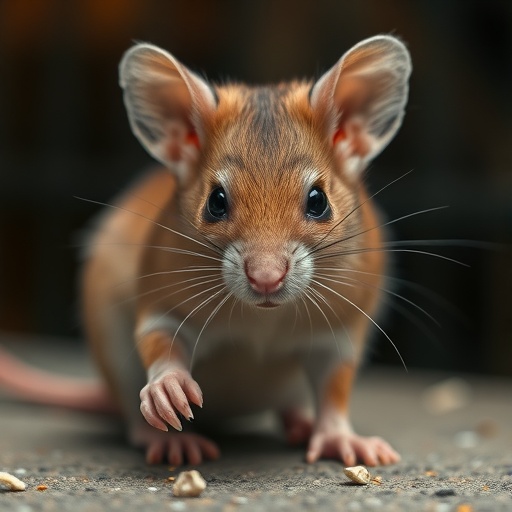
Early-life stress leaves a measurable imprint on developing brains, and a new study now suggests that this imprint can reshape how animals move and behave even when their genetics are only partially altered. In mice carrying one copy of Cntnap2—a gene linked to neurodevelopmental conditions—researchers report that early adversity drives striking abnormalities in spontaneous behavior.
The work, published in Translational Psychiatry, focuses on heterozygous Cntnap2 mice, a model designed to mirror subtle genetic risk rather than complete gene loss. The team subjected animals to an early-life adversity paradigm and then assessed behavior without relying on explicit training or external prompts, emphasizing baseline “self-driven” activity.
Using a battery of behavioral measurements, the researchers observed that early-life adversity amplified irregular activity patterns. Instead of producing uniform changes in speed or exploration, the stress exposure altered the structure of behavior—how often actions occurred, how long they persisted, and how sequences of actions emerged spontaneously. This points to disruptions not just in motivation, but in the internal dynamics that govern ongoing brain-driven behavior.
The study also highlights an interaction effect: adversity did not merely worsen baseline behavior in all animals, but specifically reshaped patterns in Cntnap2 heterozygotes. That genotype × environment coupling suggests that partial genetic risk may lower the threshold for stress-related neural reprogramming.
From a technical standpoint, the researchers analyzed behavior at high temporal resolution, enabling detection of event-level anomalies rather than only coarse outcomes. Such fine-grained quantification can reveal hidden signatures—like abnormal switching between behavioral states—that would be missed by simpler readouts.
The implications extend to human neurodevelopmental disorders, where both inherited variants and early stress are known contributors. If similar mechanisms operate in people, early adversity could bias neural circuit development toward atypical self-organized activity.
Importantly, the authors frame the findings as “anomalous spontaneous behavior,” underscoring that the phenotype emerges during naturalistic, unprompted conditions. This strengthens the case that early stress can modify fundamental brain organization, not just performance under test conditions.
As viral science news, the message is clear: stress in early life may act as a biological amplifier for genetic vulnerability, shifting behavior from orderly to irregular. Future work will be needed to identify the circuits and molecular pathways through which Cntnap2 heterozygosity and adversity converge.
Cite Scienmag News
Glenn Wilkins. (July 15, 2026). Early-Life Stress Alters Spontaneous Behavior in Cntnap2 Heterozygous Mice. Scienmag. https://scienmag.com/early-life-stress-alters-spontaneous-behavior-in-cntnap2-heterozygous-mice/
Glenn Wilkins. "Early-Life Stress Alters Spontaneous Behavior in Cntnap2 Heterozygous Mice." Scienmag, 15 July 2026, https://scienmag.com/early-life-stress-alters-spontaneous-behavior-in-cntnap2-heterozygous-mice/. Accessed 4 September 2026.
Glenn Wilkins. "Early-Life Stress Alters Spontaneous Behavior in Cntnap2 Heterozygous Mice." Scienmag. July 15, 2026. https://scienmag.com/early-life-stress-alters-spontaneous-behavior-in-cntnap2-heterozygous-mice/


