

Wednesday, July 15, 2026
Science
No Result
View All Result
  • Login
  • HOME
  • SCIENCE NEWS
  • CONTACT US
  • HOME
  • SCIENCE NEWS
  • CONTACT US
No Result
View All Result
Scienmag
No Result
View All Result
Home Science News Chemistry

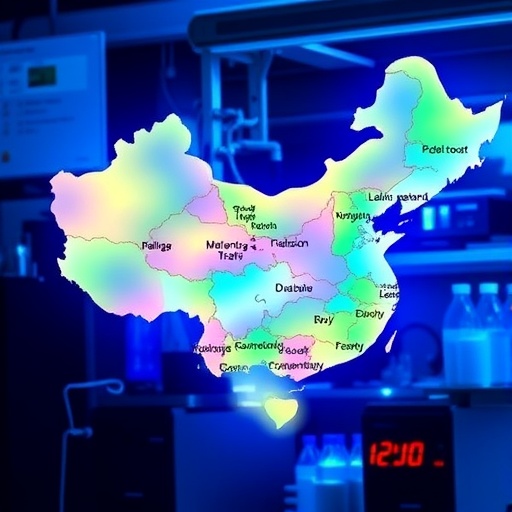
Rapid Mass Spectrometry Maps Traditional Chinese Medicine Beyond the Laboratory

July 15, 2026
in Chemistry
Reading Time: 2 mins read
0
Rapid Mass Spectrometry Maps Traditional Chinese Medicine Beyond the Laboratory

Rapid Mass Spectrometry Maps Traditional Chinese Medicine Beyond the Laboratory

65
SHARES
587
VIEWS
Share on FacebookShare on Twitter
ADVERTISEMENT

A new review in Biomedical Analysis maps how direct mass spectrometry is moving into Traditional Chinese Medicine (TCM) quality control, aiming to solve a problem that has long resisted conventional analytical workflows: TCM products are chemically complex, compositionally variable across processing steps, and difficult to prepare for analysis without losing context. By surveying more than a decade of published work, the authors assess what rapid, low-preparation mass spectrometric methods can reliably deliver today—and where they still fail to meet regulatory-grade expectations.

Direct mass spectrometry techniques, including ambient ionization approaches, are highlighted as a key shift. Rather than relying on time-consuming chromatographic separations, these methods generate chemical fingerprints quickly, often within minutes. The review emphasizes that this speed is not just convenience: it enables monitoring of chemical transformations during preparation of herbal decoctions and supports spatial or tissue-level localization of select compounds.

Real-time or process-oriented monitoring emerges as one of the most mature application areas. The review consolidates evidence that direct mass spectrometry can track the degradation of target molecules during boiling, addressing how processing changes safety-critical constituents. A prominent example discussed is the dynamic monitoring of toxic alkaloids in Aconitum species, where decreasing levels provide an immediate proxy for detoxification progress.

Despite these advantages, the review draws a clear line between analytical capability and analytical certainty. It identifies persistent bottlenecks in absolute quantification, where stakeholders need exact concentrations rather than relative fingerprints. Matrix effects—interferences produced by the complex herbal background—can distort intensities and reduce comparability between instruments and laboratories.

Performance is also uneven across chemical classes. The literature reviewed suggests strong responsiveness for certain classes such as alkaloids, while carbohydrates and polysaccharides remain more challenging to interpret robustly. The review frames this as a fundamental limitation of both ionization behavior and spectral interpretability rather than a simple experimental inconvenience.

For routine screening, the authors argue that authentication and origin discrimination represent the most practical near-term use cases. Direct mass spectrometric fingerprints can distinguish closely related herbs, identify adulterants, and infer geographical sourcing patterns—capabilities aligned with the high-throughput demands of industrial quality checks.

Looking forward, the report shifts attention away from inventing entirely new ionization concepts and toward standardization. Dedicated TCM spectral databases, common acquisition and reporting protocols, and inter-laboratory benchmarking are positioned as necessary steps to make results more transferable and defensible.

Finally, the review points to two “force multipliers” for the field: portable mass spectrometry for on-site testing and artificial intelligence for interpreting large, high-dimensional spectra. Together, these trends aim to transform direct mass spectrometry from a rapid screening tool into an integrated evidence platform linking chemical profiles to quality, safety, and efficacy.

Subject of Research: Not applicable
Article Title: Direct mass spectrometry for traditional Chinese medicine analysis: Analytical strategies, applications, and future perspectives
News Publication Date: 1-Jun-2026
Web References: https://www.sciencedirect.com/journal/biomedical-analysis
References: DOI: 10.1016/j.bioana.2026.05.001
Image Credits: Kaiwen Zhang, Bin Li & Chang-jiang-sheng Lai
Keywords: Direct mass spectrometry; Traditional Chinese Medicine; ambient ionization; fingerprinting; process monitoring; authentication; quantification; AI spectral analysis

Tags: advancements in portable mass spectrometry for herbal medicine analysisambient ionization techniqueschallenges in analyzing chemically complex herbal formulationschemical fingerprinting of herbal medicinesdetection of toxic alkaloids in Aconitum speciesnon-destructive analytical workflows for complex herbal productsprocess-oriented analysis of TCM preparationsrapid mass spectrometryreal-time monitoring of herbal decoctionsregulatory compliance of mass spectrometry in TCMspatial localization of bioactive compounds in TCMTraditional Chinese Medicine quality control
Share26Tweet16
Previous Post

Bile Acid Accumulation Promotes Breast Cancer Spread, Study Finds

Next Post

ADLM 2026 to Highlight Diabetes Milestones, Space Diagnostics, and Cancer Biomarkers

Related Posts

Researchers Say Solar Storm Risks May Be Underestimated
Chemistry

Researchers Say Solar Storm Risks May Be Underestimated

July 15, 2026
Cross-Scale Intelligence Framework Enables Predictions for Aquatic Ecosystem Health
Chemistry

Cross-Scale Intelligence Framework Enables Predictions for Aquatic Ecosystem Health

July 15, 2026
Atoco Inc. Launches Reticular Science Prize for Emerging Scholars and Innovators
Chemistry

Atoco Inc. Launches Reticular Science Prize for Emerging Scholars and Innovators

July 15, 2026
Symmetry Holds the Key to Hydrogen’s Quantum Behavior
Chemistry

Symmetry Holds the Key to Hydrogen’s Quantum Behavior

July 15, 2026
Study Maps Photogenerated Hole Evolution During Separation and Transfer in Photocatalysis
Chemistry

Study Maps Photogenerated Hole Evolution During Separation and Transfer in Photocatalysis

July 15, 2026
Molecular Model Explains Buckled Dimers on Ge(100) Surface
Chemistry

Molecular Model Explains Buckled Dimers on Ge(100) Surface

July 15, 2026
Next Post
ADLM 2026 to Highlight Diabetes Milestones, Space Diagnostics, and Cancer Biomarkers

ADLM 2026 to Highlight Diabetes Milestones, Space Diagnostics, and Cancer Biomarkers

  • Mothers who receive childcare support from maternal grandparents show more

    Mothers who receive childcare support from maternal grandparents show more parental warmth, finds NTU Singapore study

    27656 shares
    Share 11059 Tweet 6912
  • University of Seville Breaks 120-Year-Old Mystery, Revises a Key Einstein Concept

    1061 shares
    Share 424 Tweet 265
  • Bee body mass, pathogens and local climate influence heat tolerance

    682 shares
    Share 273 Tweet 171
  • Researchers record first-ever images and data of a shark experiencing a boat strike

    546 shares
    Share 218 Tweet 137
  • Groundbreaking Clinical Trial Reveals Lubiprostone Enhances Kidney Function

    531 shares
    Share 212 Tweet 133
Science

Embark on a thrilling journey of discovery with Scienmag.com—your ultimate source for cutting-edge breakthroughs. Immerse yourself in a world where curiosity knows no limits and tomorrow’s possibilities become today’s reality!

RECENT NEWS

  • SwRI Study Links Asteroid Collision to 800 Million-Year-Old Meteor Showers
  • Study identifies Europe’s most critical wetlands for climate action
  • New Drug Design Method Enhances Cancer Treatments with Increased Potency
  • Researchers Say Solar Storm Risks May Be Underestimated

Categories

  • Agriculture
  • Anthropology
  • Archaeology
  • Athmospheric
  • Biology
  • Biotechnology
  • Blog
  • Bussines
  • Cancer
  • Chemistry
  • Climate
  • Earth Science
  • Editorial Policy
  • Marine
  • Mathematics
  • Medicine
  • Pediatry
  • Policy
  • Psychology & Psychiatry
  • Science Education
  • Social Science
  • Space
  • Technology and Engineering

Subscribe to Blog via Email

Enter your email address to subscribe to this blog and receive notifications of new posts by email.

Join 5,146 other subscribers

© 2025 Scienmag - Science Magazine

Welcome Back!

Login to your account below

Forgotten Password?

Retrieve your password

Please enter your username or email address to reset your password.

Log In
No Result
View All Result
  • HOME
  • SCIENCE NEWS
  • CONTACT US

© 2025 Scienmag - Science Magazine

Discover more from Science

Subscribe now to keep reading and get access to the full archive.

Continue reading
