


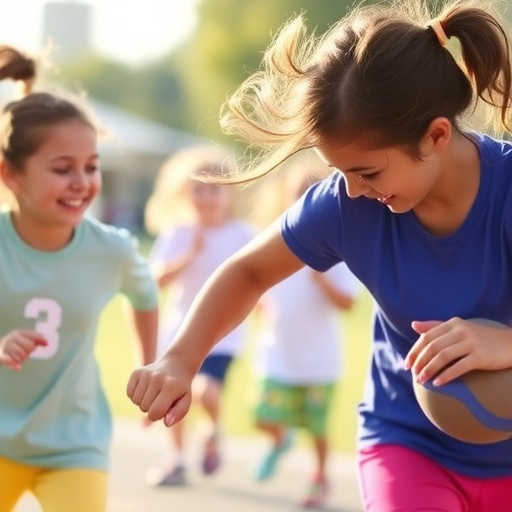
Sedentary study time is now the hidden bottleneck for Hong Kong’s schoolchildren. Researchers report that many primary students fall short of the World Health Organization’s recommended 60 minutes of moderate-to-vigorous physical activity (MVPA) each day. In response, an interdisciplinary team at The Education University of Hong Kong (EdUHK) designed a home-based intervention intended to convert “screen time” into movement time.
The study followed 119 child–guardian pairs over two years, using objective activity monitoring. Children wore wrist-based monitors to quantify MVPA, while families also completed structured questionnaires. The research focused on how different types of guidance—content-only versus motivation-focused coaching—shape children’s drive to keep exercising.
Instead of relying on external pressure, the team grounded the coaching strategy in Self-Determination Theory (SDT). SDT emphasizes three psychological needs—autonomy, competence, and relatedness—that, when supported, can sustain intrinsic motivation. Accordingly, guardians were encouraged to offer exercise choices, provide specific positive feedback, and create short parent–child interaction moments during activity sessions.
Participants were randomly assigned to four conditions: an Exercise Only group received video workouts; a Coach Only group received SDT-informed coaching videos; an Exercise-plus-coaching group received both; and a Control group received no intervention. This randomized controlled design allowed the researchers to isolate which components actually changed real-world activity patterns.
After implementation, children in the Exercise Only and Exercise-plus-coaching groups increased average daily MVPA from 34.6 minutes to roughly 41–42 minutes, an improvement of about 6–7 minutes per day. Meanwhile, the Control group’s activity decreased by approximately 14 minutes, highlighting how quickly routines can deteriorate without structured support.
Dr Gary Chow Chi-ching, who led the project, noted that parenting styles based purely on pressure may produce short-lived compliance. In contrast, autonomy-supportive communication appeared to help children maintain motivation and better satisfy their psychological needs—an effect the team believes is key to long-term behavior change.
The exercise library was co-designed with students, aiming for short, fun, and household-friendly sessions that fit space constraints and varying schedules. Importantly for real families, the intervention also worked for parents with full-time jobs, who reportedly found time to join activities with their children.
Funded by the Research Grants Council’s Early Career Scheme, the results were published in the Journal of Exercise Science & Fitness. The team is now planning school-integrated digital platforms and additional support pathways to keep children active beyond the initial trial—an approach that could make home exercise both measurable and viral.
Cite Scienmag News
Courtney Benton. (July 15, 2026). Study Shows Parents as Coaches Increase Children’s Physical Activity. Scienmag. https://scienmag.com/study-shows-parents-as-coaches-increase-childrens-physical-activity/
Courtney Benton. "Study Shows Parents as Coaches Increase Children’s Physical Activity." Scienmag, 15 July 2026, https://scienmag.com/study-shows-parents-as-coaches-increase-childrens-physical-activity/. Accessed 4 September 2026.
Courtney Benton. "Study Shows Parents as Coaches Increase Children’s Physical Activity." Scienmag. July 15, 2026. https://scienmag.com/study-shows-parents-as-coaches-increase-childrens-physical-activity/


