


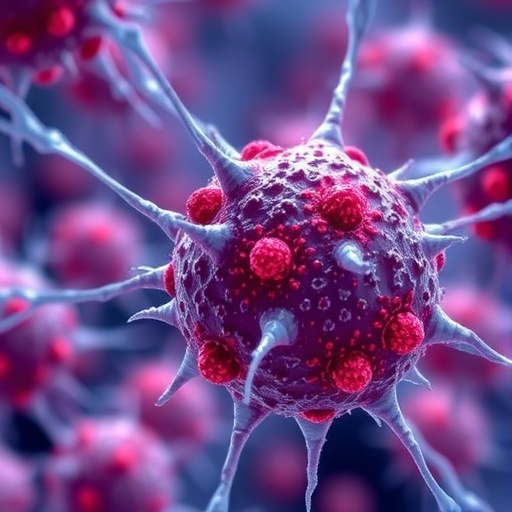
A new preclinical study in Biomedical Analysis reports a targeted nanomedicine strategy that tackles a long-standing obstacle in copper-dependent cancer therapy. The approach focuses on “cuproptosis,” a cell-death pathway triggered by copper, which—until now—has often required systemic copper supplementation and may raise safety concerns beyond the tumor site.
Researchers designed a biocompatible nanoparticle platform based on PLGA-PEG, widely used in drug delivery because it is stable in circulation and breaks down in biological environments. To help the particles preferentially associate with tumor tissue, the team grafted iRGD, a tumor-penetrating peptide known for enhancing cellular uptake in cancer cells.
The therapeutic payload is TPEN, a chelator that binds metal ions, including copper. In this design, TPEN is delivered directly into cancer cells, where it can coordinate endogenous copper species and push the cells toward copper-dependent death without relying on externally administered metal. This reframes cuproptosis as an exploit of the tumor’s own biochemical resources.
The optimized formulation, TPEN@1%-iPPN, was engineered to be uniform, with nanoparticles averaging roughly 80 nm—an architecture favorable for tumor accumulation. In stability tests that mimic key features of blood circulation, the particles remained intact after dilution and exposure to serum proteins, supporting delivery of the chelator to the intended cellular compartment.
Release kinetics were also assessed: TPEN was found to be released in a sustained manner over about 72 hours. Such prolonged cargo liberation can help maintain therapeutic pressure within the tumor microenvironment rather than producing a short-lived drug pulse.
Targeting performance was evaluated in 4T1 breast cancer cells using complementary imaging and quantitative cytometry. Compared with non-targeted nanoparticles, iRGD-modified particles showed markedly greater cellular uptake, consistent with improved binding and internalization.
Importantly, functional assays supported selectivity. The targeted TPEN@1%-iPPN exhibited substantially higher toxicity toward 4T1 cells than the non-targeted control, while showing lower harm to normal human endothelial cells (HUVECs) compared with free, untargeted TPEN. The resulting tumor-selective profile suggests a widened therapeutic window.
Together, these findings provide proof-of-concept for a precision nanomedicine route to cuproptosis activation using endogenous copper. By pairing robust nanoparticle stability with ligand-directed delivery and metal-chelation chemistry, the authors outline a framework for reducing systemic side effects in copper-based cancer interventions.
“Our approach leverages the high copper levels already present in tumors… [delivering] a chelator that turns the cancer cell’s own biology against itself,” said corresponding author Dr. Ying Chen, emphasizing the cellular-level validation and the potential for future development.
Cite Scienmag News
Nathaniel Bowman. (July 15, 2026). Targeted Nanoparticles Make Tumors’ Copper Into a Lethal Weapon. Scienmag. https://scienmag.com/targeted-nanoparticles-make-tumors-copper-into-a-lethal-weapon/
Nathaniel Bowman. "Targeted Nanoparticles Make Tumors’ Copper Into a Lethal Weapon." Scienmag, 15 July 2026, https://scienmag.com/targeted-nanoparticles-make-tumors-copper-into-a-lethal-weapon/. Accessed 4 September 2026.
Nathaniel Bowman. "Targeted Nanoparticles Make Tumors’ Copper Into a Lethal Weapon." Scienmag. July 15, 2026. https://scienmag.com/targeted-nanoparticles-make-tumors-copper-into-a-lethal-weapon/


