


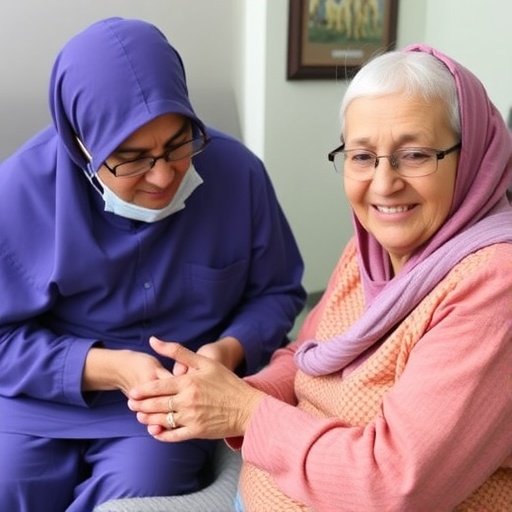
A new expert-based qualitative study is reshaping how researchers measure whether older adults can actually reach primary healthcare in Iran. Published in BMC Geriatrics, the work by Solbi, Shati, Amiri and colleagues introduces a contextually grounded assessment framework built from expert perspectives rather than relying on assumptions imported from other health systems.
The central challenge the researchers address is that “access” is not a single statistic. For older adults, barriers can be structural, cultural, informational, and operational at the same time—ranging from geographic availability of services to the ease of navigating referrals, affordability pressures, and the quality of communication during clinical encounters. By treating access as a multidimensional concept, the study moves beyond simple utilization metrics.
Methodologically, the researchers generated their framework through qualitative inquiry with experts, capturing how practitioners and system stakeholders interpret access in everyday practice. This approach is designed to identify components that are locally meaningful, ensuring the resulting model reflects Iran’s realities instead of generic international categories.
The proposed framework aims to help policymakers and evaluators conduct more accurate assessments of primary healthcare reach. In technical terms, it supports structured evaluation across relevant domains, potentially enabling benchmarking of gaps and prioritization of interventions targeted to older populations.
Importantly, qualitative expert elicitation can reveal “hidden variables” that standard surveys may miss—such as how trust in primary care is formed, how provider responsiveness influences follow-up, or how administrative processes affect continuity of care for those with limited mobility.
For a country’s health system, such a tool can guide resource allocation by clarifying which barriers are most influential in limiting access. That, in turn, can inform program design in primary care, including service organization, outreach strategies, and communication protocols geared to aging-related needs.
The authors also highlight the value of tailoring assessment tools to local context. As health systems diversify and aging accelerates, measurement frameworks must adapt to local workflows, financing behaviors, and social determinants to remain valid.
With the DOI signaling a 2026 publication, the study arrives at a critical moment: global health agencies increasingly emphasize age-friendly services and equitable access. A locally calibrated framework could improve both research quality and real-world decision-making.
In a science-news landscape, the key takeaway is clear: measuring access requires more than counting visits—it requires a model that reflects how older adults experience the system on the ground.
Cite Scienmag News
Ophelia Keating. (July 15, 2026). Iran experts build framework to assess older adults’ primary healthcare access. Scienmag. https://scienmag.com/iran-experts-build-framework-to-assess-older-adults-primary-healthcare-access/
Ophelia Keating. "Iran experts build framework to assess older adults’ primary healthcare access." Scienmag, 15 July 2026, https://scienmag.com/iran-experts-build-framework-to-assess-older-adults-primary-healthcare-access/. Accessed 4 September 2026.
Ophelia Keating. "Iran experts build framework to assess older adults’ primary healthcare access." Scienmag. July 15, 2026. https://scienmag.com/iran-experts-build-framework-to-assess-older-adults-primary-healthcare-access/


