

Wednesday, July 15, 2026
Science
No Result
View All Result
  • Login
  • HOME
  • SCIENCE NEWS
  • CONTACT US
  • HOME
  • SCIENCE NEWS
  • CONTACT US
No Result
View All Result
Scienmag
No Result
View All Result
Home Science News Psychology & Psychiatry

Sleep spindles linked to cognitive performance in euthymic bipolar disorder

July 15, 2026
in Psychology & Psychiatry
Reading Time: 2 mins read
0
Sleep spindles linked to cognitive performance in euthymic bipolar disorder

Sleep spindles linked to cognitive performance in euthymic bipolar disorder

65
SHARES
587
VIEWS
Share on FacebookShare on Twitter
ADVERTISEMENT

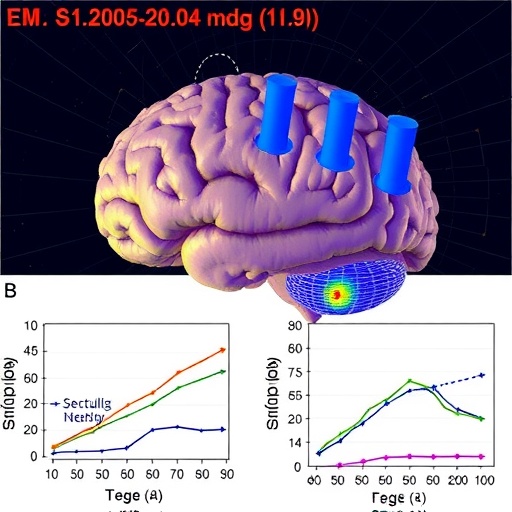
Sleep spindles—brief bursts of brain activity that appear during non-rapid eye movement sleep—are increasingly recognized as a neural “timing signal” for memory and learning. Now, a new study in Translational Psychiatry reports that these signature rhythms are not only linked to cognition in healthy brains, but also show measurable relationships in people living with bipolar disorder who are currently euthymic, meaning their mood is relatively stable.

Researchers focused on whether specific spindle features align with cognitive performance when patients are not experiencing acute mania or depression. The central idea is that, even outside symptomatic periods, underlying brain-network dynamics may influence how efficiently information is processed and retained.

To test this, the team examined sleep recordings and extracted spindle characteristics from electrophysiological data. Instead of treating spindles as a single uniform phenomenon, they assessed aspects such as how strongly spindles appear and how consistently they are expressed across sleep, reflecting the brain’s capacity for coordinated oscillatory activity.

Cognition was evaluated using standardized behavioral measures covering multiple domains, allowing the investigators to map which spindle-related metrics track most closely with performance. The analysis sought statistical links between spindle activity and cognitive outcomes while accounting for factors that could otherwise blur the interpretation, such as age differences and variability in sleep.

The results suggest that stronger or more organization-consistent spindle activity corresponds to better cognitive functioning in euthymic bipolar disorder. This pattern supports a model in which sleep-dependent processes contribute to the maintenance of cognitive stability, even when mood symptoms are not prominent.

Importantly, the work moves the field toward biomarker-driven sleep science. If spindle metrics can reliably reflect cognitive status, they could help clinicians identify vulnerability long before relapse or functional decline becomes obvious.

Beyond clinical promise, the study adds mechanistic weight to the idea that sleep spindles may facilitate synaptic consolidation and the integration of newly learned information. In that framework, spindle disruptions could represent a bottleneck for plasticity, with downstream effects on cognition.

As bipolar disorder continues to be increasingly understood as a brain-network condition rather than purely a mood disorder, spindle-linked cognition may offer a window into how neural timing during sleep shapes everyday mental performance.

If the findings replicate in larger cohorts and across diverse recording protocols, sleep spindle profiling could become a practical and noninvasive tool for monitoring cognitive health in bipolar disorder—turning nighttime brain dynamics into a measurable signal for daytime function.

Subject of Research: Sleep spindles and cognitive performance in euthymic bipolar disorder.

Article Title: The association between sleep spindles and cognitive performance in euthymic bipolar disorder.

Article References: Tröger, A., Schneider, J., Tsapekos, D. et al. The association between sleep spindles and cognitive performance in euthymic bipolar disorder. Translational Psychiatry (2026). https://doi.org/10.1038/s41398-026-04273-2

Image Credits: AI Generated

DOI: https://doi.org/10.1038/s41398-026-04273-2

Tags: bipolar disorder neurophysiologybrain oscillations and cognitioncognitive performance in bipolar disorderelectrophysiological biomarkers for cognitive functionelectrophysiological sleep markersmemory and learning during sleepneural timing signalssleep EEG analysis in psychiatric conditionssleep regulation and mental healthsleep spindle characteristicsSleep spindlesstable mood state brain activity
Share26Tweet16
Previous Post

Emerging Tick-Borne Virus Sparks Growing Concern

Next Post

Semipermeable species boundaries allow gene flow but block hybrid swarm in desert fish

Related Posts

EEG Machine Learning Predicts Comorbid Anxiety in Depressed Adolescents
Psychology & Psychiatry

EEG Machine Learning Predicts Comorbid Anxiety in Depressed Adolescents

July 15, 2026
Brain Morphometry Links Behavioral Inhibition Activation System to OCD Treatment Outcomes
Psychology & Psychiatry

Brain Morphometry Links Behavioral Inhibition Activation System to OCD Treatment Outcomes

July 14, 2026
Depression Linked to Hippocampal Subfield Volume Changes in Older Adults
Psychology & Psychiatry

Depression Linked to Hippocampal Subfield Volume Changes in Older Adults

July 14, 2026
DRD1-MSNs Hyperactivity in Striatum Causes Repetitive Behaviors in Cry1Δ11 Mutation
Psychology & Psychiatry

DRD1-MSNs Hyperactivity in Striatum Causes Repetitive Behaviors in Cry1Δ11 Mutation

July 14, 2026
Widespread White Matter Abnormalities Found in First-Episode Schizophrenia Patients
Psychology & Psychiatry

Widespread White Matter Abnormalities Found in First-Episode Schizophrenia Patients

July 13, 2026
New Computational Method Aligns Human and Primate Cognitive Strategies
Psychology & Psychiatry

New Computational Method Aligns Human and Primate Cognitive Strategies

July 13, 2026
Next Post
Semipermeable species boundaries allow gene flow but block hybrid swarm in desert fish

Semipermeable species boundaries allow gene flow but block hybrid swarm in desert fish

  • Mothers who receive childcare support from maternal grandparents show more

    Mothers who receive childcare support from maternal grandparents show more parental warmth, finds NTU Singapore study

    27656 shares
    Share 11059 Tweet 6912
  • University of Seville Breaks 120-Year-Old Mystery, Revises a Key Einstein Concept

    1061 shares
    Share 424 Tweet 265
  • Bee body mass, pathogens and local climate influence heat tolerance

    682 shares
    Share 273 Tweet 171
  • Researchers record first-ever images and data of a shark experiencing a boat strike

    546 shares
    Share 218 Tweet 137
  • Groundbreaking Clinical Trial Reveals Lubiprostone Enhances Kidney Function

    531 shares
    Share 212 Tweet 133
Science

Embark on a thrilling journey of discovery with Scienmag.com—your ultimate source for cutting-edge breakthroughs. Immerse yourself in a world where curiosity knows no limits and tomorrow’s possibilities become today’s reality!

RECENT NEWS

  • Elephants Use Ground Vibrations for Communication via Specialized Middle Ear Anatomy
  • Integrating Polygenic Scores with Registry Data to Improve Colorectal Cancer Screening
  • Microplastics Found 2,000 Meters Deep in Hydrothermal Vent Animals
  • Many Women Still Confused by Perimenopause

Categories

  • Agriculture
  • Anthropology
  • Archaeology
  • Athmospheric
  • Biology
  • Biotechnology
  • Blog
  • Bussines
  • Cancer
  • Chemistry
  • Climate
  • Earth Science
  • Editorial Policy
  • Marine
  • Mathematics
  • Medicine
  • Pediatry
  • Policy
  • Psychology & Psychiatry
  • Science Education
  • Social Science
  • Space
  • Technology and Engineering

Subscribe to Blog via Email

Enter your email address to subscribe to this blog and receive notifications of new posts by email.

Join 5,146 other subscribers

© 2025 Scienmag - Science Magazine

Welcome Back!

Login to your account below

Forgotten Password?

Retrieve your password

Please enter your username or email address to reset your password.

Log In
No Result
View All Result
  • HOME
  • SCIENCE NEWS
  • CONTACT US

© 2025 Scienmag - Science Magazine

Discover more from Science

Subscribe now to keep reading and get access to the full archive.

Continue reading
