


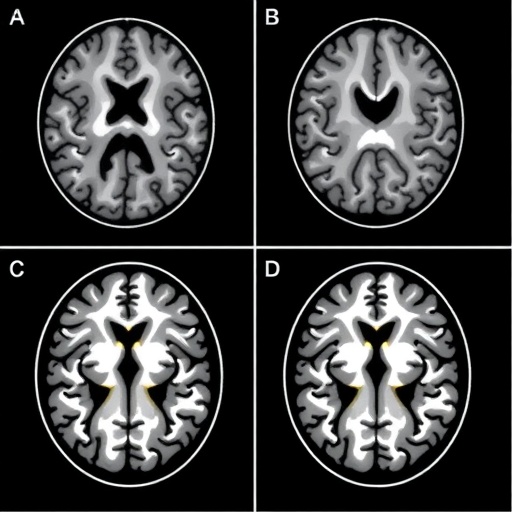
A groundbreaking study has unveiled extensive white matter microstructural changes in individuals experiencing their first episode of schizophrenia, shifting our understanding of this enigmatic psychiatric disorder. Using cutting-edge fixel-based analysis, researchers from Yang et al. have mapped widespread abnormalities in the brain’s white matter architecture of treatment-naïve patients, revealing intricate disruptions that may underpin schizophrenia’s cognitive and behavioral symptoms.
Traditionally, white matter alterations in schizophrenia have been linked to chronic illness or effects of medication, but this study’s focus on treatment-naïve patients uniquely rules out confounding influences from antipsychotic drugs. The research harnesses advanced diffusion MRI techniques, moving beyond conventional voxel-based analysis to utilize fixel-based metrics that allow for detailed examination of crossing fiber populations within white matter tracts. This methodology provides unprecedented specificity in detecting microstructural abnormalities at a sub-voxel level, capturing subtle yet widespread changes that were previously undetectable.
Findings suggest that these white matter disruptions are not localized but instead pervade multiple fiber tracts involved in critical brain networks. Such widespread microstructural abnormalities implicate a fundamental neurodevelopmental component to schizophrenia, potentially arising before clinical symptoms manifest. The damage appears to affect pathways integral to information processing, cognitive control, and emotional regulation, which may explain the heterogeneous symptom profile of early schizophrenia.
The implications for diagnosis and treatment are profound. Identifying these microstructural signatures in first-episode patients opens avenues for early biomarkers that could facilitate prompt intervention before severe symptom progression. Moreover, understanding the specific white matter pathways affected provides targets for novel therapies aimed at restoring connectivity and function, potentially transforming clinical management for schizophrenia.
This study also highlights the transformative power of fixel-based analysis in psychiatric neuroscience. By dissecting fiber-specific changes, researchers can disentangle complex brain circuitry alterations and advance precision psychiatry. Future research leveraging this approach may unravel pathophysiological mechanisms in other neuropsychiatric disorders where white matter integrity is compromised.
Notably, the study’s rigorous exclusion of medicated subjects and first-episode design strengthen the causal inference between white matter abnormalities and schizophrenia onset. While longitudinal studies are required to chart progression and response to treatment, these findings establish a critical baseline characterization of the early brain in schizophrenia, setting a new standard for future neuroimaging research in the field.
As neuroscientists strive to decode the biological underpinnings of schizophrenia, this work stands as a crucial milestone. The pervasive nature of white matter microstructural alterations revealed here underscores the disorder’s complexity and points toward integrative models involving neurodevelopment, connectivity disruption, and symptom emergence.
In sum, Yang and colleagues have delivered a viral advance in schizophrenia research, demonstrating that the earliest stages of the illness are marked by widespread, fiber-specific white matter deficits. Their findings not only deepen our pathophysiological insight but also pave the way for improved early detection and therapeutic innovation.
Cite Scienmag News
Glenn Wilkins. (July 13, 2026). Widespread White Matter Abnormalities Found in First-Episode Schizophrenia Patients. Scienmag. https://scienmag.com/widespread-white-matter-abnormalities-found-in-first-episode-schizophrenia-patients/
Glenn Wilkins. "Widespread White Matter Abnormalities Found in First-Episode Schizophrenia Patients." Scienmag, 13 July 2026, https://scienmag.com/widespread-white-matter-abnormalities-found-in-first-episode-schizophrenia-patients/. Accessed 4 September 2026.
Glenn Wilkins. "Widespread White Matter Abnormalities Found in First-Episode Schizophrenia Patients." Scienmag. July 13, 2026. https://scienmag.com/widespread-white-matter-abnormalities-found-in-first-episode-schizophrenia-patients/


