

Tuesday, July 14, 2026
Science
No Result
View All Result
  • Login
  • HOME
  • SCIENCE NEWS
  • CONTACT US
  • HOME
  • SCIENCE NEWS
  • CONTACT US
No Result
View All Result
Scienmag
No Result
View All Result
Home Science News Cancer

Researchers Identify Therapeutic Vulnerability in Aggressive Childhood Leukemia

July 14, 2026
in Cancer
Reading Time: 2 mins read
0
Researchers Identify Therapeutic Vulnerability in Aggressive Childhood Leukemia

Researchers Identify Therapeutic Vulnerability in Aggressive Childhood Leukemia

65
SHARES
587
VIEWS
Share on FacebookShare on Twitter
ADVERTISEMENT

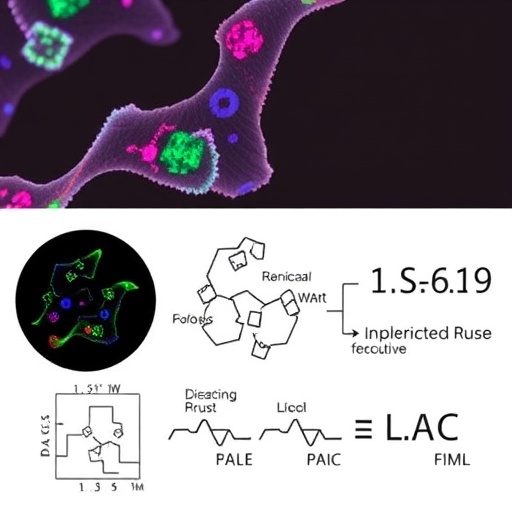
An international research team has pinpointed a new biological weakness in KMT2A-rearranged B-cell acute lymphoblastic leukemia (B-ALL), one of the most dangerous childhood cancers. The work, published in Blood, may open a path toward treatment strategies for patients who often face relapse and limited options.

The study targets a subtype that strikes mostly infants and very young children. Compared with other pediatric leukemias, KMT2A-r B-ALL shows higher relapse rates and poorer survival, making the search for more effective interventions urgent.

Using preclinical evidence from patient-derived material, cell-based experiments, and animal models, the researchers focused on how leukemia cells maintain themselves and expand. They identified a critical interaction involving two surface proteins that helps drive disease persistence.

Mechanistically, the authors report that the relevant protein network connects to intracellular signaling through Rho GTPases, molecular switches known to regulate cell behavior such as movement, survival, and proliferation. When this pathway is disrupted, leukemic aggressiveness is reduced.

Crucially, the vulnerability proved druggable. Blocking the mechanism significantly slowed leukemia progression in experimental models and strengthened the effectiveness of conventional therapies. In other words, the targeted intervention acted as an accelerator of standard treatment response rather than as a standalone cure.

The study is notable for its translational angle: the blocking strategy was achieved with natalizumab, a monoclonal antibody already approved for autoimmune diseases including multiple sclerosis and Crohn’s disease. Because natalizumab has extensive clinical use, repurposing it could, in principle, shorten future development timelines.

However, the researchers emphasize that the findings remain preclinical. Natalizumab has not yet been tested in patients with this leukemia subtype, so safety, dosing, and efficacy must be evaluated through carefully designed clinical trials.

Overall, the results provide a proof of concept for a targeted adjunct approach, grounded in leukemia biology and signaling. By revealing a druggable axis in KMT2A-r B-ALL, the work sets up a foundation for future studies aimed at improving outcomes for children facing very high-risk disease.

Subject of Research: Human tissue samples
Article Title: NG2-ITGA4 axis regulates Rho GTPases and leukemic aggressiveness in KMT2A-r B-ALL and is targetable with natalizumab
News Publication Date: 23-Jun-2026
Web References: https://ashpublications.org/blood/article-abstract/doi/10.1182/blood.2025031693/569304/NG2-ITGA4-axis-regulates-Rho-GTPases-and-leukemic?redirectedFrom=fulltext ; http://dx.doi.org/10.1182/blood.2025031693
Image Credits: Josep Carreras Leukaemia Research Institute

Keywords: leukemia; blood cancer; pediatrics; antibody therapy

Tags: biological vulnerabilities in childhood leukemiacell surface proteins in leukemiachildhood leukemia treatmentcombination therapy strategies in pediatric cancerdruggable pathways in leukemiaexperimental models of childhood leukemiaKMT2A-rearranged B-cell acute lymphoblastic leukemialeukemia cell survival mechanismspediatric leukemia relapseRho GTPases in cancer progressiontargeted therapy for aggressive leukemiatranslational research in leukemia treatment
Share26Tweet16
Previous Post

Dual-Frequency Photoacoustic CT Reveals Clear Whole Brain, Centimeters Deep

Next Post

Uncanny Valley Effect Detected in Macaques Using 3D Animated Monkey Avatars

Related Posts

Sustained virtual smoking cessation doubles quit rates for cancer patients
Cancer

Sustained virtual smoking cessation doubles quit rates for cancer patients

July 14, 2026
Reactivated DRP1 Enables Resistance to MEK Inhibitors in Pancreatic Cancer Cells
Cancer

Reactivated DRP1 Enables Resistance to MEK Inhibitors in Pancreatic Cancer Cells

July 14, 2026
Second Review Aims to Improve Targeting Accuracy
Cancer

Second Review Aims to Improve Targeting Accuracy

July 14, 2026
New Insights into Liver Cancer Gene Signatures for Prognosis and Therapy
Cancer

New Insights into Liver Cancer Gene Signatures for Prognosis and Therapy

July 14, 2026
Veillonella ratti alters gut microbiome to prevent EAE disease progression
Cancer

Veillonella ratti alters gut microbiome to prevent EAE disease progression

July 14, 2026
New cancer drug demonstrates potential in mesothelioma clinical trial
Cancer

New cancer drug demonstrates potential in mesothelioma clinical trial

July 14, 2026
Next Post
Uncanny Valley Effect Detected in Macaques Using 3D Animated Monkey Avatars

Uncanny Valley Effect Detected in Macaques Using 3D Animated Monkey Avatars

  • Mothers who receive childcare support from maternal grandparents show more

    Mothers who receive childcare support from maternal grandparents show more parental warmth, finds NTU Singapore study

    27656 shares
    Share 11059 Tweet 6912
  • University of Seville Breaks 120-Year-Old Mystery, Revises a Key Einstein Concept

    1061 shares
    Share 424 Tweet 265
  • Bee body mass, pathogens and local climate influence heat tolerance

    682 shares
    Share 273 Tweet 171
  • Researchers record first-ever images and data of a shark experiencing a boat strike

    546 shares
    Share 218 Tweet 137
  • Groundbreaking Clinical Trial Reveals Lubiprostone Enhances Kidney Function

    531 shares
    Share 212 Tweet 133
Science

Embark on a thrilling journey of discovery with Scienmag.com—your ultimate source for cutting-edge breakthroughs. Immerse yourself in a world where curiosity knows no limits and tomorrow’s possibilities become today’s reality!

RECENT NEWS

  • Informal Dementia Caregivers as Hidden Second Patients: Stress, Resilience, Burden
  • UniFFBench Benchmarks Universal Machine Learning Force Fields Using Experimental Data
  • Single-Crystal Monolayer Graphene Synthesized on Cu/Ni(111) Alloy Foil
  • Study finds most pregnant people fail recommended seatbelt placement, despite safety need

Categories

  • Agriculture
  • Anthropology
  • Archaeology
  • Athmospheric
  • Biology
  • Biotechnology
  • Blog
  • Bussines
  • Cancer
  • Chemistry
  • Climate
  • Earth Science
  • Editorial Policy
  • Marine
  • Mathematics
  • Medicine
  • Pediatry
  • Policy
  • Psychology & Psychiatry
  • Science Education
  • Social Science
  • Space
  • Technology and Engineering

Subscribe to Blog via Email

Enter your email address to subscribe to this blog and receive notifications of new posts by email.

Join 5,146 other subscribers

© 2025 Scienmag - Science Magazine

Welcome Back!

Login to your account below

Forgotten Password?

Retrieve your password

Please enter your username or email address to reset your password.

Log In
No Result
View All Result
  • HOME
  • SCIENCE NEWS
  • CONTACT US

© 2025 Scienmag - Science Magazine

Discover more from Science

Subscribe now to keep reading and get access to the full archive.

Continue reading
