


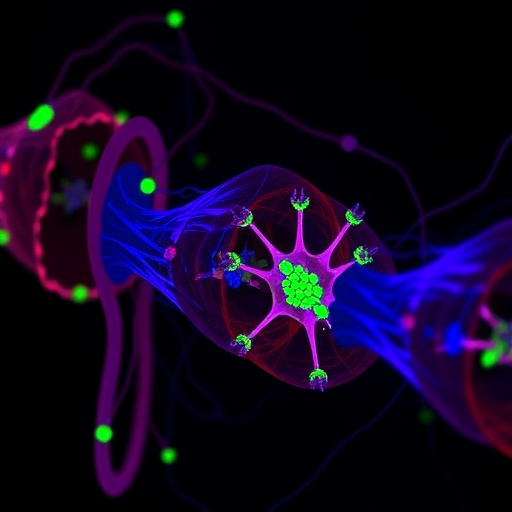
Pancreatic cancer remains notoriously difficult to treat, and targeted therapies often fall short when tumor cells activate escape routes. A new study reports that a key mitochondrial regulator, DRP1, helps pancreatic cancer cells withstand MEK inhibition—a strategy designed to disrupt aberrant MAPK signaling that many tumors depend on. The work, published in British Journal of Cancer, ties mitochondrial dynamics directly to therapeutic resistance.
MEK inhibitors aim to blunt downstream signaling through ERK, reducing proliferation and survival. Yet resistant responses can emerge quickly, leaving patients with progressive disease despite drug pressure. Researchers focused on whether mitochondrial remodeling—an emerging determinant of stress tolerance—contributes to this problem during MEK-targeted treatment.
The study centers on DRP1 (dynamin-related protein 1), a protein that governs mitochondrial fission. By controlling how mitochondria split and reshape, DRP1 can influence energy production, apoptosis sensitivity, and the ability of cells to cope with metabolic stress. The authors investigated how MEK inhibition affects DRP1 activity and mitochondrial morphology in pancreatic cancer cells.
They found that, rather than shutting down with pathway blockade, DRP1 could be reactivated, shifting the mitochondrial network toward a state supportive of survival under therapy. Functionally, this reactivation correlated with continued growth signals and reduced cell death compared with cells lacking effective DRP1-driven remodeling.
Mechanistically, the results suggest that the re-emergence of DRP1-driven fission helps maintain cellular fitness when MEK signaling is interrupted. This provides a route by which tumors buffer the consequences of pathway inhibition, potentially sustaining mitochondrial quality control and redox balance long enough to resist drug-induced stress.
Importantly, the authors tested the concept beyond correlations. By modulating DRP1-related processes, they observed changes in how cancer cells respond to MEK inhibitors, strengthening the argument that DRP1 is not merely a marker of resistance but a functional contributor.
The findings place mitochondrial dynamics at the center of a therapeutic blind spot: even when signaling pathways are targeted, cells may pivot to organelle-based adaptations. If validated in broader models, DRP1 could become a predictive biomarker for response or a target to combine with MEK inhibition.
For clinicians and translational researchers, the implication is clear: overcoming MEK inhibitor resistance may require addressing the mitochondrial machinery that tumors recruit under drug pressure. Future studies will need to define which patient subgroups display DRP1 reactivation and how best to therapeutically intercept it.
Cite Scienmag News
Nathaniel Bowman. (July 14, 2026). Reactivated DRP1 Enables Resistance to MEK Inhibitors in Pancreatic Cancer Cells. Scienmag. https://scienmag.com/reactivated-drp1-enables-resistance-to-mek-inhibitors-in-pancreatic-cancer-cells/
Nathaniel Bowman. "Reactivated DRP1 Enables Resistance to MEK Inhibitors in Pancreatic Cancer Cells." Scienmag, 14 July 2026, https://scienmag.com/reactivated-drp1-enables-resistance-to-mek-inhibitors-in-pancreatic-cancer-cells/. Accessed 4 September 2026.
Nathaniel Bowman. "Reactivated DRP1 Enables Resistance to MEK Inhibitors in Pancreatic Cancer Cells." Scienmag. July 14, 2026. https://scienmag.com/reactivated-drp1-enables-resistance-to-mek-inhibitors-in-pancreatic-cancer-cells/


