

Tuesday, July 14, 2026
Science
No Result
View All Result
  • Login
  • HOME
  • SCIENCE NEWS
  • CONTACT US
  • HOME
  • SCIENCE NEWS
  • CONTACT US
No Result
View All Result
Scienmag
No Result
View All Result
Home Science News Medicine

STN-DBS and LCIG Impact Parkinson’s Disease Axial Symptoms Differently

July 14, 2026
in Medicine
Reading Time: 2 mins read
0
STN-DBS and LCIG Impact Parkinson’s Disease Axial Symptoms Differently

STN-DBS and LCIG Impact Parkinson’s Disease Axial Symptoms Differently

65
SHARES
587
VIEWS
Share on FacebookShare on Twitter
ADVERTISEMENT

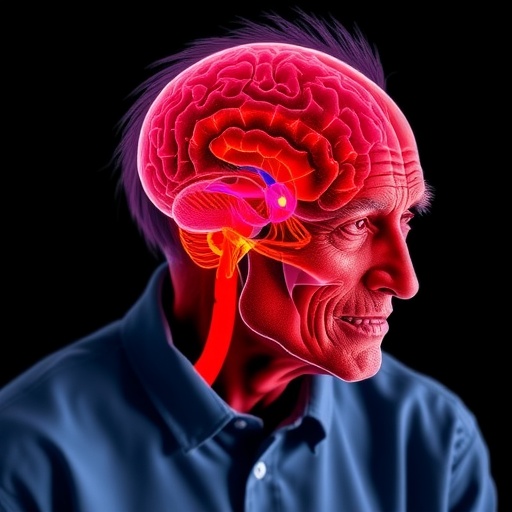
A groundbreaking study published in npj Parkinson’s Disease reveals new insights into the long-term effects of two advanced therapies for Parkinson’s disease: Subthalamic nucleus deep brain stimulation (STN-DBS) and levodopa-carbidopa intestinal gel (LCIG). Researchers led by Colucci, Kaymak, and Antenucci have uncovered that these treatments, both widely used to alleviate motor symptoms, exhibit significantly different outcomes specifically for axial symptoms over time.

Axial symptoms—manifesting as balance difficulties, gait disturbances, and postural instability—represent some of the most debilitating and treatment-resistant features of Parkinson’s disease. While STN-DBS involves implanting electrodes in the brain to modulate abnormal subthalamic nucleus activity, LCIG delivers a continuous dopaminergic infusion directly into the small intestine to smooth out motor fluctuations. Until now, the nuanced long-term impact of these treatments on axial functions remained unclear.

The study employed rigorous longitudinal assessments of patients undergoing either STN-DBS or LCIG therapy. Using standardized clinical scales and objective gait analysis over extended follow-up periods, the researchers documented divergent trajectories in axial symptom progression. They report that STN-DBS patients initially experience notable improvement in axial motor control; however, over time, these benefits wane and axial symptoms may even worsen. Conversely, LCIG recipients show more stable axial function, with fewer declines observed years after treatment initiation.

These findings carry immense clinical implications. Understanding the differential effects on axial symptoms can inform tailored therapeutic decision-making, particularly for patients at high risk of falls and mobility loss. The study also highlights the underlying neurophysiological mechanisms distinguishing these treatments: STN-DBS primarily targets aberrant basal ganglia circuitry via electrical modulation, whereas LCIG restores dopaminergic tone continuously, influencing widespread motor pathways.

Moreover, the research underscores the importance of comprehensive monitoring protocols that specifically evaluate axial motor domains. As Parkinson’s disease progresses, axial impairment often dictates quality of life and independence far more than limb motor symptoms. This study champions a shift from merely controlling tremor and rigidity to preserving core postural functions in the long term.

While the benefits of STN-DBS on overall motor fluctuations remain undeniable, the revelation of its potentially limited efficacy on axial symptoms over time calls for adjunctive strategies or alternative interventions. LCIG’s relative stability in this realm suggests that continuous dopaminergic delivery may confer protective effects against axial deterioration.

Future investigations are warranted to decode the neurobiological substrates driving these differential outcomes, possibly guiding innovative therapies combining electrical and pharmacological approaches. This research lays the groundwork for a more nuanced understanding of Parkinson’s motor complications and how to mitigate them strategically.

In the quest to improve the lives of millions afflicted by Parkinson’s disease worldwide, these insights represent a critical stride toward personalized, symptom-specific treatment paradigms. As our knowledge deepens, so does hope for maintaining mobility and autonomy in this challenging neurodegenerative disorder.


Subject of Research: Long-term effects of STN-DBS and LCIG therapies on axial symptoms in Parkinson’s disease.

Article Title: STN-DBS and LCIG differentially affect long-term axial symptoms in Parkinson’s disease.

Article References:
Colucci, F., Kaymak, A., Antenucci, P. et al. STN-DBS and LCIG differentially affect long-term axial symptoms in Parkinson’s disease. npj Parkinsons Dis. (2026). https://doi.org/10.1038/s41531-026-01453-1

Image Credits: AI Generated

Tags: axial symptomsclinical assessmentdeep brain stimulationdisease progressiondopaminergic infusiongait disturbanceslevodopa-carbidopa intestinal gellong-term treatment outcomesmotor symptom managementneurostimulation therapyParkinson's diseasepostural instability
Share26Tweet16
Previous Post

Kinesiophobia Profiles Linked to Exercise and Fall Risks in Older Diabetics

Next Post

Terasaki Institute Develops Real-Time Biosensor for Donor Liver Preservation

Related Posts

Ethics Framework Proposed for Perioperative-Neonatal Care in Open Fetal Surgery
Medicine

Ethics Framework Proposed for Perioperative-Neonatal Care in Open Fetal Surgery

July 14, 2026
Single-cell analysis identifies keratinocyte groups driving inflammation in dermatitis
Medicine

Single-cell analysis identifies keratinocyte groups driving inflammation in dermatitis

July 14, 2026
Terasaki Institute Develops Real-Time Biosensor for Donor Liver Preservation
Medicine

Terasaki Institute Develops Real-Time Biosensor for Donor Liver Preservation

July 14, 2026
Kinesiophobia Profiles Linked to Exercise and Fall Risks in Older Diabetics
Medicine

Kinesiophobia Profiles Linked to Exercise and Fall Risks in Older Diabetics

July 14, 2026
Simple Test May Track Metabolic Health in Cancer and Chronic Illnesses
Medicine

Simple Test May Track Metabolic Health in Cancer and Chronic Illnesses

July 14, 2026
Deep Learning Detects REM Sleep Disorder and Parkinson’s Early via fMRI
Medicine

Deep Learning Detects REM Sleep Disorder and Parkinson’s Early via fMRI

July 14, 2026
Next Post
Terasaki Institute Develops Real-Time Biosensor for Donor Liver Preservation

Terasaki Institute Develops Real-Time Biosensor for Donor Liver Preservation

  • Mothers who receive childcare support from maternal grandparents show more

    Mothers who receive childcare support from maternal grandparents show more parental warmth, finds NTU Singapore study

    27656 shares
    Share 11059 Tweet 6912
  • University of Seville Breaks 120-Year-Old Mystery, Revises a Key Einstein Concept

    1061 shares
    Share 424 Tweet 265
  • Bee body mass, pathogens and local climate influence heat tolerance

    682 shares
    Share 273 Tweet 171
  • Researchers record first-ever images and data of a shark experiencing a boat strike

    546 shares
    Share 218 Tweet 137
  • Groundbreaking Clinical Trial Reveals Lubiprostone Enhances Kidney Function

    531 shares
    Share 212 Tweet 133
Science

Embark on a thrilling journey of discovery with Scienmag.com—your ultimate source for cutting-edge breakthroughs. Immerse yourself in a world where curiosity knows no limits and tomorrow’s possibilities become today’s reality!

RECENT NEWS

  • Ethics Framework Proposed for Perioperative-Neonatal Care in Open Fetal Surgery
  • How Supermassive Black Holes Sustain Their Growth
  • Robot-Guided Surgery Advances Treatment of Complex Brain Abscesses
  • Sensitive SWCNT Pyroelectric Phototransistors for Broadband Infrared Detection at Room Temperature

Categories

  • Agriculture
  • Anthropology
  • Archaeology
  • Athmospheric
  • Biology
  • Biotechnology
  • Blog
  • Bussines
  • Cancer
  • Chemistry
  • Climate
  • Earth Science
  • Editorial Policy
  • Marine
  • Mathematics
  • Medicine
  • Pediatry
  • Policy
  • Psychology & Psychiatry
  • Science Education
  • Social Science
  • Space
  • Technology and Engineering

Subscribe to Blog via Email

Enter your email address to subscribe to this blog and receive notifications of new posts by email.

Join 5,146 other subscribers

© 2025 Scienmag - Science Magazine

Welcome Back!

Login to your account below

Forgotten Password?

Retrieve your password

Please enter your username or email address to reset your password.

Log In
No Result
View All Result
  • HOME
  • SCIENCE NEWS
  • CONTACT US

© 2025 Scienmag - Science Magazine

Discover more from Science

Subscribe now to keep reading and get access to the full archive.

Continue reading
