

Tuesday, July 14, 2026
Science
No Result
View All Result
  • Login
  • HOME
  • SCIENCE NEWS
  • CONTACT US
  • HOME
  • SCIENCE NEWS
  • CONTACT US
No Result
View All Result
Scienmag
No Result
View All Result
Home Science News Medicine

Kinesiophobia Profiles Linked to Exercise and Fall Risks in Older Diabetics

July 14, 2026
in Medicine
Reading Time: 2 mins read
0
Kinesiophobia Profiles Linked to Exercise and Fall Risks in Older Diabetics

Kinesiophobia Profiles Linked to Exercise and Fall Risks in Older Diabetics

65
SHARES
587
VIEWS
Share on FacebookShare on Twitter
ADVERTISEMENT

A new study sheds light on the complex interplay between psychological fears, self-confidence in exercising, emotional stress, and physical vulnerability among older adults living with type 2 diabetes. By analyzing patterns of kinesiophobia — the fear of movement due to anticipated pain or injury — researchers have uncovered distinct profiles that reveal how this fear correlates with exercise habits and fall risk.

Kinesiophobia, often overlooked in diabetes care, can profoundly influence the willingness of individuals to engage in regular physical activity, which is crucial for managing blood sugar levels and overall health. In this groundbreaking cross-sectional study, scientists employed latent profile analysis, a statistical technique that identifies unobserved subgroups within a population, to categorize older diabetic adults according to their levels of kinesiophobia. This nuanced approach allows for a deeper understanding beyond a simple high-or-low fear dichotomy.

The research identified several unique kinesiophobia profiles, each associated with varying degrees of exercise self-efficacy — a person’s belief in their capability to perform physical activities. Those with higher fear tended to report diminished confidence in their ability to exercise, which could initiate a vicious cycle of reduced activity, physical deconditioning, and increased fall risk. Such falls carry particularly serious consequences for diabetic individuals, who may suffer slower wound healing and higher complication rates.

Moreover, the study explored the relationship between diabetes distress, a condition characterized by emotional burdens stemming from disease management, and kinesiophobia profiles. It found that higher diabetes distress amplified the fear of movement, further eroding exercise motivation. These findings underscore the need to address not only physical but also psychological barriers in diabetes care regimens.

Technological and therapeutic interventions targeting these latent fear profiles could pave the way for personalized support systems. For instance, cognitive-behavioral strategies aiming to reduce fear, combined with tailored exercise programs to boost self-efficacy, might mitigate the heightened fall risk and improve quality of life.

Importantly, the cross-sectional design provides a snapshot of these intertwined factors, inviting further longitudinal studies to unravel causality and the potential benefits of intervention. As populations age and diabetes prevalence climbs globally, understanding such psychological dimensions could inform healthcare professionals and caregivers in designing holistic treatment plans.

This research ultimately challenges the traditional focus on purely physiological metrics in diabetes management by positioning psychological fear and emotional distress as central elements influencing health outcomes. The integration of mental health assessment into routine diabetes care may be a crucial step toward reducing physical complications and enhancing patient well-being.

In summary, the study reveals that kinesiophobia is a multifaceted phenomenon intricately linked to exercise confidence, emotional strain, and fall susceptibility in older adults with type 2 diabetes. These insights open new horizons in personalized medicine and preventive strategies, potentially transforming how chronic conditions like diabetes are managed in the aging population.


Subject of Research: Kinesiophobia profiles, exercise self-efficacy, diabetes distress, and fall risk in older adults with type 2 diabetes

Article Title: Latent profiles of kinesiophobia and their associations with exercise self-efficacy, diabetes distress, and fall risk in older adults with type 2 diabetes: a cross-sectional study

Article References: Ding, W., Li, C., Liu, K. et al. BMC Geriatr (2026). https://doi.org/10.1186/s12877-026-07984-9

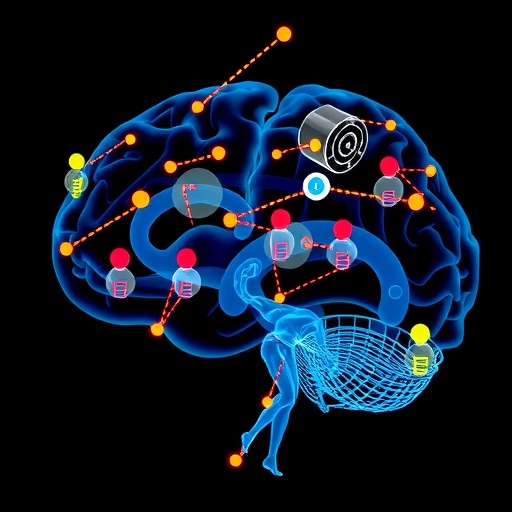
Image Credits: AI Generated

Tags: emotional stress and physical vulnerability in elderly diabeticsexercise self-efficacy in diabetes managementfall prevention strategies for older adults with diabetesimpact of kinesiophobia on physical activity in diabeteskinesiophobia in older diabeticslatent profile analysis of kinesiophobia in older populationsphysical deconditioning and fall risk in elderly with type 2 diabetespsychological factors influencing exercise adherence in older diabetpsychological fear of movement and fall riskrelationship between fear of injury and exercise habits in diabetics
Share26Tweet16
Previous Post

Flexible EV charging boosts cost efficiency in EU energy systems

Next Post

STN-DBS and LCIG Impact Parkinson’s Disease Axial Symptoms Differently

Related Posts

Single-cell analysis identifies keratinocyte groups driving inflammation in dermatitis
Medicine

Single-cell analysis identifies keratinocyte groups driving inflammation in dermatitis

July 14, 2026
Terasaki Institute Develops Real-Time Biosensor for Donor Liver Preservation
Medicine

Terasaki Institute Develops Real-Time Biosensor for Donor Liver Preservation

July 14, 2026
STN-DBS and LCIG Impact Parkinson’s Disease Axial Symptoms Differently
Medicine

STN-DBS and LCIG Impact Parkinson’s Disease Axial Symptoms Differently

July 14, 2026
Simple Test May Track Metabolic Health in Cancer and Chronic Illnesses
Medicine

Simple Test May Track Metabolic Health in Cancer and Chronic Illnesses

July 14, 2026
Deep Learning Detects REM Sleep Disorder and Parkinson’s Early via fMRI
Medicine

Deep Learning Detects REM Sleep Disorder and Parkinson’s Early via fMRI

July 14, 2026
Food Intake Levels Influence Swallowing Sound Acoustics in Older Adults
Medicine

Food Intake Levels Influence Swallowing Sound Acoustics in Older Adults

July 14, 2026
Next Post
STN-DBS and LCIG Impact Parkinson’s Disease Axial Symptoms Differently

STN-DBS and LCIG Impact Parkinson’s Disease Axial Symptoms Differently

  • Mothers who receive childcare support from maternal grandparents show more

    Mothers who receive childcare support from maternal grandparents show more parental warmth, finds NTU Singapore study

    27656 shares
    Share 11059 Tweet 6912
  • University of Seville Breaks 120-Year-Old Mystery, Revises a Key Einstein Concept

    1061 shares
    Share 424 Tweet 265
  • Bee body mass, pathogens and local climate influence heat tolerance

    682 shares
    Share 273 Tweet 171
  • Researchers record first-ever images and data of a shark experiencing a boat strike

    546 shares
    Share 218 Tweet 137
  • Groundbreaking Clinical Trial Reveals Lubiprostone Enhances Kidney Function

    531 shares
    Share 212 Tweet 133
Science

Embark on a thrilling journey of discovery with Scienmag.com—your ultimate source for cutting-edge breakthroughs. Immerse yourself in a world where curiosity knows no limits and tomorrow’s possibilities become today’s reality!

RECENT NEWS

  • Single-cell analysis identifies keratinocyte groups driving inflammation in dermatitis
  • Terasaki Institute Develops Real-Time Biosensor for Donor Liver Preservation
  • STN-DBS and LCIG Impact Parkinson’s Disease Axial Symptoms Differently
  • Kinesiophobia Profiles Linked to Exercise and Fall Risks in Older Diabetics

Categories

  • Agriculture
  • Anthropology
  • Archaeology
  • Athmospheric
  • Biology
  • Biotechnology
  • Blog
  • Bussines
  • Cancer
  • Chemistry
  • Climate
  • Earth Science
  • Editorial Policy
  • Marine
  • Mathematics
  • Medicine
  • Pediatry
  • Policy
  • Psychology & Psychiatry
  • Science Education
  • Social Science
  • Space
  • Technology and Engineering

Subscribe to Blog via Email

Enter your email address to subscribe to this blog and receive notifications of new posts by email.

Join 5,146 other subscribers

© 2025 Scienmag - Science Magazine

Welcome Back!

Login to your account below

Forgotten Password?

Retrieve your password

Please enter your username or email address to reset your password.

Log In
No Result
View All Result
  • HOME
  • SCIENCE NEWS
  • CONTACT US

© 2025 Scienmag - Science Magazine

Discover more from Science

Subscribe now to keep reading and get access to the full archive.

Continue reading
