

Tuesday, July 14, 2026
Science
No Result
View All Result
  • Login
  • HOME
  • SCIENCE NEWS
  • CONTACT US
  • HOME
  • SCIENCE NEWS
  • CONTACT US
No Result
View All Result
Scienmag
No Result
View All Result
Home Science News Medicine

Fallopian Tube T Cells May Prevent Ovarian Cancer Through Immune Surveillance

July 13, 2026
in Medicine
Reading Time: 2 mins read
0
Fallopian Tube T Cells May Prevent Ovarian Cancer Through Immune Surveillance

Fallopian Tube T Cells May Prevent Ovarian Cancer Through Immune Surveillance

65
SHARES
587
VIEWS
Share on FacebookShare on Twitter
ADVERTISEMENT

Groundbreaking Study Unveils Immune Surveillance Network in Fallopian Tubes Linked to Ovarian Cancer Prevention

A pioneering study published in Nature Communications has uncovered a sophisticated immune surveillance mechanism located within the fallopian tubes, potentially heralding a paradigm shift in ovarian cancer prevention strategies. Using advanced transcriptomic analysis, researchers dissected the cellular landscape of tissue-resident memory T (TRM) cells in the fallopian tube microenvironment, demonstrating their critical role in early immune defense and cancer surveillance.

Tissue-resident memory T cells are a specialized subset of immune cells that reside long-term in tissues, providing localized immune protection. While their function in mucosal surfaces such as the lungs and intestines has been well-characterized, their presence and role in the fallopian tubes remained largely unexplored until now.

The study conducted by Wang et al. employed cutting-edge single-cell RNA sequencing to profile the transcriptomic signatures of TRM cells extracted from healthy fallopian tube tissues. This high-resolution technique enabled the identification of distinct molecular networks governing the activation, maintenance, and antigen recognition capabilities of these cells.

The researchers revealed that fallopian tube TRM cells exhibit a unique gene expression profile indicative of heightened immune surveillance readiness. This includes the upregulation of cytotoxic effector molecules, tissue adhesion proteins, and chemokine receptors that enable these T cells to persist within the fallopian tube epithelium and rapidly respond to pathogen invasion or aberrant cellular activity.

Importantly, the data suggest that this TRM cell population forms a precursor immune network capable of detecting early oncogenic changes within the fallopian tube mucosa, which is increasingly recognized as a primary site of origin for high-grade serous ovarian carcinoma. This immune network could patrol cellular abnormalities and potentially initiate anti-tumor responses well before overt cancer develops.

These findings provide fresh insights into the immunological landscape that underpins ovarian cancer prevention at its earliest stages. Characterizing the molecular circuits that sustain TRM cells in the fallopian tube could pave the way toward novel immunotherapeutic approaches aimed at reinforcing this natural barrier against tumorigenesis.

Furthermore, the study underscores the critical importance of localized, tissue-specific immunity in female reproductive organs, extending the concept of TRM-mediated immune surveillance beyond traditional mucosal sites.

Experts believe that leveraging this knowledge may one day lead to interventions that boost the functionality or abundance of TRM cells in the fallopian tube as a preventative strategy against ovarian cancer. Developing diagnostic tools that assess TRM cell health could also enable earlier detection of malignant transformations.

In summary, this research marks a significant advance in cancer immunology by illuminating a previously underappreciated immune sentinel system within the fallopian tubes. It opens promising avenues for cancer prevention research, emphasizing the need to understand tissue-resident immunity in the context of gynecological malignancies.

As ovarian cancer remains a leading cause of female cancer mortality worldwide due to late diagnosis, these findings hold transformative potential for improving patient outcomes through early immune-mediated intervention.


Subject of Research: Tissue-resident memory T cells in the fallopian tube and their role in ovarian cancer immune surveillance

Article Title: Transcriptomic analysis of tissue-resident memory T cells of the fallopian tube reveals a precursor immune surveillance network for ovarian cancer prevention

Article References:
Wang, L., Roskams-Hieter, B., Hussain, N. et al. Transcriptomic analysis of tissue-resident memory T cells of the fallopian tube reveals a precursor immune surveillance network for ovarian cancer prevention. Nat Commun (2026). https://doi.org/10.1038/s41467-026-74599-4

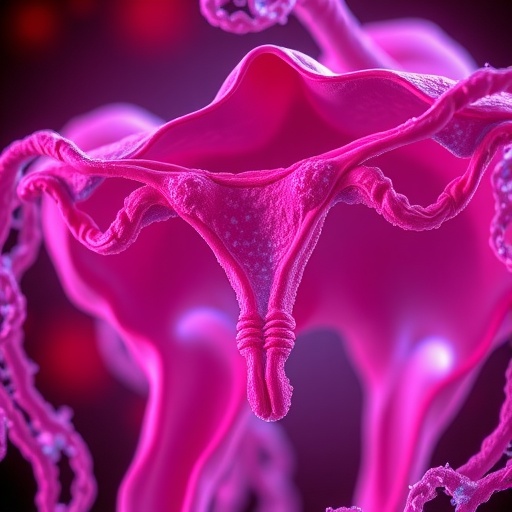
Image Credits: AI Generated

Tags: advanced transcriptomic techniquescellular landscape of fallopian tissuesearly detection of ovarian cancerFallopian tube immune surveillanceimmune mechanisms in cancer preventionimmune microenvironment of fallopian tubesmucosal immune defenseovarian cancer preventionSingle-Cell RNA SequencingTissue-resident memory T cellstranscriptomic analysis of immune cellsTRM cells in fallopian tubes
Share26Tweet16
Previous Post

WVU engineers create AI to accelerate wildfire satellite tracking

Next Post

Widespread White Matter Abnormalities Found in First-Episode Schizophrenia Patients

Related Posts

Half of New York Pedestrian Deaths Linked to Substance-Impaired Awareness
Medicine

Half of New York Pedestrian Deaths Linked to Substance-Impaired Awareness

July 14, 2026
Tumor Profiling Reveals Chemotherapy Effects and Personalized Treatments for Ovarian Cancer
Medicine

Tumor Profiling Reveals Chemotherapy Effects and Personalized Treatments for Ovarian Cancer

July 14, 2026
Advances and Challenges in Placenta Models for HIV-1, ART, and Nicotine Research
Medicine

Advances and Challenges in Placenta Models for HIV-1, ART, and Nicotine Research

July 14, 2026
Social Support and Participation Challenges in Disabled Brazilian Older Adults
Medicine

Social Support and Participation Challenges in Disabled Brazilian Older Adults

July 14, 2026
Astrocyte Lipid Imbalance Triggers Early Neurodegeneration
Medicine

Astrocyte Lipid Imbalance Triggers Early Neurodegeneration

July 14, 2026
Beginner’s Guide to Fast Neutron Detection Using EJ-309 Detector
Medicine

Beginner’s Guide to Fast Neutron Detection Using EJ-309 Detector

July 14, 2026
Next Post
Widespread White Matter Abnormalities Found in First-Episode Schizophrenia Patients

Widespread White Matter Abnormalities Found in First-Episode Schizophrenia Patients

  • Mothers who receive childcare support from maternal grandparents show more

    Mothers who receive childcare support from maternal grandparents show more parental warmth, finds NTU Singapore study

    27656 shares
    Share 11059 Tweet 6912
  • University of Seville Breaks 120-Year-Old Mystery, Revises a Key Einstein Concept

    1061 shares
    Share 424 Tweet 265
  • Bee body mass, pathogens and local climate influence heat tolerance

    682 shares
    Share 273 Tweet 171
  • Researchers record first-ever images and data of a shark experiencing a boat strike

    546 shares
    Share 218 Tweet 137
  • Groundbreaking Clinical Trial Reveals Lubiprostone Enhances Kidney Function

    531 shares
    Share 212 Tweet 133
Science

Embark on a thrilling journey of discovery with Scienmag.com—your ultimate source for cutting-edge breakthroughs. Immerse yourself in a world where curiosity knows no limits and tomorrow’s possibilities become today’s reality!

RECENT NEWS

  • KAIST launches space sensors with fully electrically reconfigurable optical functions
  • KAIST Advances Development of Microbial Cell Factories
  • SPOP Double-Donut Structure Reveals Cause of Cancer Mutations
  • Scientists reverse “silly sprinklers” to solve decades-old physics mystery

Categories

  • Agriculture
  • Anthropology
  • Archaeology
  • Athmospheric
  • Biology
  • Biotechnology
  • Blog
  • Bussines
  • Cancer
  • Chemistry
  • Climate
  • Earth Science
  • Editorial Policy
  • Marine
  • Mathematics
  • Medicine
  • Pediatry
  • Policy
  • Psychology & Psychiatry
  • Science Education
  • Social Science
  • Space
  • Technology and Engineering

Subscribe to Blog via Email

Enter your email address to subscribe to this blog and receive notifications of new posts by email.

Join 5,146 other subscribers

© 2025 Scienmag - Science Magazine

Welcome Back!

Login to your account below

Forgotten Password?

Retrieve your password

Please enter your username or email address to reset your password.

Log In
No Result
View All Result
  • HOME
  • SCIENCE NEWS
  • CONTACT US

© 2025 Scienmag - Science Magazine

Discover more from Science

Subscribe now to keep reading and get access to the full archive.

Continue reading
