

Monday, July 13, 2026
Science
No Result
View All Result
  • Login
  • HOME
  • SCIENCE NEWS
  • CONTACT US
  • HOME
  • SCIENCE NEWS
  • CONTACT US
No Result
View All Result
Scienmag
No Result
View All Result
Home Science News Mathematics

Amyloid PET Quantification Enhances Alzheimer’s Disease Diagnosis Accuracy

July 13, 2026
in Mathematics
Reading Time: 2 mins read
0
Amyloid PET Quantification Enhances Alzheimer’s Disease Diagnosis Accuracy

Amyloid PET Quantification Enhances Alzheimer’s Disease Diagnosis Accuracy

65
SHARES
587
VIEWS
Share on FacebookShare on Twitter
ADVERTISEMENT

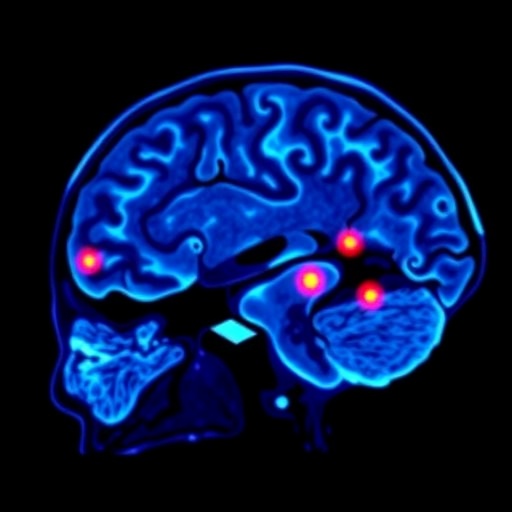
A recent meta-analysis focusing on Alzheimer’s disease biomarkers has introduced refined insights into the interpretation of amyloid PET imaging. By pooling individual participant data from multiple studies, researchers honed in on Centiloid thresholds—a quantitative measure used to standardize amyloid PET scans across different imaging centers and tracers. Their results delineate two key positivity cutoffs: approximately 18 Centiloids for data-driven determinations and around 27 Centiloids when relying on visual reads by experts.

This convergence of cutoffs offers a more unified framework for identifying amyloid positivity, a crucial factor in diagnosing and monitoring Alzheimer’s pathology. Importantly, the study highlights a “gray zone” spanning 11 to 26 Centiloids. Scans falling within this intermediate range demand caution, indicating that diagnostic interpretation should be context-dependent and consider additional clinical and biomarker information.

The findings stem from a rigorous double-cutoff analysis designed to parse out sensitivity and specificity trade-offs inherent in amyloid PET scanning. This dual approach allows for a more nuanced understanding of how different thresholds influence the classification of amyloid burden, addressing longstanding debates in neuroimaging standardization.

Amyloid PET imaging is a pivotal tool for detecting beta-amyloid plaques in vivo, enabling earlier and more accurate Alzheimer’s diagnoses prior to symptom onset. However, varying imaging protocols and interpretative criteria have historically challenged consistency across studies and clinical centers. The meta-analytic approach in this study circumvents these limitations by leveraging harmonized participant-level data, yielding robust cutoffs that can be broadly applied.

Moreover, the implication that scans with Centiloid values in the lower intermediate range should be interpreted cautiously could impact both clinical practice and research, particularly in trials targeting preclinical or prodromal Alzheimer’s stages. It suggests that reliance solely on amyloid PET positivity may risk misclassification without complementary assessments such as cognitive testing or cerebrospinal fluid biomarkers.

Published in JAMA to coincide with the Alzheimer’s Association International Conference, this work signifies a critical step toward standardizing amyloid PET quantification. The research team, led by Dr. Ganna Blazhenets, underscores the importance of precision in neurodegenerative disease imaging, recommending that interpretation protocols incorporate these refined cutoffs to enhance diagnostic accuracy.

As quantitative imaging advances, integration of standardized Centiloid thresholds will facilitate harmonized data sharing and meta-analyses in the Alzheimer’s research community. It also paves the way for developing tailored interventions by reliably stratifying patient amyloid status.

In summary, this meta-analytic study refines amyloid PET positivity thresholds to 18 Centiloids for data-driven assessment and 27 Centiloids for visual interpretation, with a cautious zone between 11 and 26 Centiloids. These findings emphasize nuanced diagnostic scrutiny in scans within this gray area and promise to advance clinical and research practices in Alzheimer’s disease.


Subject of Research: Alzheimer’s disease, amyloid PET imaging, biomarker standardization
Article Title: Not provided
News Publication Date: Not provided
Web References: Not provided
References: doi:10.1001/jama.2026.13116
Image Credits: Not provided

Keywords: Alzheimer disease, positron emission tomography, quantitative analysis, medical diagnosis, metaanalysis, data analysis

Tags: Alzheimer’s disease biomarker analysisamyloid PET imaging standardizationCentiloid thresholds for amyloid detectionclinical implications of amyloid PET thresholdsdiagnostic accuracy in Alzheimer’s diseaseearly detection of beta-amyloid plaquesgray zone in amyloid positivitymeta-analysis of amyloid PET studiesneuroimaging standardization in Alzheimer’s researchquantitative amyloid PET scan interpretationsensitivity and specificity in Alzheimer’s diagnosisvisual versus quantitative amyloid PET reads
Share26Tweet16
Previous Post

Association for Molecular Pathology Reveals 2026 Leadership Election Results

Next Post

Vitamin K Prevents Bleeding Risks in Newborns and Infants

Related Posts

New method clarifies debates on ferroelectric materials
Mathematics

New method clarifies debates on ferroelectric materials

July 13, 2026
New Statistical Test Evaluates Effectiveness of Personalization Strategies
Mathematics

New Statistical Test Evaluates Effectiveness of Personalization Strategies

July 13, 2026
Dynamic liquid crystals enable challenging polymer reactions
Mathematics

Dynamic liquid crystals enable challenging polymer reactions

July 13, 2026
Modeling Shows Sydney 1789 Smallpox Killed Up to 220,000 Indigenous Australians
Mathematics

Modeling Shows Sydney 1789 Smallpox Killed Up to 220,000 Indigenous Australians

July 10, 2026
Fraunhofer invites industry partners to explore quantum computing applications
Mathematics

Fraunhofer invites industry partners to explore quantum computing applications

July 9, 2026
Paderborn University Wins European Grant for Quantum Technology Ecosystem
Mathematics

Paderborn University Wins European Grant for Quantum Technology Ecosystem

July 9, 2026
Next Post
Vitamin K Prevents Bleeding Risks in Newborns and Infants

Vitamin K Prevents Bleeding Risks in Newborns and Infants

  • Mothers who receive childcare support from maternal grandparents show more

    Mothers who receive childcare support from maternal grandparents show more parental warmth, finds NTU Singapore study

    27656 shares
    Share 11059 Tweet 6912
  • University of Seville Breaks 120-Year-Old Mystery, Revises a Key Einstein Concept

    1061 shares
    Share 424 Tweet 265
  • Bee body mass, pathogens and local climate influence heat tolerance

    682 shares
    Share 273 Tweet 171
  • Researchers record first-ever images and data of a shark experiencing a boat strike

    546 shares
    Share 218 Tweet 137
  • Groundbreaking Clinical Trial Reveals Lubiprostone Enhances Kidney Function

    531 shares
    Share 212 Tweet 133
Science

Embark on a thrilling journey of discovery with Scienmag.com—your ultimate source for cutting-edge breakthroughs. Immerse yourself in a world where curiosity knows no limits and tomorrow’s possibilities become today’s reality!

RECENT NEWS

  • Researchers remotely achieve real-time autonomous control of nuclear reactor power
  • IU Study Links Obesity to Leukemia, Weight-Loss Drugs Could Halt It
  • CCNY Researchers Unveil Breakthrough in Quantum Materials Science
  • Groundbreaking Surgery Completed on Western Lowland Gorilla at San Diego Zoo

Categories

  • Agriculture
  • Anthropology
  • Archaeology
  • Athmospheric
  • Biology
  • Biotechnology
  • Blog
  • Bussines
  • Cancer
  • Chemistry
  • Climate
  • Earth Science
  • Editorial Policy
  • Marine
  • Mathematics
  • Medicine
  • Pediatry
  • Policy
  • Psychology & Psychiatry
  • Science Education
  • Social Science
  • Space
  • Technology and Engineering

Subscribe to Blog via Email

Enter your email address to subscribe to this blog and receive notifications of new posts by email.

Join 5,146 other subscribers

© 2025 Scienmag - Science Magazine

Welcome Back!

Login to your account below

Forgotten Password?

Retrieve your password

Please enter your username or email address to reset your password.

Log In
No Result
View All Result
  • HOME
  • SCIENCE NEWS
  • CONTACT US

© 2025 Scienmag - Science Magazine

Discover more from Science

Subscribe now to keep reading and get access to the full archive.

Continue reading
