


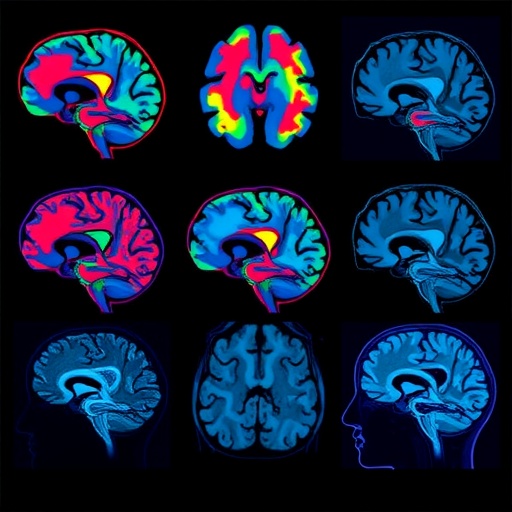
A groundbreaking study published in Nature Mental Health reveals the neuroimaging signatures of depression by analyzing data pooled from six expansive population-based datasets. This unprecedented meta-analysis, led by Hamilton et al., promises a leap forward in our understanding of how depression manifests at the brain network level, potentially transforming diagnosis and treatment strategies.
Depression, affecting over 300 million people worldwide, has long posed a challenge for clinicians due to its heterogeneity and elusive biological markers. The novel research harnessed neuroimaging data from thousands of individuals, combining different modalities such as structural MRI and resting-state functional MRI (rs-fMRI). The resulting large-scale data integration allowed the investigators to identify consistent brain alterations associated with depressive symptoms across diverse populations.
Key findings emphasize disrupted functional connectivity within the default mode network (DMN), a set of brain regions implicated in self-referential thought and rumination, commonly exaggerated in depression. The study reports hypo-connectivity between the dorsolateral prefrontal cortex and subcortical limbic structures, highlighting deficits in cognitive control and emotion regulation circuits. Notably, these patterns were robustly replicated across all six datasets, underscoring their potential as stable neurobiological traits of depression.
Methodologically, the research applied advanced multivariate techniques, including connectome-wide association analyses, to uncover subtle but consistent connectivity patterns. This approach overcomes previous limitations of smaller studies that often produced conflicting results due to methodological discrepancies and limited sample sizes. The harmonization of neuroimaging protocols and clinical assessments across cohorts enhanced the generalizability of the findings.
The implications of this work are profound. By establishing reliable brain network markers, clinicians may soon predict depression risk or treatment response using personalized neuroimaging profiles. Furthermore, understanding connectivity alterations opens new avenues for targeted neuromodulation therapies, such as transcranial magnetic stimulation, aimed at rectifying dysfunctional circuits.
Critically, the study acknowledges the variability inherent in depression subtypes and symptom dimensions. Future research will need to unravel how these neural signatures correspond to clinical heterogeneity, potentially enabling the stratification of patients into biologically defined subgroups.
This landmark investigation sets a new standard for psychiatric neuroscience, demonstrating the power of large-scale collaborative efforts and advanced analytic frameworks to decode complex brain disorders. As neuroimaging technologies and data-sharing initiatives continue to evolve, such integrative studies will pave the way for precision psychiatry, moving beyond symptom-based diagnoses to mechanistically informed interventions.
Hamilton and colleagues’ contribution marks a pivotal step toward unveiling the neural architecture of depression at a population level, offering hope for more effective diagnostics and personalized treatments in clinical practice.
Cite Scienmag News
Colin Clarke. (July 13, 2026). Neuroimaging Links to Depression Found in Six Large Population Studies. Scienmag. https://scienmag.com/neuroimaging-links-to-depression-found-in-six-large-population-studies/
Colin Clarke. "Neuroimaging Links to Depression Found in Six Large Population Studies." Scienmag, 13 July 2026, https://scienmag.com/neuroimaging-links-to-depression-found-in-six-large-population-studies/. Accessed 5 September 2026.
Colin Clarke. "Neuroimaging Links to Depression Found in Six Large Population Studies." Scienmag. July 13, 2026. https://scienmag.com/neuroimaging-links-to-depression-found-in-six-large-population-studies/


