

Sunday, August 2, 2026
Science
No Result
View All Result
  • Login
  • HOME
  • SCIENCE NEWS
  • CONTACT US
  • HOME
  • SCIENCE NEWS
  • CONTACT US
No Result
View All Result
Scienmag
No Result
View All Result
Home Science News Social Science

Neuroimaging Links to Depression Found in Six Large Population Studies

July 13, 2026
in Social Science
Reading Time: 2 mins read
0
Neuroimaging Links to Depression Found in Six Large Population Studies

Neuroimaging Links to Depression Found in Six Large Population Studies

65
SHARES
587
VIEWS
Share on FacebookShare on Twitter
ADVERTISEMENT

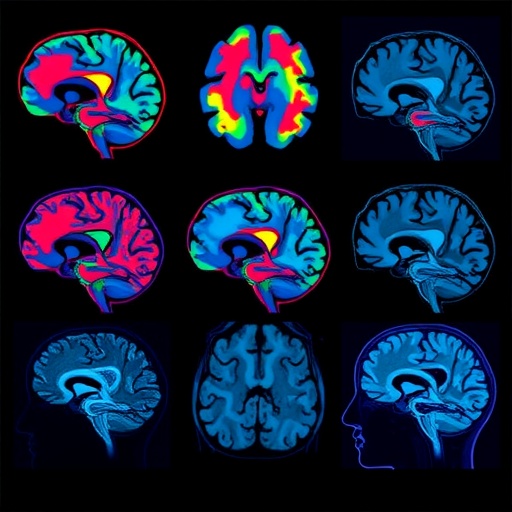
A groundbreaking study published in Nature Mental Health reveals the neuroimaging signatures of depression by analyzing data pooled from six expansive population-based datasets. This unprecedented meta-analysis, led by Hamilton et al., promises a leap forward in our understanding of how depression manifests at the brain network level, potentially transforming diagnosis and treatment strategies.

Depression, affecting over 300 million people worldwide, has long posed a challenge for clinicians due to its heterogeneity and elusive biological markers. The novel research harnessed neuroimaging data from thousands of individuals, combining different modalities such as structural MRI and resting-state functional MRI (rs-fMRI). The resulting large-scale data integration allowed the investigators to identify consistent brain alterations associated with depressive symptoms across diverse populations.

Key findings emphasize disrupted functional connectivity within the default mode network (DMN), a set of brain regions implicated in self-referential thought and rumination, commonly exaggerated in depression. The study reports hypo-connectivity between the dorsolateral prefrontal cortex and subcortical limbic structures, highlighting deficits in cognitive control and emotion regulation circuits. Notably, these patterns were robustly replicated across all six datasets, underscoring their potential as stable neurobiological traits of depression.

Methodologically, the research applied advanced multivariate techniques, including connectome-wide association analyses, to uncover subtle but consistent connectivity patterns. This approach overcomes previous limitations of smaller studies that often produced conflicting results due to methodological discrepancies and limited sample sizes. The harmonization of neuroimaging protocols and clinical assessments across cohorts enhanced the generalizability of the findings.

The implications of this work are profound. By establishing reliable brain network markers, clinicians may soon predict depression risk or treatment response using personalized neuroimaging profiles. Furthermore, understanding connectivity alterations opens new avenues for targeted neuromodulation therapies, such as transcranial magnetic stimulation, aimed at rectifying dysfunctional circuits.

Critically, the study acknowledges the variability inherent in depression subtypes and symptom dimensions. Future research will need to unravel how these neural signatures correspond to clinical heterogeneity, potentially enabling the stratification of patients into biologically defined subgroups.

This landmark investigation sets a new standard for psychiatric neuroscience, demonstrating the power of large-scale collaborative efforts and advanced analytic frameworks to decode complex brain disorders. As neuroimaging technologies and data-sharing initiatives continue to evolve, such integrative studies will pave the way for precision psychiatry, moving beyond symptom-based diagnoses to mechanistically informed interventions.

Hamilton and colleagues’ contribution marks a pivotal step toward unveiling the neural architecture of depression at a population level, offering hope for more effective diagnostics and personalized treatments in clinical practice.


Subject of Research: Neuroimaging correlates of depression across population datasets

Article Title: The neuroimaging correlates of depression established across six large-scale population datasets

Article References:
Hamilton, K.M., Luo, X., Easley, T. et al. The neuroimaging correlates of depression established across six large-scale population datasets. Nat. Mental Health (2026). https://doi.org/10.1038/s44220-026-00680-y

Image Credits: AI Generated

DOI: https://doi.org/10.1038/s44220-026-00680-y

Tags: brain connectivity patterns in mental healthcognitive control deficits in depressionconnectome-wide association techniquesdefault mode network disruption in depressionemotion regulation circuits in depressionfunctional MRI in depression diagnosisimplications for depression treatment strategieslarge-scale population brain studiesmeta-analysis of brain imaging dataneurobiological traits of depressionneuroimaging biomarkers for depressionstructural MRI and resting-state fMRI analysis
Share26Tweet16
Previous Post

Correction: Molecular Mechanism of Plant DCL4 Outcompeting DCL2 Unveiled

Next Post

Advancing Polyamide Desalination Membranes with Interfacial Rheology Techniques

Related Posts

Compact urban high-rises intensify humid heat from vegetation transpiration
Social Science

Compact urban high-rises intensify humid heat from vegetation transpiration

August 2, 2026
Chinese Intercity Migration Network Reveals Why Migration Distance-Decay Varies Spatially
Social Science

Chinese Intercity Migration Network Reveals Why Migration Distance-Decay Varies Spatially

August 1, 2026
Unprecedented Excavation Uncovers Roman-Era Pottery Kilns in Burgenland
Social Science

Unprecedented Excavation Uncovers Roman-Era Pottery Kilns in Burgenland

August 1, 2026
Team Success Can Mask Individual Errors
Social Science

Team Success Can Mask Individual Errors

August 1, 2026
Bentham Science launches Current Artificial Intelligence journal to advance global AI innovation
Social Science

Bentham Science launches Current Artificial Intelligence journal to advance global AI innovation

August 1, 2026
Children’s speech patterns may signal future mental health risks
Social Science

Children’s speech patterns may signal future mental health risks

August 1, 2026
Next Post
Advancing Polyamide Desalination Membranes with Interfacial Rheology Techniques

Advancing Polyamide Desalination Membranes with Interfacial Rheology Techniques

  • Mothers who receive childcare support from maternal grandparents show more

    Mothers who receive childcare support from maternal grandparents show more parental warmth, finds NTU Singapore study

    27656 shares
    Share 11059 Tweet 6912
  • University of Seville Breaks 120-Year-Old Mystery, Revises a Key Einstein Concept

    1061 shares
    Share 424 Tweet 265
  • Bee body mass, pathogens and local climate influence heat tolerance

    682 shares
    Share 273 Tweet 171
  • Researchers record first-ever images and data of a shark experiencing a boat strike

    546 shares
    Share 218 Tweet 137
  • Groundbreaking Clinical Trial Reveals Lubiprostone Enhances Kidney Function

    531 shares
    Share 212 Tweet 133
Science

Embark on a thrilling journey of discovery with Scienmag.com—your ultimate source for cutting-edge breakthroughs. Immerse yourself in a world where curiosity knows no limits and tomorrow’s possibilities become today’s reality!

RECENT NEWS

  • Machine Learning Predicts Falls in Older Adults Using Dual-Task Gait Measures
  • How Inflammatory Markers Affect Physical Performance in Community-Dwelling Older Adults: Systematic Review
  • Older Adults’ Views on Managing Chronic Pain in Primary Care
  • Brain-region microstructure and gene activity reveal Alzheimer’s neurodegeneration

Categories

  • Agriculture
  • Anthropology
  • Archaeology
  • Athmospheric
  • Biology
  • Biotechnology
  • Blog
  • Bussines
  • Cancer
  • Chemistry
  • Climate
  • Earth Science
  • Editorial Policy
  • Marine
  • Mathematics
  • Medicine
  • Pediatry
  • Policy
  • Psychology & Psychiatry
  • Science Education
  • Social Science
  • Space
  • Technology and Engineering

Subscribe to Blog via Email

Enter your email address to subscribe to this blog and receive notifications of new posts by email.

Join 5,147 other subscribers

© 2025 Scienmag - Science Magazine

Welcome Back!

Login to your account below

Forgotten Password?

Retrieve your password

Please enter your username or email address to reset your password.

Log In
No Result
View All Result
  • HOME
  • SCIENCE NEWS
  • CONTACT US

© 2025 Scienmag - Science Magazine

Discover more from Science

Subscribe now to keep reading and get access to the full archive.

Continue reading
