

Monday, July 13, 2026
Science
No Result
View All Result
  • Login
  • HOME
  • SCIENCE NEWS
  • CONTACT US
  • HOME
  • SCIENCE NEWS
  • CONTACT US
No Result
View All Result
Scienmag
No Result
View All Result
Home Science News Medicine

Polymer Receptors Enrich Specific Phosphopeptide Isomers for Proteoforms

July 13, 2026
in Medicine
Reading Time: 2 mins read
0
Polymer Receptors Enrich Specific Phosphopeptide Isomers for Proteoforms

Polymer Receptors Enrich Specific Phosphopeptide Isomers for Proteoforms

65
SHARES
587
VIEWS
Share on FacebookShare on Twitter
ADVERTISEMENT

A groundbreaking approach has emerged in the quest to decipher complex cellular signaling pathways with unprecedented precision. Traditional phosphoproteomics, while invaluable, often falls short in distinguishing subtle differences between phosphorylation sites, especially when it comes to low-abundance peptides and positional isomers—those nearly identical proteins differing only by the site of phosphate attachment. Now, researchers have unveiled a novel chemical platform that promises to rewrite the rules of site-specific phosphoprotein analysis.

At the heart of this advance lies the use of sequence-selective synthetic receptors constructed from molecularly imprinted polymers (MIPs). These engineered polymers are designed to recognize and bind specific phosphopeptide motifs with exquisite selectivity, based not just on the presence of the phosphate group but also on the local amino acid sequence surrounding the modification. This encoding of local sequence context into the polymer’s binding interface offers a powerful new level of control over phosphopeptide enrichment.

The research team turned to the T cell kinase ZAP70 to demonstrate the potential of their technology. ZAP70 contains adjacent tyrosine residues, Y492 and Y493, within a critical regulatory motif—phosphorylation at these sites plays distinct roles in T cell signaling. Differentiating between these two very closely spaced phosphorylation sites has long posed a formidable challenge due to the highly similar chemical environments and peptide sequences involved.

By employing their MIP-based receptors tailored to recognize the unique microenvironments of pY492 and pY493 phosphopeptides, the investigators were able to selectively capture each isomer with remarkable specificity. This breakthrough enables discrimination between phosphorylation sites that were previously indistinguishable in global phosphoproteomics workflows.

Crucially, the MIP receptors were integrated seamlessly into liquid chromatography-mass spectrometry (LC-MS) pipelines, enhancing the detection sensitivity for low-abundance phosphopeptides. This targeted enrichment approach not only overcomes challenges posed by sample complexity but also elevates the resolution at which cellular phosphorylation events can be mapped.

The versatility of the molecular imprinting strategy points toward broad applicability beyond the ZAP70 system. It opens avenues to decode signaling networks at the level of individual phosphorylation sites across diverse biological contexts. Researchers anticipate this method will accelerate discovery of subtle regulatory modifications that govern complex cellular responses.

This innovation represents a significant leap in enabling proteoform-specific analyses, bridging chemical design with cutting-edge analytical techniques. By transforming synthetic polymers into programmable receptors with sequence-level discrimination capacity, the study charts a novel course for precision phosphoproteomics.

Future developments may expand the library of synthetic receptors to cover a wider array of post-translational modifications and interaction motifs. Ultimately, this programmable, scalable approach holds promise to deepen our understanding of cell signaling—paving the way for novel therapeutics targeting specific modified proteoforms with molecular accuracy.

In sum, molecular imprinting emerges as a formidable chemical toolkit in the modern proteomics arsenal, empowering researchers to unravel the complex language of protein phosphorylation with refined specificity and sensitivity.


Subject of Research: Protein phosphorylation site-specific analysis using molecularly imprinted polymer-based synthetic receptors.

Article Title: Proteoform-specific enrichment of phosphopeptide isomers by polymer-based synthetic receptors.

Article References:
İncel, A., Shinde, S., Arribas Díez, I. et al. Proteoform-specific enrichment of phosphopeptide isomers by polymer-based synthetic receptors. Nat Chem Biol (2026). https://doi.org/10.1038/s41589-026-02274-2

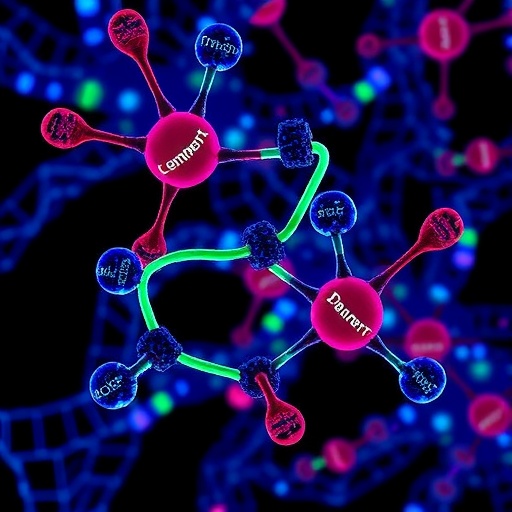
Image Credits: AI Generated

DOI: https://doi.org/10.1038/s41589-026-02274-2

Tags: advanced techniques for cellular signaling pathway analysischemical platforms for phosphoproteomicsdistinguishing close phosphorylation sites in signaling proteinsenrichment of low-abundance phosphopeptidesmolecularly imprinted polymers for phosphoproteomicsphosphopeptide isomer enrichmentproteoproteoform differentiation using polymer receptorsrecognition of phosphopeptide motifs with local sequence contextsequence-selective synthetic receptors for phosphopeptide analysissite-specific phosphoprotein detection methodsT cell kinase ZAP70 phosphorylation site detection
Share26Tweet16
Previous Post

High-Resolution Mapping of Cell-Specific Gene Regulation from Bulk Sequencing

Next Post

Large-Scale Multi-Sequence Pretraining Enhances MRI Analysis Across Clinical Applications

Related Posts

Universal 6iL/E4 System Enables Stem Cell Growth Across Mammals
Medicine

Universal 6iL/E4 System Enables Stem Cell Growth Across Mammals

July 13, 2026
Hypothermic Preservation Extends Function in Aging Isolated Hepatocytes
Medicine

Hypothermic Preservation Extends Function in Aging Isolated Hepatocytes

July 13, 2026
Perineurium Links Leptin to Sympathetic Response to Combat Obesity
Medicine

Perineurium Links Leptin to Sympathetic Response to Combat Obesity

July 13, 2026
Machine Learning Supports Dementia Caregivers in Managing Behavioral Symptoms
Medicine

Machine Learning Supports Dementia Caregivers in Managing Behavioral Symptoms

July 13, 2026
Predicting Outcomes for Premature Infants in Advanced NICU Respiratory Care
Medicine

Predicting Outcomes for Premature Infants in Advanced NICU Respiratory Care

July 13, 2026
Large-Scale Multi-Sequence Pretraining Enhances MRI Analysis Across Clinical Applications
Medicine

Large-Scale Multi-Sequence Pretraining Enhances MRI Analysis Across Clinical Applications

July 13, 2026
Next Post
Large-Scale Multi-Sequence Pretraining Enhances MRI Analysis Across Clinical Applications

Large-Scale Multi-Sequence Pretraining Enhances MRI Analysis Across Clinical Applications

  • Mothers who receive childcare support from maternal grandparents show more

    Mothers who receive childcare support from maternal grandparents show more parental warmth, finds NTU Singapore study

    27656 shares
    Share 11059 Tweet 6912
  • University of Seville Breaks 120-Year-Old Mystery, Revises a Key Einstein Concept

    1061 shares
    Share 424 Tweet 265
  • Bee body mass, pathogens and local climate influence heat tolerance

    682 shares
    Share 273 Tweet 171
  • Researchers record first-ever images and data of a shark experiencing a boat strike

    546 shares
    Share 218 Tweet 137
  • Groundbreaking Clinical Trial Reveals Lubiprostone Enhances Kidney Function

    531 shares
    Share 212 Tweet 133
Science

Embark on a thrilling journey of discovery with Scienmag.com—your ultimate source for cutting-edge breakthroughs. Immerse yourself in a world where curiosity knows no limits and tomorrow’s possibilities become today’s reality!

RECENT NEWS

  • Advancing Polyamide Desalination Membranes with Interfacial Rheology Techniques
  • Neuroimaging Links to Depression Found in Six Large Population Studies
  • Correction: Molecular Mechanism of Plant DCL4 Outcompeting DCL2 Unveiled
  • Cooling Degree Days Show Opposite Temperature and Humidity Impacts on Energy Use

Categories

  • Agriculture
  • Anthropology
  • Archaeology
  • Athmospheric
  • Biology
  • Biotechnology
  • Blog
  • Bussines
  • Cancer
  • Chemistry
  • Climate
  • Earth Science
  • Editorial Policy
  • Marine
  • Mathematics
  • Medicine
  • Pediatry
  • Policy
  • Psychology & Psychiatry
  • Science Education
  • Social Science
  • Space
  • Technology and Engineering

Subscribe to Blog via Email

Enter your email address to subscribe to this blog and receive notifications of new posts by email.

Join 5,146 other subscribers

© 2025 Scienmag - Science Magazine

Welcome Back!

Login to your account below

Forgotten Password?

Retrieve your password

Please enter your username or email address to reset your password.

Log In
No Result
View All Result
  • HOME
  • SCIENCE NEWS
  • CONTACT US

© 2025 Scienmag - Science Magazine

Discover more from Science

Subscribe now to keep reading and get access to the full archive.

Continue reading
