


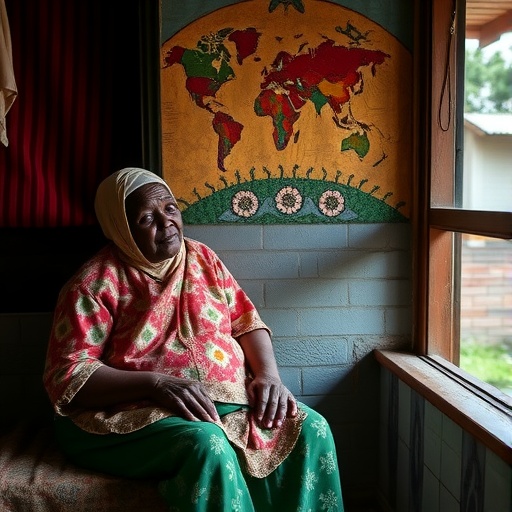
A groundbreaking new study sheds light on the compounded challenges faced by older adults living alone in Nigeria’s urban centers, revealing alarming health and social consequences linked to their socioeconomic status. Published in BMC Geriatrics, the research employs a sophisticated multilevel analysis to explore how the intersection of solitary living and poverty exacerbates vulnerabilities among this demographic.
Urbanization in sub-Saharan Africa continues to surge, with Nigeria leading as one of the fastest-growing urban populations worldwide. While cities promise opportunities, they also harbor increasing numbers of elderly individuals who are often isolated, financially strained, and at greater risk of poor health outcomes. This study elucidates the so-called “double burden” faced by urban-dwelling older Nigerians—those who live alone and simultaneously endure poverty.
The research team applied multilevel statistical models to data collected from urban centers across Nigeria, allowing them to parse out how personal and neighborhood-level socioeconomic factors interact to influence elder health. The findings underscore that living alone—traditionally linked to social isolation—takes a far more destructive toll when compounded by poor economic conditions. This combination significantly raises the incidence of mental health disorders, chronic illnesses, and diminished access to healthcare services.
One remarkable aspect of this study is its innovative approach in incorporating urban neighborhood characteristics alongside individual data. The researchers demonstrate that the socioeconomic fabric of a community, including access to resources and social cohesion, modifies how living alone impacts elderly residents. In neighborhoods marked by economic deprivation, the risk of negative health outcomes intensifies exponentially for older people who lack cohabitants.
The study also highlights important policy implications. It suggests interventions must be multifaceted—addressing not only the financial hardship of elderly individuals living alone but also enhancing community-level socio-environmental conditions. Social support networks and urban planning initiatives aimed at fostering inclusion and accessibility could alleviate some of the burdens identified.
Importantly, this research challenges the frequently held assumption that living alone in old age is merely a lifestyle choice or a benign circumstance. Instead, it proves to be a critical public health issue, especially in environments where socioeconomic disparities loom large. By pinpointing the nexus of isolation and poverty as a public health concern, the study invites governments and NGOs to consider targeted programs to identify and assist elderly residents most at risk.
As Nigeria’s population ages rapidly, the insights provided by this study are timely and paramount. The meticulous statistical analysis confirms that the intersectionality of living alone and economic deprivation demands urgent attention from health planners, urban developers, and social policymakers.
In sum, the study offers a clarion call to not overlook older adults who are invisible in bustling urban landscapes—those battling isolation and economic hardship, whose health and well-being hinge on nuanced and coordinated interventions. As the global community seeks to build inclusive societies, this research provides critical evidence of where challenges lie and how they might be addressed to improve the quality of life for vulnerable elderly populations.
Cite Scienmag News
Ophelia Keating. (July 12, 2026). Living Alone and Poverty Heighten Risks for Older Nigerians in Cities. Scienmag. https://scienmag.com/living-alone-and-poverty-heighten-risks-for-older-nigerians-in-cities/
Ophelia Keating. "Living Alone and Poverty Heighten Risks for Older Nigerians in Cities." Scienmag, 12 July 2026, https://scienmag.com/living-alone-and-poverty-heighten-risks-for-older-nigerians-in-cities/. Accessed 4 September 2026.
Ophelia Keating. "Living Alone and Poverty Heighten Risks for Older Nigerians in Cities." Scienmag. July 12, 2026. https://scienmag.com/living-alone-and-poverty-heighten-risks-for-older-nigerians-in-cities/


