


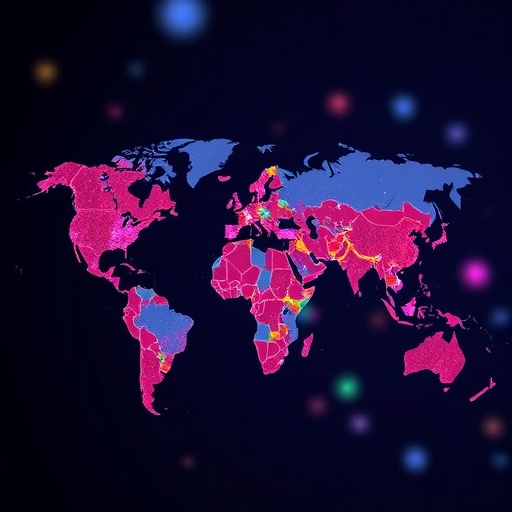
A landmark international study led by researchers at the University of Southern California has unveiled significant variations—and surprising consistencies—in the modifiable risk factors associated with dementia across 14 countries and regions. By analyzing harmonized aging data from more than 214,000 older adults spanning diverse socioeconomic backgrounds, the team challenges the prevailing assumption that dementia prevention strategies can be universally applied.
The study, published in The Lancet Healthy Longevity and presented at the Alzheimer’s Association International Conference 2026 in London, addresses a critical knowledge gap. Previous dementia research has largely focused on high-income Western countries, yet most global dementia cases arise in low- and middle-income regions. This research bridges that divide, revealing stark differences in how common risk factors like educational attainment, body mass index (BMI), and cardiometabolic parameters manifest worldwide.
For instance, low educational attainment affected 85.6% of older adults in China, contrasted with just 12.0% in the United States. Conversely, high BMI was prevalent in 44.9% of Americans but only 13.3% of Indians faced this risk. Such discrepancies underscore the futility of a “one-size-fits-all” dementia prevention blueprint. Importantly, however, the researchers uncovered consistent clustering of risk factors globally, with cardiovascular risks (such as hypertension and elevated cholesterol) and behavioral risks (including smoking and alcohol consumption) frequently co-occurring irrespective of geography.
Emma Nichols, the study’s lead author and a research scientist at USC Schaeffer Institute’s Center for Economic and Social Research, emphasized this pattern’s implications. “The consistent clustering of risk factors suggests interconnected biological and social mechanisms that transcend borders, presenting both challenges and opportunities for targeted interventions,” Nichols said.
Drawing on data from the Gateway to Global Aging Data project, the analysis incorporated 12 modifiable risk factors identified by the Lancet Commission on dementia prevention—including hearing loss, depression, physical inactivity, and social isolation—adjusting for age, sex, and education variables to map prevalence and co-occurrence.
This granular, cross-national perspective highlights the necessity of population-specific strategies. For example, interventions focusing solely on diabetes care could be expanded to address related cardiometabolic conditions simultaneously, enhancing efficacy. Moreover, Nichols points out that dementia risk “is not predetermined,” but modifiable over the life course through both individual actions and societal support.
Future research will likely integrate emerging risk factors, such as poor sleep quality, and expand geographic coverage to include countries like Kenya and Egypt, as new harmonized datasets become available. This evolving global dataset promises to refine our understanding of dementia’s complex etiology and foster more equitable brain health worldwide.
This study serves as a pivotal step towards precision public health in neurodegenerative disease prevention, advocating for tailored, culturally cognizant interventions that recognize the intricate interplay between genetic, environmental, and social determinants of dementia risk.
—
Cite Scienmag News
Cassandra Pierce. (July 12, 2026). Global Study Reveals Variations in Dementia Risk Factors. Scienmag. https://scienmag.com/global-study-reveals-variations-in-dementia-risk-factors/
Cassandra Pierce. "Global Study Reveals Variations in Dementia Risk Factors." Scienmag, 12 July 2026, https://scienmag.com/global-study-reveals-variations-in-dementia-risk-factors/. Accessed 4 September 2026.
Cassandra Pierce. "Global Study Reveals Variations in Dementia Risk Factors." Scienmag. July 12, 2026. https://scienmag.com/global-study-reveals-variations-in-dementia-risk-factors/


