


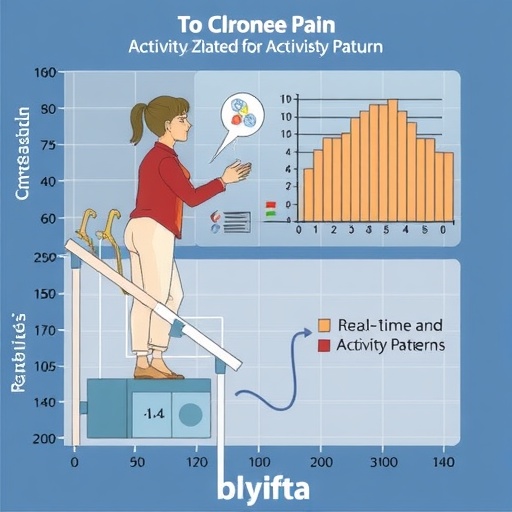
In a groundbreaking study poised to reshape our understanding of chronic pain management among the elderly, researchers have unveiled new insights into the dynamic interplay between moment-to-moment pain experiences and physical activity patterns. This work, published in BMC Geriatrics, leverages ecological momentary assessment (EMA)—a cutting-edge method capturing real-time data in natural settings—to explore how chronic multisite pain influences daily activity volume and behavior in older adults.
Chronic pain, particularly when experienced across multiple body sites, presents a complex challenge for both patients and healthcare providers. Traditional pain assessments often rely on periodic self-reports, which can obscure the nuanced fluctuations pain undergoes throughout daily life. EMA addresses this gap by prompting participants to report pain levels and activity—such as movement intensity and duration—multiple times throughout the day, producing a rich, temporal dataset.
The research team examined older adults with chronic multisite pain, monitoring their physical activity through wearable devices alongside their pain reports. The integrated approach allowed the scientists to map precise correlations between pain peaks and reductions in physical movement, revealing that pain episodes are not only associated with an overall decline in activity but also influence the patterns in which older adults engage or disengage from physical exertion.
These findings highlight a critical feedback loop where heightened pain episodes curb physical activity, potentially perpetuating a cycle of decreased mobility and worsening health outcomes. Conversely, understanding this relationship opens new avenues for interventions tailored to mitigate pain flare-ups before they profoundly impact daily function.
The study also sheds light on behavioral adaptations adopted by participants. For instance, some individuals displayed episodic bursts of activity interspersed with rest periods, indicating a strategic pacing mechanism in response to fluctuating pain. This nuanced insight challenges the conventional uniform activity recommendations and suggests that personalized activity regimens, responsive to momentary pain states, could significantly improve quality of life.
Technologically, the deployment of wearables complemented by EMA surveys exemplifies an innovative data collection paradigm that transcends clinical settings. By capturing the complexity of lived pain experiences and their impact on mobility in everyday environments, this approach paves the way for more ecological validity in chronic pain research.
The implications resonate beyond geriatric medicine. Understanding how real-time pain dynamics modulate physical behavior offers potential applications in rehabilitation, pharmacological treatment scheduling, and even the development of smart health technologies. For example, adaptive digital health interventions could utilize live data input to suggest optimal times for activity or rest, fostering autonomy and better symptom management for older individuals.
As populations age globally, chronic multisite pain is becoming an increasingly pressing public health concern. This study marks a significant step toward unraveling the temporal complexity of pain and activity relationships, ultimately informing more effective, personalized strategies to enhance functional independence and well-being among older adults.
Cite Scienmag News
Ophelia Keating. (July 11, 2026). Real-Time Pain and Activity Patterns in Older Adults with Chronic Pain. Scienmag. https://scienmag.com/real-time-pain-and-activity-patterns-in-older-adults-with-chronic-pain/
Ophelia Keating. "Real-Time Pain and Activity Patterns in Older Adults with Chronic Pain." Scienmag, 11 July 2026, https://scienmag.com/real-time-pain-and-activity-patterns-in-older-adults-with-chronic-pain/. Accessed 3 September 2026.
Ophelia Keating. "Real-Time Pain and Activity Patterns in Older Adults with Chronic Pain." Scienmag. July 11, 2026. https://scienmag.com/real-time-pain-and-activity-patterns-in-older-adults-with-chronic-pain/


