

Thursday, September 3, 2026
Science
No Result
View All Result
  • Login
  • HOME
  • SCIENCE NEWS
  • CONTACT US
  • HOME
  • SCIENCE NEWS
  • CONTACT US
No Result
View All Result
Scienmag
No Result
View All Result
Home Science News Medicine

Polyunsaturated Fatty Acid Synthesis Influences Ferroptosis Sensitivity with Low Arachidonic Acid

July 11, 2026
in Medicine
Ophelia Keating
By Ophelia Keating Scienmag Editorial Profile - Health Services Research
Reading Time: 3 mins read
0
Polyunsaturated Fatty Acid Synthesis Influences Ferroptosis Sensitivity with Low Arachidonic Acid

Polyunsaturated Fatty Acid Synthesis Influences Ferroptosis Sensitivity with Low Arachidonic Acid

65
SHARES
587
VIEWS
Share on FacebookShare on Twitter
ADVERTISEMENT

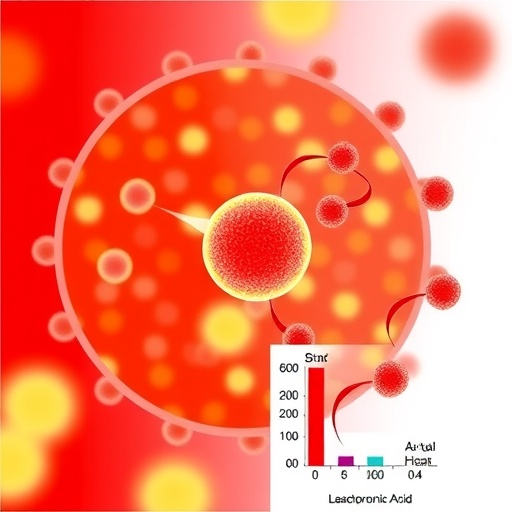
In a groundbreaking study published in Cell Death Discovery, researchers have unveiled how a cell’s innate ability to synthesize polyunsaturated fatty acids (PUFAs) critically influences its susceptibility to ferroptosis—a type of programmed cell death linked to iron and lipid peroxidation—especially when arachidonic acid availability is limited. This discovery sheds new light on the intricate biochemical interplay governing cell fate and offers promising avenues for therapeutic intervention.

Ferroptosis has attracted considerable attention in recent years due to its distinct mechanism from apoptosis and necrosis, marked by the accumulation of lipid peroxides predominantly in cellular membranes rich in polyunsaturated fatty acids. Arachidonic acid, one of the most abundant PUFAs, serves as a significant substrate for lipid peroxidation, rendering cells vulnerable to ferroptotic death. However, the extent to which cells rely on their intrinsic PUFA synthesis pathways to compensate for restricted arachidonic acid levels remained poorly understood—until now.

Kim and colleagues embarked on an in-depth investigation to decode how variations in PUFA synthesis capacity dictate ferroptosis sensitivity. Utilizing state-of-the-art lipidomic profiling alongside genetic and pharmacological manipulations of fatty acid metabolism enzymes, their work meticulously delineated how cells adapt their lipid composition under nutrient-limiting conditions. The findings reveal that cells equipped with robust endogenous PUFA synthesis enzymes sustain higher basal levels of complex polyunsaturated lipids, thus maintaining their ferroptotic vulnerability even when exogenous arachidonic acid is scarce.

Mechanistically, the study highlights the role of key desaturase and elongase enzymes, which orchestrate the biosynthesis of long-chain PUFAs. By modulating gene expression or enzyme activity, cells can effectively tune their membrane lipid architecture, influencing peroxidation dynamics and the ensuing ferroptotic response. Importantly, cells with diminished PUFA synthesis capacity showed marked resistance to ferroptosis under arachidonic acid deprivation, emphasizing the protective potential of metabolic reprogramming.

These insights carry substantial implications for cancer biology and neurodegenerative diseases—both contexts where ferroptosis is increasingly implicated. Tumor cells, for instance, often exhibit altered lipid metabolism, and their intrinsic PUFA synthesis ability may determine sensitivity to ferroptosis-inducing therapies. Similarly, neurons’ vulnerability to lipid peroxidation-related damage could be modulated by their endogenous fatty acid synthetic machinery, opening paths for targeted interventions.

Intriguingly, the study further suggests that manipulating PUFA synthesis pathways could serve as a double-edged sword: enhancing ferroptosis in malignant cells while safeguarding healthy cells by restricting PUFA availability. This duality holds promise for developing nuanced strategies that optimize therapeutic outcomes while minimizing off-target effects.

Beyond its clinical implications, this research enriches our fundamental understanding of cellular lipid homeostasis and its pivotal role in regulating cell death modalities. By revealing how metabolic capacity intersects with nutrient availability to dictate ferroptotic sensitivity, the study underscores the complexity and adaptability of cellular death pathways.

As researchers continue to probe ferroptosis, this work stands out by connecting metabolic plasticity to cell fate decisions in a precise biochemical context. Future studies may build on these findings to explore other lipid substrates and conditions influencing ferroptosis, potentially unveiling new molecular targets for disease treatment.

The revelation that intrinsic polyunsaturated fatty acid synthesis governs ferroptosis sensitivity when arachidonic acid is limited represents a significant stride in cell biology and therapeutic science. It invites a reevaluation of metabolic interventions in disease contexts where ferroptosis plays a decisive role.


Subject of Research: Intrinsic polyunsaturated fatty acid synthesis capacity and ferroptosis sensitivity under arachidonic acid limitation

Article Title: Intrinsic polyunsaturated fatty acid synthesis capacity dictates ferroptosis sensitivity under restricted arachidonic acid availability

Article References: Kim, M. W., Jang, S. Y., Lee, J.-Y., Kim, J. W., Jung, W., You, Y.-M., Kim, J., Oh, K.-J., Kim, W. K., Han, B.-S., Bae, K.-H., Kim, M.-Y., Hwang, G.-S., & Lee, E.-W. (2026). Intrinsic polyunsaturated fatty acid synthesis capacity dictates ferroptosis sensitivity under restricted arachidonic acid availability. Cell Death Discovery. https://doi.org/10.1038/s41420-026-03240-6

Image Credits: AI Generated

DOI: 10.1038/s41420-026-03240-6

Keywords: arachidonic acid role in cell death, cell membrane lipid composition, fatty acid metabolism enzymes, ferroptosis regulation, genetic manipulation of fatty acid pathways, iron-dependent lipid peroxidation, lipid peroxidation mechanisms, lipidomic profiling in cell death, nutrient limitation and ferroptosis sensitivity, pharmacological targeting of lipid synthesis, polyunsaturated fatty acid biosynthesis, therapeutic implications for ferroptosis modulation

Cite Scienmag News

Ophelia Keating. (July 11, 2026). Polyunsaturated Fatty Acid Synthesis Influences Ferroptosis Sensitivity with Low Arachidonic Acid. Scienmag. https://scienmag.com/polyunsaturated-fatty-acid-synthesis-influences-ferroptosis-sensitivity-with-low-arachidonic-acid/


Ophelia Keating. "Polyunsaturated Fatty Acid Synthesis Influences Ferroptosis Sensitivity with Low Arachidonic Acid." Scienmag, 11 July 2026, https://scienmag.com/polyunsaturated-fatty-acid-synthesis-influences-ferroptosis-sensitivity-with-low-arachidonic-acid/. Accessed 3 September 2026.

Ophelia Keating. "Polyunsaturated Fatty Acid Synthesis Influences Ferroptosis Sensitivity with Low Arachidonic Acid." Scienmag. July 11, 2026. https://scienmag.com/polyunsaturated-fatty-acid-synthesis-influences-ferroptosis-sensitivity-with-low-arachidonic-acid/

Tags: arachidonic acid role in cell deathcell membrane lipid compositionfatty acid metabolism enzymesferroptosis regulationgenetic manipulation of fatty acid pathwaysiron-dependent lipid peroxidationlipid peroxidation mechanismslipidomic profiling in cell deathnutrient limitation and ferroptosis sensitivitypharmacological targeting of lipid synthesispolyunsaturated fatty acid biosynthesistherapeutic implications for ferroptosis modulation
Share26Tweet16
Previous Post

Real-Time Pain and Activity Patterns in Older Adults with Chronic Pain

Next Post

Ultra-fine bubbles revolutionize future of inkjet printing technology

Related Posts

Germans Weigh the Value of Digital Versus Offline Weight Loss
Medicine

Germans Weigh the Value of Digital Versus Offline Weight Loss

September 3, 2026
New relative power test measures fat burning peak in active postmenopausal women
Medicine

New relative power test measures fat burning peak in active postmenopausal women

September 3, 2026
Insulin Resistance Common in Overweight MAFLD Patients in Bangladesh Hospital
Medicine

Insulin Resistance Common in Overweight MAFLD Patients in Bangladesh Hospital

September 3, 2026
Guillain-Barré Syndrome Global Burden Trends and Forecasts Through 204 Countries
Medicine

Guillain-Barré Syndrome Global Burden Trends and Forecasts Through 204 Countries

September 3, 2026
Timing Is Everything: Early Fractional CO2 Laser Treatment Shows Clear Edge for Traumatic Scars
Medicine

Timing Is Everything: Early Fractional CO2 Laser Treatment Shows Clear Edge for Traumatic Scars

September 3, 2026
Decision-Making Readiness in Chemotherapy-Treated Lung Cancer Patients
Medicine

Decision-Making Readiness in Chemotherapy-Treated Lung Cancer Patients

September 3, 2026
Next Post
Ultra-fine bubbles revolutionize future of inkjet printing technology

Ultra-fine bubbles revolutionize future of inkjet printing technology

  • Mothers who receive childcare support from maternal grandparents show more optimized

    Mothers who receive childcare support from maternal grandparents show more parental warmth, finds NTU Singapore study

    27656 shares
    Share 11059 Tweet 6912
  • University of Seville Breaks 120-Year-Old Mystery, Revises a Key Einstein Concept

    1061 shares
    Share 424 Tweet 265
  • Bee body mass, pathogens and local climate influence heat tolerance

    682 shares
    Share 273 Tweet 171
  • Researchers record first-ever images and data of a shark experiencing a boat strike

    546 shares
    Share 218 Tweet 137
  • Groundbreaking Clinical Trial Reveals Lubiprostone Enhances Kidney Function

    531 shares
    Share 212 Tweet 133
Science

Embark on a thrilling journey of discovery with Scienmag.com—your ultimate source for cutting-edge breakthroughs. Immerse yourself in a world where curiosity knows no limits and tomorrow’s possibilities become today’s reality!

RECENT NEWS

  • Integrated bioinformatics profiling of the lysine demethylase gene family in breast cancer
  • Using 12-lead ECG to locate premature heartbeats in horses
  • Largest Study of Its Kind Reveals How Australian Dogs Fare Against Lymphoma
  • BRWD3 Mutation Identified in Female with X-Linked Intellectual Disability

Categories

  • Agriculture
  • Anthropology
  • Archaeology
  • Athmospheric
  • Biology
  • Biotechnology
  • Blog
  • Bussines
  • Cancer
  • Chemistry
  • Climate
  • Earth Science
  • Editorial Policy
  • Marine
  • Mathematics
  • Medicine
  • Pediatry
  • Policy
  • Psychology & Psychiatry
  • Science Education
  • Social Science
  • Space
  • Technology and Engineering

Subscribe to Blog via Email

Enter your email address to subscribe to this blog and receive notifications of new posts by email.

Join 5,151 other subscribers

© 2025 Scienmag - Science Magazine

Welcome Back!

Login to your account below

Forgotten Password?

Retrieve your password

Please enter your username or email address to reset your password.

Log In
No Result
View All Result
  • HOME
  • SCIENCE NEWS
  • CONTACT US

© 2025 Scienmag - Science Magazine

Discover more from Science

Subscribe now to keep reading and get access to the full archive.

Continue reading