

Friday, July 10, 2026
Science
No Result
View All Result
  • Login
  • HOME
  • SCIENCE NEWS
  • CONTACT US
  • HOME
  • SCIENCE NEWS
  • CONTACT US
No Result
View All Result
Scienmag
No Result
View All Result
Home Science News Technology and Engineering

AI Enhanced with Cerebellum-Like Function for Improved Learning

July 10, 2026
in Technology and Engineering
Reading Time: 2 mins read
0
AI Enhanced with Cerebellum-Like Function for Improved Learning

AI Enhanced with Cerebellum-Like Function for Improved Learning

65
SHARES
587
VIEWS
Share on FacebookShare on Twitter
ADVERTISEMENT

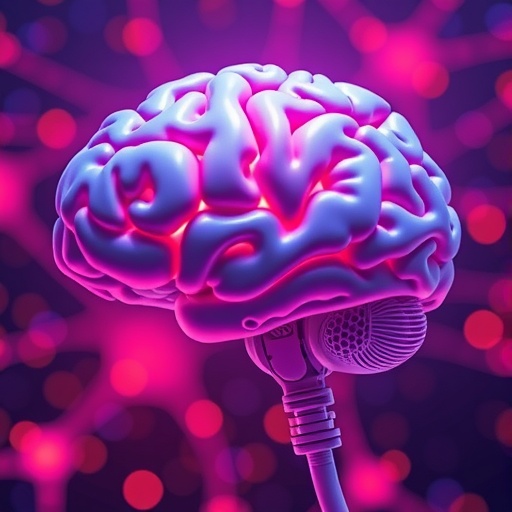
Northwestern University engineers have unveiled a groundbreaking brain-inspired device that dramatically enhances energy efficiency and speed in detecting unexpected events. Mimicking the cerebellum’s distinctive approach to processing information—monitoring for novelty rather than analyzing every input—the new electronic system significantly outperforms conventional artificial intelligence (AI) technologies in both power consumption and reaction time.

Unlike the cerebrum, which undertakes intensive “thought” processing, the cerebellum specializes in swift reflexes by selectively responding to surprising stimuli. Taking inspiration from this, the researchers designed a memtransistor device capable of operating in two distinct modes: excitatory and inhibitory. This dual functionality mirrors the balance of neural signals in the cerebellum, where excitation and inhibition maintain equilibrium during normal activity and shift rapidly upon detecting novelty.

At the heart of the device’s innovation lies the use of molybdenum disulfide, an atomically thin semiconductor renowned for exceptional electrical properties. The engineers implemented an asymmetric transistor architecture where one electrode slightly overlaps the semiconductor through a thin insulating layer. This structural nuance allows the direction of applied voltage to switch the memtransistor between excitatory and inhibitory responses, effectively emulating synaptic behavior in hardware.

The implications for AI systems are profound. In testing, the device processed electrocardiogram (ECG) data streams, accurately discerning abnormal heart rhythms within milliseconds—faster than twice the speed of current AI methods. By concentrating computational effort solely on atypical inputs instead of continuous data streams, the memtransistor reduces requisite computer operations by approximately 10,000 times, paving the way for ultra-low-power “always-on” AI applications.

Such efficiency gains could revolutionize wearable health monitors by enabling near-instant cardiac anomaly detection, bolster autonomous vehicles’ responsiveness to sudden environmental changes, enhance robotic interaction safety, and tighten cybersecurity systems by catching suspicious activities before escalation—all with minimal energy footprints.

This research advances a broader vision to reimagine AI hardware by collapsing memory and computation into single devices, a principle previously demonstrated by the team using memtransistors for classification tasks at a 100-fold energy reduction. Moving forward, the team aims to incorporate adaptive learning mechanisms to mimic the cerebellum’s capacity to habituate to repeated stimuli, further refining its neuromorphic prowess.

By harnessing atomically thin materials and innovative transistor design, this cerebellum-inspired memtransistor heralds a new era of hardware-efficient novelty detection, embodying a paradigm shift in neuromorphic engineering and energy-conscious AI.

Subject of Research: Cerebellum-inspired memtransistor devices for energy-efficient novelty detection
Article Title: Cerebellum-inspired memtransistors enable emergent differentiation for hardware-efficient novelty detection
News Publication Date: 10-Jul-2026
Web References: http://dx.doi.org/10.1038/s41467-026-75212-4
Image Credits: Mark C. Hersam/Northwestern University

Keywords

Artificial intelligence, Neuromorphic computing, Memtransistors, Cerebellum, Novelty detection, Molybdenum disulfide, Low-power AI, Wearable health monitors, Autonomous robotics, Cybersecurity

Tags: applications of brain-inspired devices in healthcare monitoringbio-inspired electronic systems for unexpected event recognitionbrain-inspired AIcerebellum-like neuromorphic computingdual-mode excitatory and inhibitory neural interfacesenergy-efficient artificial intelligence hardwarehardware mimicking cerebellar information processinglow-power AI reaction time enhancementmemtransistor device for rapid event detectionmolybdenum disulfide semiconductor applicationsneuromorphic systems for anomaly detectionstructural innovations in transistor design for neural emulation
Share26Tweet16
Previous Post

New Discovery Promises Brighter, More Energy-Efficient Digital Displays

Next Post

New Discoveries in Eosinophil Subtypes Reveal Potential Therapeutic Targets

Related Posts

AGA Introduces Nigel, AI Assistant for Gastroenterology and Hepatology
Technology and Engineering

AGA Introduces Nigel, AI Assistant for Gastroenterology and Hepatology

July 10, 2026
Soil Type Influences Impact of Carbon and Nitrogen on Nitrous Oxide Emissions
Technology and Engineering

Soil Type Influences Impact of Carbon and Nitrogen on Nitrous Oxide Emissions

July 10, 2026
First Human Trial Explores Immune-Engineered Cell Therapy for Type 1 Diabetes
Technology and Engineering

First Human Trial Explores Immune-Engineered Cell Therapy for Type 1 Diabetes

July 10, 2026
Ultrafast Semiconductor Lasers Generate Self-Starting Harmonic Frequency Combs
Technology and Engineering

Ultrafast Semiconductor Lasers Generate Self-Starting Harmonic Frequency Combs

July 10, 2026
Durable CNT@Ag-MXene Sensor Resists Corrosion Under High Strain
Technology and Engineering

Durable CNT@Ag-MXene Sensor Resists Corrosion Under High Strain

July 10, 2026
Regolith-Polymer Composites Enable Structural Components for Space Missions
Technology and Engineering

Regolith-Polymer Composites Enable Structural Components for Space Missions

July 10, 2026
Next Post
New Discoveries in Eosinophil Subtypes Reveal Potential Therapeutic Targets

New Discoveries in Eosinophil Subtypes Reveal Potential Therapeutic Targets

  • Mothers who receive childcare support from maternal grandparents show more

    Mothers who receive childcare support from maternal grandparents show more parental warmth, finds NTU Singapore study

    27656 shares
    Share 11059 Tweet 6912
  • University of Seville Breaks 120-Year-Old Mystery, Revises a Key Einstein Concept

    1061 shares
    Share 424 Tweet 265
  • Bee body mass, pathogens and local climate influence heat tolerance

    682 shares
    Share 273 Tweet 171
  • Researchers record first-ever images and data of a shark experiencing a boat strike

    546 shares
    Share 218 Tweet 137
  • Groundbreaking Clinical Trial Reveals Lubiprostone Enhances Kidney Function

    531 shares
    Share 212 Tweet 133
Science

Embark on a thrilling journey of discovery with Scienmag.com—your ultimate source for cutting-edge breakthroughs. Immerse yourself in a world where curiosity knows no limits and tomorrow’s possibilities become today’s reality!

RECENT NEWS

  • AGA Introduces Nigel, AI Assistant for Gastroenterology and Hepatology
  • BioVenture eLab Wins $1.5M Grant to Expand Weill Cornell Startup Hub
  • Response to Comment on Harappan Ernestites Geochemical Study
  • Soil Type Influences Impact of Carbon and Nitrogen on Nitrous Oxide Emissions

Categories

  • Agriculture
  • Anthropology
  • Archaeology
  • Athmospheric
  • Biology
  • Biotechnology
  • Blog
  • Bussines
  • Cancer
  • Chemistry
  • Climate
  • Earth Science
  • Editorial Policy
  • Marine
  • Mathematics
  • Medicine
  • Pediatry
  • Policy
  • Psychology & Psychiatry
  • Science Education
  • Social Science
  • Space
  • Technology and Engineering

Subscribe to Blog via Email

Enter your email address to subscribe to this blog and receive notifications of new posts by email.

Join 5,146 other subscribers

© 2025 Scienmag - Science Magazine

Welcome Back!

Login to your account below

Forgotten Password?

Retrieve your password

Please enter your username or email address to reset your password.

Log In
No Result
View All Result
  • HOME
  • SCIENCE NEWS
  • CONTACT US

© 2025 Scienmag - Science Magazine

Discover more from Science

Subscribe now to keep reading and get access to the full archive.

Continue reading
